
Arts diary: The Muriel Spark memorial perfect for ‘discreet eavesdropping’
The Muriel Spark memorial will be the first permanent structure in memory of a woman in Prince Street Gardens


Last night I was at the National Library of Scotland, where I got the chance to take a closer look at the designs for the new Muriel Spark memorial proposed for Princes Street Gardens in Edinburgh. The work, by Glasgow sculptor Jacqueline Donachie, is made up of two curved sections, featuring mini “neuks” where passers by can sit, read or as she put it, indulge in “discreet eavesdropping”.
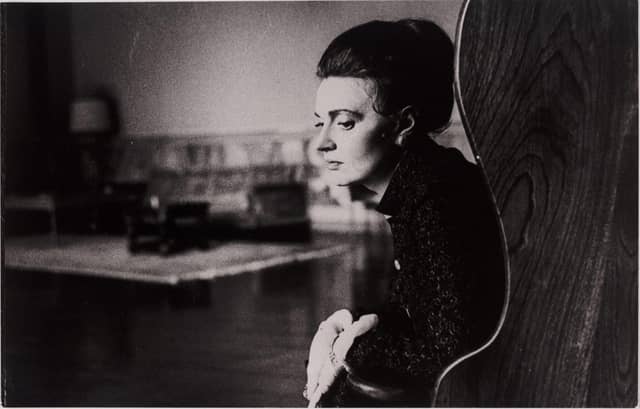
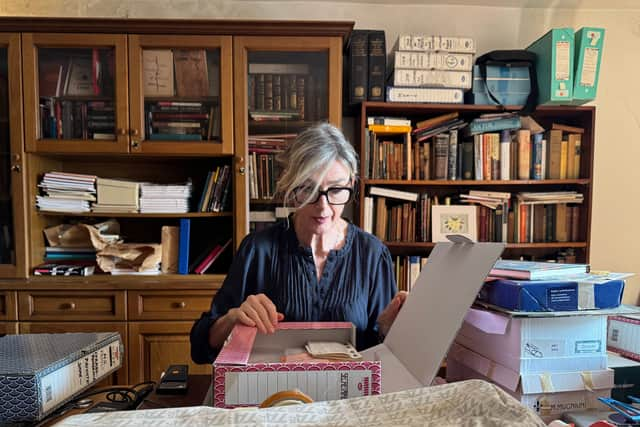
Jacqueline has spent the past few months researching Spark’s life, from reading her novels, to trawling her archive in the National Library and even spending time at her former home in Italy, with Spark’s companion, Penelope Jardine. The archive itself is no small task, with Spark herself admitting she did not throw away any paper-based record after 1949.
The memorial will be the first permanent structure in memory of a woman in Prince Street Gardens, something which featured strongly in Jacqueline’s creative thinking.
“There’s an important memorial already in the gardens to a writer, a man,” she said, referencing the looming Scott Monument. “I felt the gardens are full of memorials, mostly to men and the actions of men - and some of animals. They’re often very dark.”
She admitted she had “fallen in love” with Fleur Talbot, a character from Spark’s novel Loitering With Intent, a budding author who writes and reads in parks at lunchtimes. A quote from Fleur - “How wonderful it feels to be a woman and an artist in the twentieth century“ is to be engraved around the base of the memorial.
“I wanted to take that idea of women reading and to carve out places where that might happen,” she explained.
A detailed planning application is going in soon and the team behind the project hopes to have the memorial created in time for next year’s festival season.
Virtual reality of life in Britain’s biggest WWI internment camp
Visitors to a First World War internment camp in the Scottish Borders can now experience the reality of life behind the wire with a new immersive experience featuring virtual reality technology.
During the First World War, Stobs Camp, near Hawick, became the largest internment camp in mainland Britain, holding more than 4,000 German prisoners, both civilians and soldiers.
Live Borders is using virtual reality for the first time to bring the story of Stobs Camp to life, giving visitors an opportunity to explore the environment of the camp and engage with the human stories connected to it and to experience this important part of local, national and international history.
Following its launch, the virtual reality experience will be permanently available as part of both the Internment Research Centre at the Heritage Hub and will also become part of the permanent displays at Hawick Museum in 2027. Meanwhile, the exhibition will also tour venues across the Scottish Borders, bringing the experience to schools, libraries and community venues.
Comments
Want to join the conversation? Please or to comment on this article.