
Liquid Faith by Ian Bradley review: 'spry, witty, intriguing and informative'
This book’s opening chapter may be problematic, but the central sections more than make up for it, writes Stuart Kelly
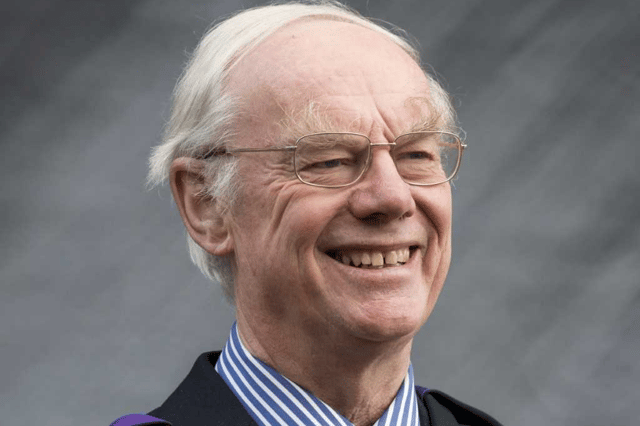

Had I only read the first chapter and conclusion of this book – subtitled “Scotland’s Sacred and Spiritual Waters”, written by the Emeritus Professor of Cultural and Spiritual History at the University of St Andrews, who is also a retired Church of Scotland minister – I would have strongly considered not reviewing it.
The central sections, however, are spry, witty, intriguing and informative. They cover looking for the source of the Clyde (a remarkably contentious proposition); Iona and the role of waters and the sea in saints’ lives; the history of holy wells, especially in the Borders, a “psychogeography” of the River North Esk as a kind of faultline; and Loch Awe and other “holy lochs”, with a number of divagations into such topics as hydroelectric dams, and a finale overlooking Carisaig Bay from the cemetery, and musing on the idea of the “western seas”. There is more to say about all of these, but the overall feel is an Autolycus-style “snapper-up of unconsidered trifles”, linked with a Blakean capacity to “see a world in a grain of sand”. (An aside: every time I re-read that poem the subtlety of it being “a world”, not “the world” staggers me).
I should, however, get my reservations out of the way. The first chapter is mostly about wild swimming. Bradley quotes approvingly from an article in Outdoor Swimmer in response to his lecture on “liquid faith”. I quote: “One of the most striking parallels between outdoor swimming and a traditional church service is the sense of community it fosters… outdoor swimming provides a structured, ritualistic practice that mirror the rhythms of Sunday services… perhaps most significantly, outdoor swimming offers moments of reflection and mindfulness”. Sure, sure: I am always more interested in difference, in quiddities, in the medieval philosopher John Duns Scotus’s “haecceitas”. Put simply, there are similarities between me, Cillian Murphy and Nigel Farage, but I think what makes us different and individual is more important. All the things listed above could as easily be applied to those who regularly visit the cinema, sit in contemplative silence, feel better afterwards and so forth. But the “traditional church service” offers other, more significant things. Morality. A re-magnetising of ourselves to others, even those whom we dislike. A sense of both our failings and our possible redemption. Dunk don’t do dat.
Likewise, the final chapter introduces some rather esoteric individuals from alternative medicine, Masaru Emoto, Paolo Consigli, Viktor Schauberger, Alick Bartholemew. They are united by the idea that water is “alive”. Or more than alive: that water can change its crystallisation by being spoken to with love, that it inspires “those who wish to live in a free, civil, multicultural and multi-ethnic society”, that it has “an almost human-like psyche” (even a soul), that because it moves it has “function and magic” and even proves intelligent design. Watch out privatised water companies, as with all these powers it might take its revenge.
There is a lot to contend with here. Robert Macfarlane’s recent work asked “Is A River Alive?” which is catchier than should a river be granted legal personhood as a means to establish it has rights? After all, McDonald’s, as a corporation, has legal personhood but no body. It can sue for damages. It has protections. The novelist Andrew Crumey opened Mr Mee with the central character wondering if fire was a form of life, since it consumes, replicates, is sparked into being, and dies. (It’s also worshipped, from the Zoroastrians even to Christianity, with the Pentecost “tongues of flame”). But, as I said above, being like is not being the same as. A lot of this reminded me of the scandal around New Scientist publishing the homeopathic theory of “water memory” by Jacques Benveniste, that water could hold a sense of a substance dissolved in it, even when diluted to the extent none remained.
This first chapter, then, and the conclusion, are problematic, and the book would be very much the better without them, especially since Bradley is a genial and intelligent companion. He moves with an aqueous fluency between comparative religion (not restricted to the Abrahamic faiths), a firm grounding in Scottish ethnography and even antiquarianism, and a willingness to entertain contradictory ideas. I was rather touched by his descriptions of mirror-like reservoirs, in stark contrast to Kapka Kassabova’s recent book on the same topic. His tour around six Borders wells is representative. It includes the Virgin Mary, King Arthur, an early example of Walter Scott being used for branding, hydrotherapy sitting alongside pagan hangover healing rituals, JM Barrie and much more. The cerebral enthusiasm is offset by the frequent disappointments, that these wells, whether 19th century industrial or even pre-Christian shrine, are now usually murky, dirty, neglected, forgotten or undrinkable – which seems a wider comment. The book will also appeal to anyone with a yen for the monstrous, as Bradley is clearly fascinated by the idea that a liminal space like a banking or shore allows for the ghostly or supernatural to seep through.
The capaciousness of Bradley’s mind more than dissolved my scepticisms, and I even noted down to acquire a copy of an Anglican priest’s mediation, “The Rock and the River: an encounter between traditional spirituality and modern thought”.
A lot of the writing here from other sources stresses that water is necessary for life: necessary but not sufficient. There’s a great Star Trek episode where they encounter a non-biological lifeform and when they establish communication, realise that we are “ugly giant bags of mostly water”. Mind you, so are melons.
Liquid Faith, by Ian Bradley, Birlinn, £10.99
The Scotsman’s arts newsletter is now sent twice a week - subscribe today
Want the latest Scottish headlines sent directly to your phone? Sign up to our new WhatsApp channel here
Comments
Want to join the conversation? Please or to comment on this article.