
Poetry reviews: Colin Bramwell | Edwin Morgan | Kristján Norge | John Burnside
The work of these four poets demands stillness and reflection, writes Stuart Kelly
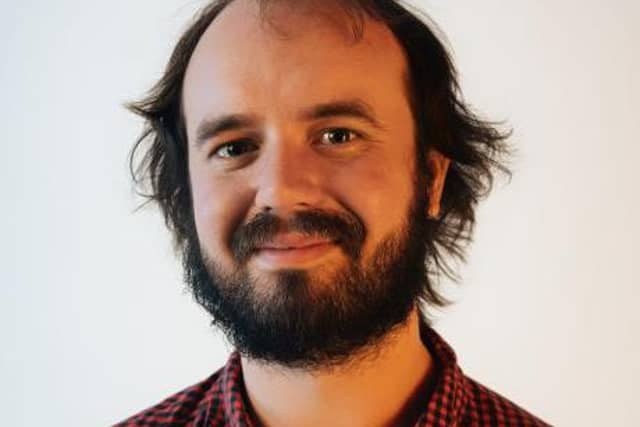

Poetry is a spectrum that ranges from stand-up (John Cooper Clarke to Pam Ayres) to enigmatic (JH Prynne to Denise Riley); or, if you like, from the joke to the epitaph. One wants immediate applause, one asks for patience. These books are keepers, not the flimsy solipsism of the craven mic-drops. Colin Bramwell skewers this in one poem where he is riffing worthy of Berryman or Rich or Kees – “Ach, I’m such a sentimentalist. One day I’ll miss my grey hairs too”, before the comblination of wink and head butt that reminds me of Don Paterson: “‘But it is easier to love what you have never lived through.’ Rupi Kaur said that. Just kidding. It was me again”. I have been through his new book Fetch repeatedly, because it is lyrical, tragic, comical and above all, one can taste the effort: the sonnets from Rome have lines that will stay with me forever: “A soul is mineral wrapped in animal”. I never get that shiver from the me-me-me-ness of the smarmy stand ups.

Bramwell seems in the expansive tradition of Edwin Morgan, and A Home in Space, a collection of Morgan’s more esoteric works – “selected concrete, visual and sound poetry” – is a necessary joy. Although some have been printed before, to see them in the original typewriter form is a wonderful harking back to when innovation did not mean clicking home / font / 14 point. There is a edginess that is in his more well known work; a sense of the glimpse and the overlooked being significant. I was delighted the book included Southfields colour supplement, a treasured possession that I am glad others might enjoy. Some of the works here are eerily prophetic – “Mogadishu under American bombardment”, “Virtual Reality”, “Greenland Abstract”, “Iceland Absract”- they should be republished as “Orange Awful”. The editors, Julie Johnstone and Greg Thomas, should be commended for a book that is as beautiful as it is necessary, and which underlines how the avant-garde – Morgan, Hamilton Finlay, Riddell, Forrest-Thomas, WS Graham – was fundamental to Scottish poetics.

Until The Twilight Falls is the third, and purportedly final work that Kirsten Norrie aka MacGillivray, writes under her Pessoa-esque alter-ego of Kristján Norge. These jottings, etchings, scratchings, notebooks and memoranda of the mythic modernist poet are a puzzle, a joy and an enigma: as poetry ought to be. These supposedly last glimpses have Norge’s mysterious disappearance made more mysterious: has he actually become the pamphlet the reader is holding, his bones staples and his flesh paper? I cannot think of a contemporary Scottish writer more akin to David Jones or Basil Bunting in putting the lyrical and the quizzical together. It is wonderful to read it alongside Morgan’s work, since both itch at the edges of standard publishing.

It is a privilege and a terrible melancholy to read (or re-read in actuality) the Selected Poems of John Burnside. Burnside was his own worst reader; I vividly remember his editor in exasperation saying his first run at a “Selected” was so short – “they’re the only good ones”, he said. He had higher standards than most. Wonderful, and beautifully edited, though the “Selected” is, I rather hope to see the “Collected” or “Complete” at some future date. It is rather striking that the jacket photograph is of a John I never met – he looks edgy at being photographed at all – whereas I remember an almost Tolkien-like presence. In person he was a joy in a way that his personae in poetry is reclusive.
The book is elegantly compiled. The opening poem establishes his tenor: there is a fear of “mere denotation / dimming in the undertow of language”. Throughout the book we see Burnside constantly chafing against language. His work is a constant struggle against the unspeakable, the unsayable, the tip of the tongue-ness of things. I do not mind confessing that the last lines struck me stone dead lachrymose – “last day of weather, lanternlight crossing the yards, / last of those stories our kinfolk used to tell / of woman into fox, fox into deer, / deer into shadow and, always, the darkness-to-come.”
Morgan has something similar: his last words are in an elegy to Dom Sylvester Houédard – “a swirling surely going by”. Bramwell ends “Hearing shite may lead to talking it / but I’m convinced a child was always there” and Norge / Norrie ends with “A standing stone circle: a mistake. The constellation is comprised of standing stones”. I might invent the word “pauseable” – my preference will ayeways be for the work that wants stillness rather than applause; reflection rather than “let’s give it up for” and complexity and ambiguity over the strident and the blathery.
These four books will stay on my shelves. These are not collections where you “get” the poem as if it were a cracker joke or electoral flyer. They are pondersome and therefore human.
Fetch, by Colin Bramwell, And Other Stories, £14.99; A Home in Space by Edwin Morgan, Reaktion Books, £25; Until The Twilight Falls, by Kristján Norge, Dare-Gall Press, £8; Driftwork, by John Burnside, Johnathan Cape, £16
The Scotsman’s arts newsletter is now sent twice a week - subscribe today
Enjoying the Arts & Culture journalism on scotsman.com? Make it easier to find by selecting us as a preferred Google source
Want the latest Scottish headlines sent directly to your phone? Sign up to our new WhatsApp channel here
Comments
Want to join the conversation? Please or to comment on this article.