
Edinburgh Book Festival round-up: Åsne Seierstad | Frank Dikötter | Oliver Bullough
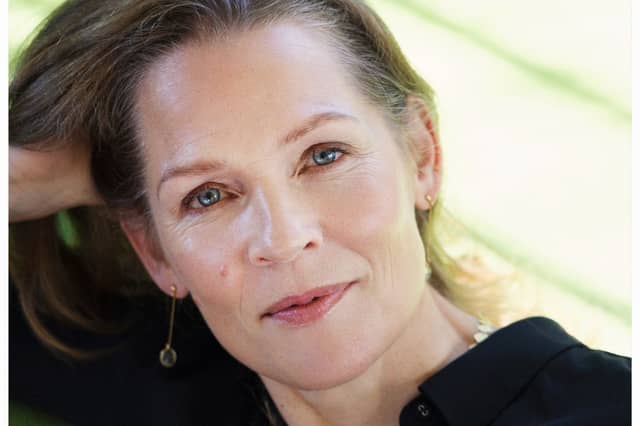

In his latest Book Festival dispatch, David Robinson hears Norwegian journalist Åsne Seierstad's tales of going above and beyond in researching her daring book about a Wagner Group mercenary, Dutch historian Frank Dikötter's talk on the Chinese Communist Party's rise to power and Oliver Bullough’s insights on the murky world of money laundering.
In Russia’s prisons, a 2003 Australian novel called Shantaram is massively popular, possibly because it deals with a jailed heroin-addicted bank robber who escapes and flees to a wonderful new life in India. So when Norwegian journalist Åsne Seierstad asked Andrey Medvedev, a Wagner Group mercenary who had fled across the border from Russia, if she could tell his story, he agreed on one condition: “that it should be as exciting as Shantaram but the reader needs to feel it’s Dostoevsky”.
She had more than a thousand hours of taped interviews with Medvedev, corroborated his stories about front-line fighting in Ukraine with other Wagner mercenaries, and checked them out on Google maps, but it was never enough. She had to go to Siberia, talk to his aunt (“Come in October. We’ve never had a foreigner in our village. Put on an old coat, shut your mouth, and I’ll be your guide”), and visit the orphanage where he spent his childhood.
There, she was struck by two things. In one room, the wall was full of photos of boys who’d been killed in the Ukraine, along with details of how they had died - an odd recruitment tactic, she thought. But watching a school play about the siege of Leningrad, she noted how many of the girls were watching cat videos on their phones instead, so perhaps the propaganda has become tiresome.
Enjoying The Scotsman's coverage of the Edinburgh festivals? For just £2 a month you can get unlimited access to scotsman.com plus 2-for-1 Fringe tickets. For details visit www.scotsman.com/subscriptions
For the last part of her book, launched at the festival, she interviewed some of the few and very brave Russians opposing the war. One of them, Lev Shlosberg, deputy leader of the Yabloko Party, was already under house arrest and awaiting his verdict when she met him. On Monday last week, for calling the war “a bloody game of chess” on a radio show and urging peace negotiations, he was sentenced to 11 years - “not in a prison but in a colony, the kind of place Alexei Navalny was in until he was killed there”.
One of Medvedev’s most bitter and frequent complaints was that he and his Wagner Group comrades were treated as if they were utterly expendable - a tactic which, according to Frank Dikötter, came straight from Mao’s playbook too. In fact, a key theme of his talk about the rise to power of the Chinese Communist Party was how indebted Mao was to Stalin's Soviet Union, both in terms of Marxist theory and military support.
Early on, the party was insignificant - founded a full decade after the bloody revolution of 1911 that toppled the Chinese emperor, and even as late as 1933 it had only 40,000 members in a nation of half a billion people. Without Stalin, he implied, Mao wouldn’t have come to power - the kind of heresy that, as chair Isabel Hilton pointed out, would get you jailed in China for the crime of “historical nihilism”.
China featured heavily in Oliver Bullough’s talk about money laundering, not least because of its heavy restrictions on moving currency out of the country. Worldwide, he said, banks spend $200 billion fighting financial crime “enough, according to the United Nations, to solve world hunger, to provide clean water and sanitation to everyone on Earth, and to have $50 billion left over.”
Even so, he said, they are already completely failing to tackle the ‘dirty money’ problem. But crypto - whose lobbyists are far more powerful than any others in the US - could make things so much worse.
“Basically, it’s privatised money. Normal money is controlled by democratically elected authorities. Crypto isn’t. It belongs to rich people. That license to print money is now going to the crypto guys. There is so much money in crypto that if it gets into our politics, we are doomed.”
The Scotsman’s arts newsletter is now sent twice a week - subscribe today
Enjoying the Arts & Culture journalism on scotsman.com? Make it easier to find by selecting us as a preferred Google source
Want the latest Scottish headlines sent directly to your phone? Sign up to our new WhatsApp channel here
Comments
Want to join the conversation? Please or to comment on this article.