
Edinburgh International Film Festival reviews: Hysteria | Concessions | On the Sea | In Transit
Our film critic Alistair Harkness’ latest round-up of EIFF reviews includes a thought-provoking metatextual piece, a subtle exploration of the artist/muse dynamic, and the late Michael Madsen’s final - and alas, disappointing - film.
Hysteria
★★★★☆
Concessions
★★☆☆☆
On the Sea
★★☆☆☆
In Transit
★★★☆☆
Receiving its UK premiere at this year’s EIFF, the provocative new German film Hysteria kicks off like a horror movie, specifically a found footage movie, even more specifically a Paranormal Activity film.
There are static night vision cameras, sleeping inhabitants and malevolent intruders, only the intruders aren’t spirits and the footage isn’t trying to elicit jump scares. Instead it’s security footage of a racist attack on a family of Turkish immigrants unaware of the fire burning white through the frame as they sleep. Except it’s not that either.
As we cut to an exterior shot of a burning set we realise it’s a recreation of the aforementioned atrocity for a movie based on a real arson attack that took place in Germany in 1993.
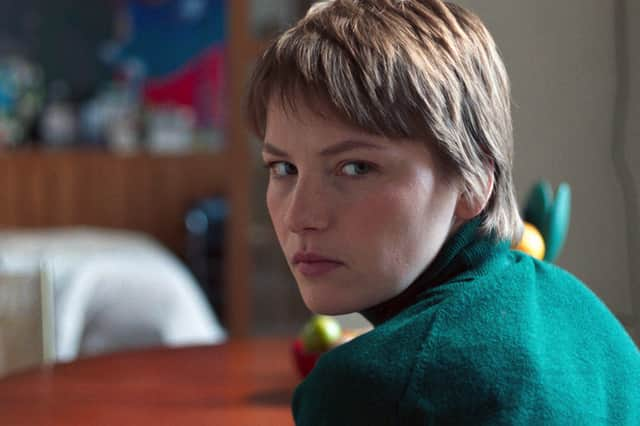

It’s an intriguingly slippery way to start — and indicative of Hysteria’s modus operandi as German writer/director Mehmet Akif Büyükatalay uses the behind-the-scenes conceit to make a film about the racial problems in his home country that also explores the complexities and ethics of making films that allow arthouse audiences to feel better about themselves for engaging with these themes from a safe distance.
The catalyst for all this is the revelation that an actual copy of the Quran has been burned up during the filming of the aforementioned arson attack, an act of desecration that offends the Muslim extras that the film-within-the-film’s Turkish-German director Yigit (Serkan Kaya) has hired to boost his project’s authenticity.
Whether this was a prop gaff or a deliberately incendiary move on Yigit’s part to elicit the performances he’s after is never disclosed, but the fall-out takes on a strange thriller dimension of its own when the footage of the scene subsequently goes missing after the production’s lowly intern Elif (Devrim Lingnau) is tasked with looking after it.
Büyükatalay keeps the focus on Elif initially, drawing us into her sense of panic and ratcheting up the tension as she loses the keys to Yigit’s apartment en route to storing the footage, and then tries to cover up her mistake only to find herself stalked by a stranger who may or may not have some connection to the movie. The film uses this creeping sense of dread to tease out its larger thematic ideas, particularly as we start to learn more about Elif’s own background as the white-passing daughter of a Turkish immigrant.
But just as you’re starting to get a handle on it, Büyükatalay switches gears again, letting the film veer into whodunnit territory with an extended, grimly ironic confrontation scene that may make slightly heavy satirical work of tying everything together, but also cleverly acknowledges the value and limitations of filmmaking when it comes to addressing hot-button issues.
Sadly, the limitations of films about films are unintentionally exposed in another festival title, Concessions, which had its world premiere over the weekend and is one of ten films competing for the Sean Connery Prize for Filmmaking Excellence.
It’s notable mainly, if at all, as the last film of the late Michael Madsen, the Quentin Tarantino regular who broke through in Reservoir Dogs. Here Madsen plays a very Tarantino-lite character, that of a fading Hollywood stunt double called Rex Fuel, who shows up to see a movie he’s worked on at a scheduled-for-closure independent cinema on its final day of business.
Madsen enters the film in a scene lifted directly from Tarantino’s Once Upon a Time in Hollywood, which ends up being less an act of homage than indicative of the depressing reality that this once-mighty actor should have to bow out with a groaning cameo in a fan-boyish movie devoid of a single original idea.
The film isn’t really a Tarantino knock off, though, and, despite its setting, nor is it really a riff on Peter Bogdanovich’s New Hollywood Classic The Last Picture Show. Instead it’s a Kevin Smith tribute, with the plot, structure, character types, story arcs, pop-culture diatribes about Star Wars, even the rhythms and intonations in the actors’ line readings mimicking Smith’s breakthrough movie Clerks so slavishly you start to wonder why Concessions’ 23-year-old writer/director Mas Bouzidi didn’t just use AI and be done with it.
It’s certainly odd that he’d want to subsume his own voice so completely so early in his career — and the film’s pandering celebration of the power of the big screen experience in the age of streaming would have been more convincing had it offered up something new.
Fellow competition nominee On the Sea is also disappointing, a kind of glum, queer-themed unrequited love story that puts a May-December spin on Brokeback Mountain in its regressive plot about a closeted, middle-aged Welsh mussel picker (Barry Ward) who falls for a young, itinerant deckhand (Lorne MacFadyen) in a small village in Anglesey.
Novelist-turned-filmmaker Helen Walsh’s sophomore feature isn’t quite clear about when it’s set; nobody seems to have a smart phone, or even a mobile, but there’s nothing that specifically dates it to a late 20th century setting beyond the uproar homosexuality seems to inspire among the locals and Walsh’s own groaningly obvious juxtaposition of her repressed protagonist hitting a local cruising spot in one scene and then listening to a church sermon about sin (with his wife and son in tow) in the next.
She also piles on the misery, giving Ward’s already tormented Jack a terminal illness diagnosis to add to the tragedy of being gay in a dated movie that doesn’t seem to realise God’s Own Country, Weekend, Passages and All of Us Strangers have shifted the needle in terms of the range and types of stories gay characters can front.
A better version of this story is to be found in yet another competition entry, In Transit, an American indie about an unsure-of-herself 20-something who forms a curious bond with an older, successful female painter who’s visiting her sleepy rural Maine hometown on an artist’s retreat.
Though it’s pretty clear the direction their charged relationship is going to take from the moment Jennifer Ehle’s Ilse asks Alex Sarrigeorgiou’s soon-to-be-unemployed barmaid Lucy to pose for her, the film — which is directed by Jaclyn Bethany from script by Sarrigeorgiou — uses the artist/muse dynamic to subtly explore the rut both women have fallen into in a realistic way without resorting to life-or-death melodrama.
Edinburgh International Film Festival runs until 20 August. For more information and tickets visit: www.edfilmfest.org
Make sure you keep up to date with Arts and Culture news from across Scotland by signing up to our free newsletter here.
Comments
Want to join the conversation? Please or to comment on this article.