
'It keeps her alive in a different way' – filmmakers Louise Lockwood and Sarah Howitt on documentary Bel
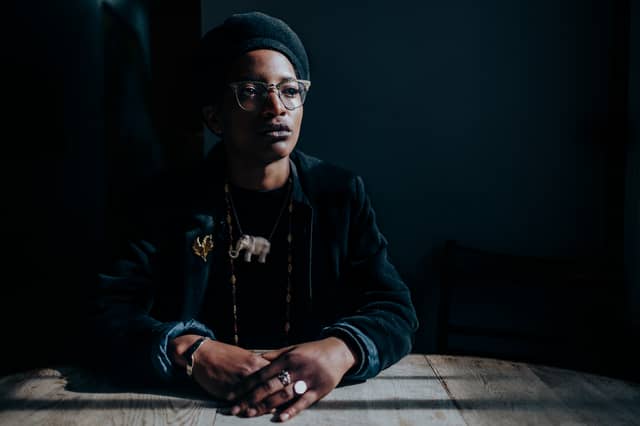

With their Edinburgh Film Festival closing documentary about late musician Beldina Odenyo, director Louise Lockwood and producer Sarah Howitt hope to platform the power of the late Scottish-Kenyan songwriter's work and help ensure that it lives on for generations, they tell Arusa Qureshi.
“I love everything to do with music,” Beldina Odenyo says tenderly in a self-shot video diary which opens the powerful new documentary Bel. “I want to be a musician, to be famous, someone to just show the world my skills and just rock their socks off.”
Throughout the film, it feels as though Odenyo’s voice continually traverses that sacred distance between the living and the dead, giving audiences a chance to encounter the late Scottish-Kenyan musician on her own terms.
Bel, directed by Louise Lockwood and produced by Sarah Howitt, is built around Odenyo’s music, archive footage and the memories of those who knew and loved her. The film traces her life from her early years in Kenya and upbringing in Scotland through to her work as Heir of the Cursed, the musical project through which she developed a distinctive voice marked by raw honesty and striking poetic force.
For Lockwood, the film began with a request from Odenyo’s sister, Leah McAleer. The pair were friends, but Lockwood had never met Odenyo. After Odenyo’s death in 2021, McAleer asked her to create a short film using footage from her sister’s phone for a planned tribute concert.
“I didn't know Bel. I knew of her,” Lockwood recalls. “I knew Leah had an amazing singer songwriter sister, but I had never met her. And then I saw the footage that Leah had given me. I was blown away.”
The footage evidently stayed with her. A year later, when McAleer began work on finishing Tero Buru, the unstaged play that Odenyo had left behind, and also preparing for the posthumous release of her debut album, Lockwood asked a simple question: “Do you want a documentary?”
That conversation eventually became Bel.
Enjoying The Scotsman's coverage of the Edinburgh festivals? For just £2 a month you can get unlimited access to scotsman.com plus 2-for-1 Fringe tickets. For details visit www.scotsman.com/subscriptions
The film is a deeply personal collaboration. McAleer appears not only as Odenyo’s sister but as one of the people helping to preserve and share her story. Howitt, meanwhile, brought her own experience of losing her mother to suicide to the project.
“For me, it was an important subject to get right,” Howitt says. “But also Lou obviously understood that having someone that had my lived experience on board might help matters.”
The result is a film shaped by the tension between intimacy and responsibility. Odenyo cannot tell her own story in the present, but her voice remains everywhere: in songs, recordings, notebooks, archive footage and the recollections of people whose lives she touched.
For McAleer, that was one of the film’s greatest strengths. She had always imagined gathering stories from the people who knew her sister, but had never known where to begin.
“I'd always had this fantasy of being able to go out and speak to everyone that knew her and gather all these stories,” she says. The film made that possible, allowing the filmmakers to meet people McAleer might otherwise never have encountered and to “hear all those different perspectives on who she was.”

At the centre of Bel is Odenyo’s music. Rather than using the songs simply as a soundtrack, Lockwood structures the film around them. The lyrics become a form of narration, allowing Odenyo to tell her own story through the work she left behind.
“She told it through her lyrics,” Lockwood says. “We didn't have her here, but we had what she'd left, which were incredible songs. So we used that as the spine of the film.”
The documentary moves through Odenyo’s life track by track, although not necessarily in the order in which the songs were written. That structure reflects the breadth of her musical evolution. The Heir of the Cursed material represents only the final three years of her life, while the film reaches further back, incorporating songs Odenyo recorded as a teenager.
“The film is looking at her whole life and her whole musical journey – it seems really important and beautiful that even that early voice of teenage Bel is heard there,” McAleer says. “The album is the songs that she recorded as Heir of the Cursed, but the film is her longer musical journey.”
The film also travels to Kenya, where Odenyo spent her early years. For McAleer, returning there was an emotional act of connection. She had travelled to Kenya for her sister’s funeral during the pandemic, when international travel was uncertain and COVID restrictions shaped the experience. Returning with Odenyo’s completed album, the film offered a different kind of journey.
“It felt like such a huge thing to be able to go back with her album, with her music, and just complete that,” McAleer says. “And take my children there and show them that part of their history.”
For Lockwood, Kenya was essential to understanding the person Odenyo was.
“Being Kenyan was a big part of Bel's identity,” she says. “She was really proud and owned being from Kenya, and it formed a big part of her.”
“We felt we understood a little more about her life by going there, and therefore so would our audience I hope,” Howitt adds.
That sense of place is matched by the film’s commitment to Odenyo’s own words. Yet telling the story of someone who has died, particularly someone who died by suicide, brought difficult questions for the filmmakers.
“Whose right is it to tell this story, and whose story is it, and whose words are they?” Lockwood asks.
The question became part of the filmmaking process itself. Every line had to be considered: was it testimony from an interview, a lyric Odenyo had written, or something from a notebook? How should the filmmakers interpret words created at a particular point in Odenyo’s life?
“You're navigating that because it's always all of our perspectives,” Lockwood says. “Bel didn't make her own film, but you kind of hope if you have that turned on in your head, you can assess that on a thought by thought and sentence by sentence basis.”
For McAleer, the power of Odenyo’s work lies in its honesty. She describes her sister as possessing not only an extraordinary voice but a rare ability to express difficult experiences with both truth and beauty.
“There’s so much truth in the music that she made, the lyrics that she wrote, and the way she sang them,” McAleer says. “I think when you saw her play live, it was captivating. It was instantly captivating.”
For Howitt, who had never met Odenyo, the film has a central purpose, dictated by the simple feeling that this is a talent that deserved to be heard by a much wider audience.
“We need to get her out there,” she says. “She deserves a bigger audience than she had.”
Bel arrives with that ambition at its heart. The filmmakers are not attempting to reduce Odenyo to a single narrative, or to suggest that a 90-minute film can contain an entire person. Rather, they are offering a portrait assembled from songs, stories, and reflections.
“It’s impossible, you cannot distil a person down to a 90-minute film,” McAleer says. “You just can't.” What the film can do, however, is create a space in which Odenyo’s work continues to live.
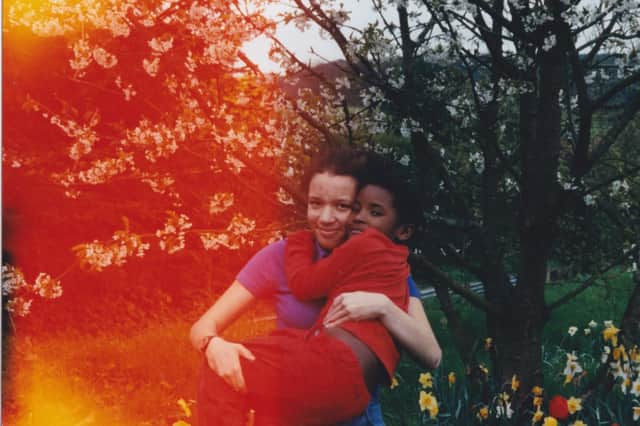
The documentary premieres at the Edinburgh International Film Festival, followed by a short cinematic tour and a broadcast on the BBC later this year. For McAleer, the hope is that the film will ensure Odenyo’s music continues to travel beyond the film itself – that her songs will be played, shared and passed on.
“I really want them to be heard and to be sung and to be part of the Scottish folk tradition at some point,” she says. “That would be really lovely, if you could sing the songs with your friends and share them with your children and pass them on so they exist forever more.”
“Share her,” Lockwood adds, when asked how Odenyo’s legacy might be preserved. “And keep talking about her,” Howitt continues. “Which keeps her alive in a different way.”
And that is what Bel sets out to do. To share the artist, the sister, the friend and the musician. To bring a voice that was cut short into new rooms and to new ears. And ultimately, to let the songs continue on their long and hopefully prolific journey.
Bel screens at the Edinburgh International Film Festival on Wed 19 August, at the Cameo, 9pm; Filmhouse, 9.30pm; and Cineworld, 10pm. www.edfilmfest.org
The Scotsman’s arts newsletter is now sent twice a week - subscribe today
Enjoying the Arts & Culture journalism on scotsman.com? Make it easier to find by selecting us as a preferred Google source
Want the latest Scottish headlines sent directly to your phone? Sign up to our new WhatsApp channel here
Comments
Want to join the conversation? Please or to comment on this article.