
From Scorsese to Spielberg trail-blazing film producer and festival director Lynda Myles has met them all in a 50 year career honoured by BAFTA Scotland this month
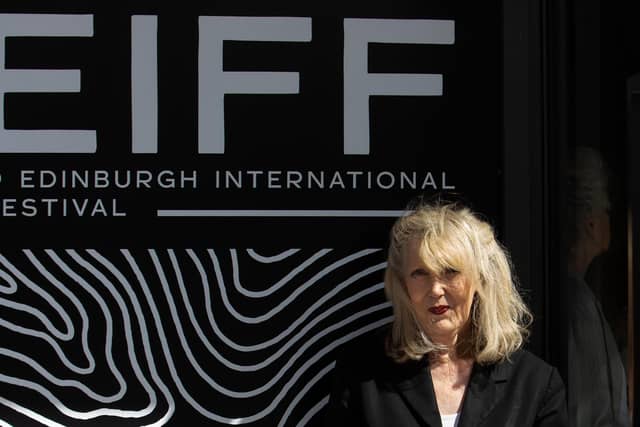

Lynda Myles, ground-breaking film producer, curator, writer and former Director of the Edinburgh International Film Festival will be presented with a BAFTA Scotland Outstanding Contribution to Film Award at this year’s Edinburgh International Film Festival. She gives us her list of the top ten films that mean the most to her
Lynda Myles, ground-breaking film producer, curator, writer and former Director of the Edinburgh International Film Festival will be presented with a BAFTA Scotland Outstanding Contribution to Film Award at this year’s Edinburgh International Film Festival.
The first female director of the EIFF, she is also the producer of The Commitments, which won the BAFTA for Best Film in 1991, Defence of the Realm, The Snapper (winner of inter alia, the Premio Goya and the Prix Italia) and The Van, both directed by Stephen Frears, When Brendan Met Trudy written by Roddy Doyle and Chen Kaige's Killing Me Softly.
Arbroath-born Myles transformed the Festival when she became Director in 1973 - the first woman ever appointed as director of a film festival anywhere in the world - she championed the work of overlooked directors including Alfred Hitchcock, Douglas Sirk, Raoul Walsh and Sam Fuller and women film-makers. She went on to become Director and Curator of Film at the Pacific Film Archive at the University of California, Berkeley, and Senior Vice–President at Columbia Pictures, Commissioning Editor for Drama at the BBC, Co-executive director of the East-West Producers' Seminar (the first training program for young producers in Eastern Europe) and Head of Fiction at The National Film and Television School in 2004, always championing new talent.

The Edinburgh International Film Festival will take place in venues across the city from 15–21 August 2024, www.edfilmfest.org
I KNOW WHERE I’M GOING, 1945, MICHAEL POWELL and Emeric Pressburger
One of the things I love about it is Michael Powell loved Scotland and had such a knowledge of it. I’ve never been interested in realism and what I like about this is there’s a sort of mythical, supernatural element to Scotland which he captures. And it’s about desire. I could have chosen three movies by him and Pressburger - The Red Shoes or Black Narcissus - but because it’s Mull, this has a special resonance.
OUT OF THE PAST, 1947, JACQUES TOURNEUR
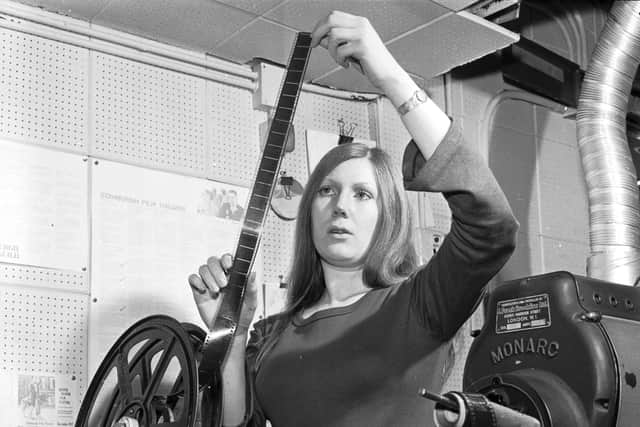
I love film noir and think it’s the greatest example. It stars Robert Mitchum, Jane Greer and Kirk Douglas and is a very bleak story of betrayal and treachery. It’s wonderful. When we started the Film Festival we thought we should have a major retrospective of a forgotten maverick American director and did Tourneur. We invited him and he was quite elderly then and wrote me the saddest letter saying ‘I’m sorry it’s too late’ which sort of broke my heart.
THE SEARCHERS, 1956, JOHN FORD.
Magnificent use of landscape and radical. John Wayne is a character consumed by hate which propels him on a ten year journey. In terms of psychopathology it’s about a man torn apart by his need for revenge. Also it looks absolutely wonderful and has moments of comedy. I think it’s Wayne’s best performance and is one of the key John Ford films.
4. WRITTEN ON THE WIND, 1956, DOUGLAS SIRK
Written On The Wind is the ultimate melodrama. It’s really about sexual frustration. It looks unbelievable. Rock Hudson, Lauren Bacall, Robert Stack and Dorothy Malone and it’s about a Texas oil family.
In 1972 we did the first big Douglas Sirk retrospective at the Edinburgh Film Festival and published a book which was co-edited by Laura Mulvey and John Halliday.
Douglas was Danish but brought up in Germany and a leading theatre director, but it was shut down by the Nazis and he started making movies. He was living with an actress who was Jewish and his first wife was an arch Nazi who managed to get an injunction to prevent him seeing their son who became the leading child actor in propaganda films. Escaping to the States, he made the most fantastic, powerful melodramas, superficially about Fifties culture where everything’s sunny, but actually he just rips the society apart.
The last film Douglas made in Hollywood was called Imitation of Life, and it made more money for Columbia than any other film in their history.
He was an extremely sophisticated intellectual and knew exactly what he was doing. His films were dismissed as female ‘weepies’ and of no cultural significance, and that was one of the barriers that we were trying to break down with a retrospective. Douglas and Hilde came to Edinburgh and we showed everything available and he had such a good time they came back the next year.
He was a European intellectual who went to Hollywood and took on the studio system and undermined it. This was not a hymn to American suburban life, it was exposing what lay beneath it.
5. VERTIGO, 1958, Alfred Hitchcock
Again a film about obsession. As with Written on the Wind you get two great leading men of American cinema, John Wayne and James Stewart, playing men being destroyed by obsession. But they’re very different. Jimmy Stewart had played quite complex men but nothing as extreme as Vertigo, a man completely taken over by it.
When I lived in Berkeley, with a journalist friend I spent weeks trying to find every location in San Francisco that Hitchcock used for Vertigo and we wrote a psycho geographic piece for a San Francisco magazine. It’s probably James Stewart’s greatest performance, arguably Hitchcock’s greatest film, and I could watch it a million times. Again, psychoanalytically fulfilling.
6. PIERROT LE FOU 1965, Jean-Luc Godard
For me Godard is like Bob Dylan, constantly evolving and I can track my growing up through a Dylan song or Godard movie. Basically Godard for me is god. This is the most emotional film he made, what he called a film about the last romantic couple. Just glorious, Jean-Paul Belmondo is wonderful, Anna Karina is the most dazzling screen presence ever and again, another film about treachery and betrayal.
7. The Samurai, 1967, Jean-Pierre Melville
Melville is kind of the father of the Nouvelle Vague. A French director, he had been part of the Resistance during the war, had his own film studio and was fiercely independent.
It stars Alain Delon, the most beautiful man in cinema ever, and is probably his greatest performance. It had a huge influence on other directors and is a story about a hit man played by Delon. It’s virtually an avant garde film, there’s virtually no dialogue, and it’s become the model for every other hit man film made since. An absolutely dazzling film and a key figure in French cinema.
8. Mean Streets, 1973
This has more personal relevance because I was introduced to Martin Scorcese at Cannes in 73 or 74. He’d only made about three films but I decided to do a tribute and he came to Edinburgh and we had a fascinating time. He’s a ball of energy and ideas and fantastically well-informed, knows cinema backwards, fantastic on music. We had a print of Mean Streets which we watched endlessly. When I hear The Ronettes starting ‘Be My Baby’ I’m in a state of bliss.
Because we got to know Marty, Brian De Palma came the next year and he introduced me to Speilberg in New York and what interested me about that generation was that Marty, Brian De Palma, Frances Coppola, George Lucas, John Milius and Steven Spielberg were the first generation of directors to have gone to film school. With former Scotsman journalist Michael Pye I wrote Movie Brats: How the Film Generation Took Over Hollywood and got obsessed with that generation. I got to know Coppola later because when I went to the Pacific Film Archive in Berkeley he’d lend me prints and had a beautiful house in Pacific Heights and allowed us to use his cinema for fundraisers. That whole generation is very important to me.
9. The American Friend, 1977 Wim Wenders
We started showing Wim Wenders’ student films way back and I met him in the early 70s. We had a huge number of German directors come to the festival. The thing about Wim and Herzog and Fassbender, is the films were always changing.
I had a very minor role in Paris, Texas and the producer sent me the initial outline he’d written with Sam Shepherd and I took it to Channel 4 and they got involved in financing it.
The American Friend, adapted from Highsmith’s 1974 novel Ripley’s Game, along with Plein Soleil (Purple Noon), are the two great films based on Highsmith’s novels.
And Wim does so much for the European industry, apart from being quite prolific - he’s spent a lot of the time on the politics and keeping the European industry going, and I loved the last film, Perfect Days.
10. La Chimera 2023, Alice Rohrwacher
I thought I should have a film made this century, and one I love is La Chimera by Swiss Italian director Alice Rohrwacher, starring Josh O’Connor as a shambolic renegade archaeologist tied up with a group of Etruscan tomb robbers. He has an ability to know where treasures are buried but is a tormented soul obsessed with the memory of his lost love.
Again, it’s about obsession and death, and operates at so many levels. Rohrwacher deals with it in such a light way that the film is endlessly entertaining. It just takes my breath away. She’s one of the ones to watch for the future.
WHAT ABOUT ONE THE FILMS YOU’VE PRODUCED?
Well I loved working with Roddy Doyle, it was fantastic, a very great friendship. The one I feel most strongly about is Defence of the Realm because the first film you produce is like a first love affair. There will be others but there’s something about the first film. It’s great because you don’t know what can go wrong. Now producing I find a nightmare because you’re so aware of everything that can go wrong.
That film had a great crew, shot by Roger Deakins, and I think it holds up. We tried about four years ago to make an updated version and Gabriel and Greta were going to play cameos in it but we just couldn’t get the script right. I find I enjoy watching Defence still, fantastic crew… I had the most wonderful Scottish lot - Robbie Coltrane (who had been my driver at one point at the Film Festival) but also Bill Paterson, Fulton Mackay and Ian Bannen and you can’t get much better than that, all fantastic, and the wonderful Denholm Elliott, who won BAFTA best supporting actor for the film.
The Snapper is a much loved film, and obviously The Commitments, but Defence has a kind of special place and I’m very grateful because I got to work with David Putnam. I was supposed to find the greatest love story ever and talked to 60 or 70 writers. I think the great love stories, like Tolstoy’s Anna Karenina, you need incredible forces keeping people apart and that’s hard to generate these days, and I found David had optioned an early draft of Defence of the Realm which I looked up one night when I was waiting to see him. He said ‘if you like this so much why don’t you do it?’ The only thing I’d ever produced was Sean Connory’s Edinburgh which is on a very different scale. It’s hard to get finance and it fell through at one point and we had to reconstruct, but huge thanks to David because I learnt so much from working with him. And it was fantastic that he just trusted me. Without him the film wouldn’t have happened, so I owe him a great deal.
THESE FILMS HAVE OBSESSION IN COMMON, WHY ARE YOU OBSESSED WITH OBSESSION AND WHAT’S YOUR OBSESSION.
It’s cinema, that’s my only real obsession. Oh and politics to a certain extent, but really just cinema.
I like the intensity of all these films, all these obsessional movies. I’m very interested in psychoanalysis and film noir essentially - out of the past. So much is the return of the repressed, at one level or another, of the past. But it’s that intensity. What I don’t like is tepid cinema. I hate polite cinema.
I think with all of these films, there is a kind of message. They all go beyond normal kind of cinematic realism. There’s a strong metaphysical element in almost all of these and also, all of them shift cinema in some way, for example The Samurai is classic, because it’s a neo-noir at one level but it’s almost an avant garde movie because it’s so abstract. I mean Delon says about three words in the film. Apparently he met Melville to discuss it and Delon said to him ‘you’ve gone through the first seven pages of script and I haven’t said anything, I’ll do the film’.
It was funny thinking about what connects them but there’s something about obsession, and metaphysical elements and none of them are very talky - well Mean Streets has got quite a lot of chat - but they’re on the whole slightly spare.
THERE ARE TWO DOCUMENTARIES ABOUT YOU, The Lynda Myles Project by filmmaker and university lecturer Susan Kemp and filmmaker and former Director of the Edinburgh International Film Festival Mark Cousins, AND YOUR CHILDHOOD IN ARBROATH IS MENTIONED, INCLUDING THE DEATH OF YOUR SISTER AS A CHILD. DID THAT HAVE AN EFFECT ON HOW YOU SEE THE WORLD AND THEREFORE FILMS AND FILM-MAKING?
I’m not saying I had a grim Dickensian childhood at all, but the weekly trips to the grave at the cemetery went on for a long time. On the other hand I had a lot of walks with my father along the coast around Arbroath and to Auchmithie which I loved.
I think one of the things is my parents had got married in ‘38, they had my sister in ‘39 and my father was in India in the army for I think the whole of the war and he came back on a Red Cross ship in 1946 so my mother was on her own - she had no family - for the whole of the war with my sister who was very, very ill all of the time, so the intensity of that… I don’t think parents get over the death of children but I think it was particularly hard for her.
BUT THERE ARE A LOT OF LIGHTHEARTED ELEMENTS IN YOUR FILMS OF CHOICE TOO.
Yes, I don’t want relentless intensity.
WHAT’S THE NEXT FILM YOU’RE LOOKING FORWARD TO SEEING?
There’s a new film by Nuri Bilge Ceylan, the Turkish director. And I’m looking forward to the [Edinburgh] Film Festival. I’m very optimistic about the Film Festival. It’s phoenix from the ashes and there’s a new sort of energy. Paul Ridd is very good news and there’s Andrew Macdonald, who produced Trainspotting and many other films and is also grandson of Emeric Pressburger and this Sean Connery Foundation big cash award of £25,000 for a young director, it’s back at The Cameo cinema, and it’s in August again, where it belongs since 1947. So I think it’s the kind of radical new energy the Film Festival needed. I think it’s in very good hands and I’m optimistic. I hope it all works out.
WHAT ABOUT ONE OF THE FILMS YOU’VE PRODUCED?
Well I loved working with Roddy Doyle, it was fantastic, a very great friendship. The one I feel most strongly about is Defence of the Realm because the first film you produce is like a first love affair. There will be others but there’s something about the first film. It’s great because you don’t know what can go wrong. Now producing I find a nightmare because you’re so aware of everything that can go wrong.
That film had a great crew, shot by Roger Deakins, and I think it holds up. We tried about four years ago to make an updated version and Gabriel and Greta were going to play cameos in it but we just couldn’t get the script right. I find I enjoy watching Defence still, fantastic crew… I had the most wonderful Scottish lot - Robbie Coltrane (who had been my driver at one point at the Film Festival) but also Bill Paterson, Fulton Mackay and Ian Bannen and you can’t get much better than that, all fantastic, and the wonderful Denholm Elliott, who won BAFTA best supporting actor for the film.
The Snapper is a much loved film, and obviously The Commitments, but Defence has a kind of special place and I’m very grateful because I got to work with David Putnam. I was supposed to find the greatest love story ever and talked to 60 or 70 writers. I think the great love stories, like Tolstoy’s Anna Karenina, you need incredible forces keeping people apart and that’s hard to generate these days, and I found David had optioned an early draft of Defence of the Realm which I looked up one night when I was waiting to see him. He said ‘if you like this so much why don’t you do it?’ The only thing I’d ever produced was Sean Connory’s Edinburgh which is on a very different scale. It’s hard to get finance and it fell through at one point and we had to reconstruct, but huge thanks to David because I learnt so much from working with him. And it was fantastic that he just trusted me. Without him the film wouldn’t have happened, so I owe him a great deal.
THESE FILMS HAVE OBSESSION IN COMMON, WHY ARE YOU OBSESSED WITH OBSESSION AND WHAT’S YOUR OBSESSION.
It’s cinema, that’s my only real obsession. Oh and politics to a certain extent, but really just cinema.
I like the intensity of all these films, all these obsessional movies. I’m very interested in psychoanalysis and film noir essentially - out of the past. So much is the return of the repressed, at one level or another, of the past. But it’s that intensity. What I don’t like is tepid cinema. I hate polite cinema.
I think with all of these films, there is a kind of message. They all go beyond normal kind of cinematic realism. There’s a strong metaphysical element in almost all of these and also, all of them shift cinema in some way, for example The Samurai is classic, because it’s a neo-noir at one level but it’s almost an avant garde movie because it’s so abstract. I mean Delon says about three words in the film. Apparently he met Melville to discuss it and Delon said to him ‘you’ve gone through the first seven pages of script and I haven’t said anything, I’ll do the film’.
It was funny thinking about what connects them but there’s something about obsession, and metaphysical elements and none of them are very talky - well Mean Streets has got quite a lot of chat - but they’re on the whole slightly spare.
THERE ARE TWO DOCUMENTARIES ABOUT YOU, THE LYNDA MYLES PROJECT BY FILMMAKER AND UNIVERSITY LECTURER SUSAN KEMP AND FILMMAKER AND FORMER DIRECTOR OF THE EDINBURGH INTERNATIONAL FILM FESTIVAL MARK COUSINS, AND YOUR CHILDHOOD IN ARBROATH IS MENTIONED, INCLUDING THE DEATH OF YOUR SISTER AS A CHILD. DID THAT HAVE AN EFFECT ON HOW YOU SEE THE WORLD AND THEREFORE FILMS AND FILM-MAKING?
I’m not saying I had a grim Dickensian childhood at all, but the weekly trips to the grave at the cemetery went on for a long time. On the other hand I had a lot of walks with my father along the coast around Arbroath and to Auchmithie which I loved.
I think one of the things is my parents had got married in ‘38, they had my sister in ‘39 and my father was in India in the army for I think the whole of the war and he came back on a Red Cross ship in 1946 so my mother was on her own - she had no family - for the whole of the war with my sister who was very, very ill all of the time, so the intensity of that… I don’t think parents get over the death of children but I think it was particularly hard for her.
BUT THERE ARE A LOT OF LIGHTHEARTED ELEMENTS IN YOUR FILMS OF CHOICE TOO.
Yes, I don’t want relentless intensity.
WHAT’S THE NEXT FILM YOU’RE LOOKING FORWARD TO SEEING?
There’s a new film by Nuri Bilge Ceylan, the Turkish director. And I’m looking forward to the [Edinburgh International] Film Festival. I’m very optimistic about the Film Festival. It’s phoenix from the ashes and there’s a new sort of energy. Paul Ridd is very good news and there’s Andrew Macdonald, who produced Trainspotting and many other films and is also grandson of Emeric Pressburger and this Sean Connery Foundation big cash award of £25,000 for a young director, it’s back at The Cameo cinema, and it’s in August again, where it belongs since 1947. So I think it’s the kind of radical new energy the Film Festival needed. I think it’s in very good hands and I’m optimistic. I hope it all works out.
Comments
Want to join the conversation? Please or to comment on this article.