
Do we really need a Pride and Prejudice Netflix series? Why I feel as distrustful as Mr Darcy at the thought


Netflix may have many successes under its belt, but a good Austen adaptation isn’t among them.
Upon hearing the news that a Pride and Prejudice series is in development at Netflix, exactly one quote from the novel sprung to mind: “My good opinion once lost is lost forever.”
Said by Mr Darcy early in the novel during a discussion with Elizabeth regarding character flaws and faults (of which we all have all have many), I can fully acknowledge that after Netflix’s absolutely awful Persuasion film starring Dakota Johnson that this is a hill I’m ready to die on.
Or is it?
I don’t want to fall into the same trap as our beloved Lizzy Bennet by allowing my prejudices to get in the way of any possible enjoyment, but I can’t help but be wary.
There were three Pride and Prejudice adaptations announced this week. The first was the BBC’s ten part series The Other Bennet Sister, which focuses on the often overlooked Mary Bennet. The second was from Netflix who are in early development stages of film Pride, a modern retelling of the classic based on the 2018 young adult novel by Haitian American author Ibi Zoboi.
The third was, of course, Netflix’s Pride and Prejudice series which appears to be a straight adaptation with Dolly Alderton attached as writer.
Pride and Prejudice is probably my favourite work of fiction, ever
When I say I love Pride and Prejudice, I really love Pride and Prejudice. It is probably my favourite book of all time and Jane Austen’s writing was my gateway into reading classics.
I’m not particularly fussy in how I enjoy Pride and Prejudice either. I recently re-read it and have been known to pop on the audiobook instead of music while cleaning.

I think I’ve watched the 2005 film with Kiera Knightley and Matthew McFayden at least four times this year already. If that wasn’t sad enough, I also watch the 1995 miniseries starring Jennifer Ehle and Colin Firth in its entirety every time my partner is away for work. (He has been away on six work trips in 2024.)
Like I said, I’m not fussy.
It is a truth universally acknowledged, however, that adaptations are not made equal.
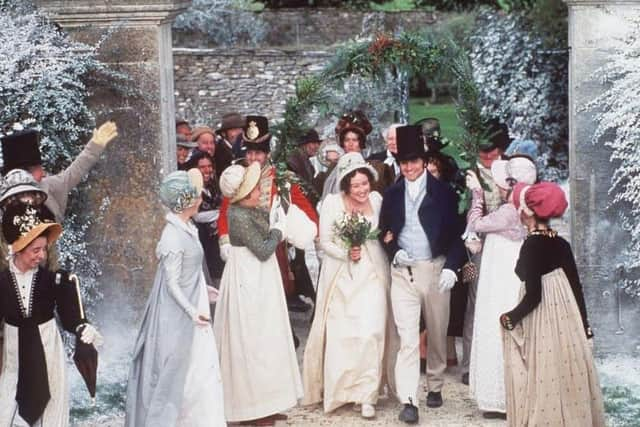
My favourite, and in my opinion the best, Pride and Prejudice adaptation is the 1995 miniseries. The 2005 film comes close, especially considering it has far less time to play with, but I enjoy both Firth and Ehle’s interpretations of the characters just that bit more.
My least favourite – even though I am still fond of it – is the 1940 adaptation starring Greer Garson and Laurence Olivier who can’t quite save it from being out of touch with Austen’s source material.
There’s one adaptation which I would recommend over the 1940 film which I feel isn’t recognised enough: The Lizzy Bennet Diaries. A 2012 web series, it is able to remain mostly true to Austen’s original Pride and Prejudice despite reimagining Elizabeth as a university student who starts her own vlog to document her life.

Then there’s also those such as the 1980 BBC series, Pride and Prejudice and Zombies – which is its own beast altogether – even Death Comes to Pemberley. Anyway, you get the point; there’s good and bad regardless of medium.
Why I’m automatically nervous for a Netflix Pride and Prejudice series
All we know so far about the possible Netflix Pride and Prejudice series is that it is supposedly in development, meaning it has yet to be greenlit.
So there is no cast attached and we don’t know much of anything, really.
What we do know, however, is that Dolly Alderton is attached to write the scripts which very well could be its saving grace.
Perhaps better known for her memoir Everything I Know About Love or novels Ghosts and Good Material, Alderton is an award winning author who was previously an agony aunt for the Sunday Times, with many of her responses having been compiled into the book Dear Dolly.

In addition, her other credits include working as a script assistant on shows such as Fresh Meat and Peep Show as well as her first role which was as Story Producer for Made in Chelsea.
Now, I was aware of Alderton’s work as an author but upon learning about her time working in reality shows, I became intrigued.
Already Alderton has proven her insight into the human condition, from her deeply personal reflections to her advice columns. Her writing is often described as deeply honest; a quality I feel she shares with Austen.
Pride and Prejudice is a romance, yes. But it’s more than that too. Austen writes with passion about people; the good and the bad. In doing so, regardless of the time period and society she lived within, her keen ability to see to the heart of humanity allows her characters to truly come to life – warts and all – which makes her work so enduring.
It’s also why Alderton feels like a perfect fit. In theory, anyway.
I will never forgive Netflix for Persuasion
People like to joke that Dakota Johnson looks like she knows what an iPhone is and that’s why she should never be in a period drama.
But quite frankly, that is the absolute least of the problems with Netflix’s Persuasion adaptation.
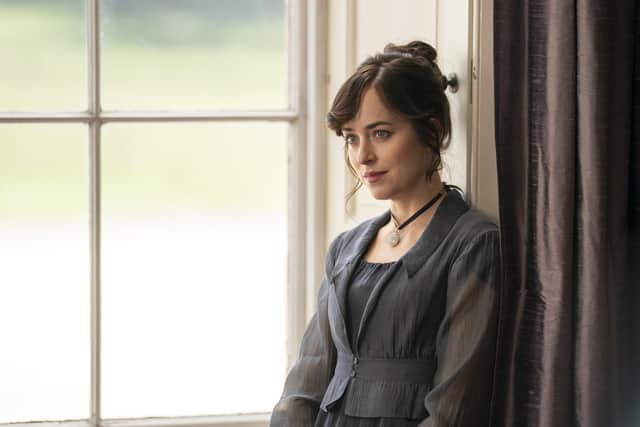
A heartfelt tale of love, regret and second chances, Persuasion was Austen’s last complete novel. Published posthumously, it follows 27-year-old Anne Elliot (Johnson) as her past love, Captain Frederick Wentworth (Cosmo Jarvis) comes back into her life years after she was persuaded by her family not to marry him.
Unlike Pride and Prejudice, it is notable for featuring one of Austen’s most mature protagonists – something which you can feel woven through the text.
If I were to use a modern trope to describe Persuasion it would be “second chance romance”. While it doesn’t quite encompass what the novel is about as a whole, it is a relatively inoffensive way to interpret – and market – a Jane Austen novel for younger audiences.
What is offensive in its attempts to appeal to a new generation, however, is the Netflix film. Its tagline acknowledges Persuasion as a “timeless” love story, yet the actual film struggles to live up to those expectations.
It feels entirely too modern with its wannabe-Fleabag fourth wall breaking, references to Anne drinking wine and moping, with one particular aside even referring to a “playlist” Wentworth made for her tucked among various post-break up items.
Aside from that particular line – which somehow manages to date a period drama – the filmmakers couldn’t decide if they wanted to be silly or serious, resulting in a big fat mess.
It’s pretty enough, for sure. Technically competent with a sweeping period score and solid performances from the cast (Cosmo Jarvis’ Wentworth was perhaps my favourite part of the film). But what truly makes it such a colossal disappointment is its complete lack of understanding – and, at times, respect – for its source material.
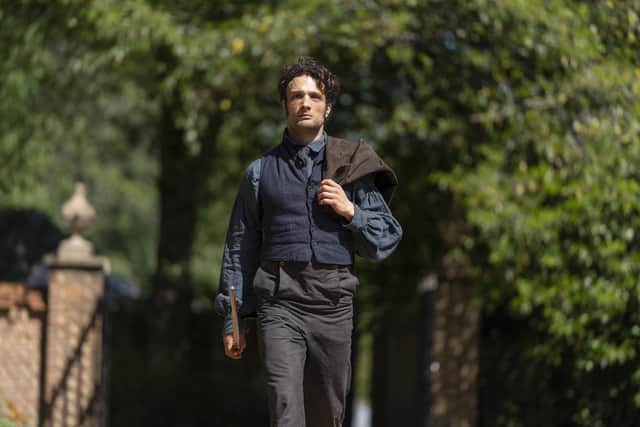
Like Elizabeth Bennet before her, Anne Elliot is a fully fleshed out and captivating character. A retiring flower no longer in bloom and muted because of heartache, she couldn’t be more different to the headstrong Lizzy, who completely refused to marry a man despite her mother demanding she do so.
Meanwhile, Anne listened to her family’s advice on marriage and lost out on love, spending years haunted by regrets.
It doesn’t make Anne a boring character; it makes her complex, nuanced and a symbol of Austen’s own maturing writing style.
One popular quote from Persuasion appears in chapter eight as Captain Wentworth and Anne’s encounters increase, the author describes all the ways their previously tight knit relationship unravelled.
...there could have been no two hearts so open, no tastes so similar, no feelings so in unison, no countenances so beloved. Now they were as strangers; nay, worse than strangers, for they could never become acquainted. It was a perpetual estrangement.”
For those who haven’t seen the film, I’m sure you’re now wondering how Netflix’s Persuasion recreated such an evocative passage.
Breaking the fourth wall, Johnson’s Anne sits by the window lamenting her past relationship.
She tells the audience: “A heartbeat ago, there were no two souls more in rhythm than Wentworth and I. Now we’re strangers. Worse than strangers. We’re exes.”
What’s worse is that later in the film they, unfortunately, revisit this line.
Now we’re worse than exes. We’re friends.”
Again, I remind you of the film’s tagline: “Based on the timeless love story by Jane Austen.” Oh the irony.
Do we need another Pride and Prejudice adaptation?
I love Pride and Prejudice. I love reading it, watching it, listening to it. I love losing myself in the world that Austen crafted.
But as much as I always return to it, do I think we need another Pride and Prejudice adaptation? Not really.
I’m not surprised that an adaptation has been announced, nor am I shocked that there are two more unique adaptations in the works. The timeless nature of Pride and Prejudice inspires creativity.
It’s one of the reasons why I don’t think adaptations need to be word for word recreations of the source material to be considered faithful.
However, if you are looking to adapt this particular Austen novel in the form of a period drama faithfully, you should probably be aiming for a perfect hybrid between the 1995 miniseries and the 2005 film.
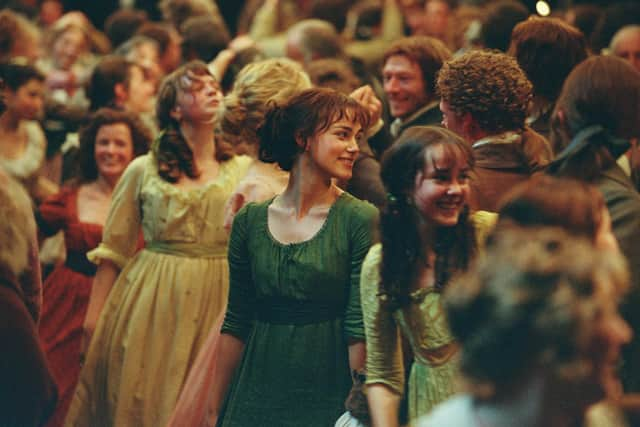
They both have their good points. Of course the story and the characters portrayed in the BBC miniseries are better developed and fully fleshed out – there’s time for that when you’ve got six hours. Lizzy and Darcy here feel as though they have stepped out of the pages of the book. But the 2005 film is definitely better cinematically and it, perhaps, does a better job of capturing the romance at the heart of Pride and Prejudice.
At the end of the day they’re not flawless and they don’t need to be. I don’t think we need another adaptation when we already have such strong contenders.
That being said, I wouldn’t exactly be mad at being able to enjoy Pride and Prejudice through a new lens - as long as it is not the same one that Netflix used for Persuasion.
I have my reservations for that reason, but when you consider Dolly Alderton’s involvement it becomes a far more intriguing prospect.
I do hope that if the series comes to fruition that I am humbled, much like Mr Darcy was. If not, I will treat it as though it’s Mr Collins at the dinner table. Uninspiring and unwelcome but ultimately harmless.
I will bring this full circle by quoting Mr Darcy once more: “I have faults enough, but they are not, I hope, of understanding.”
Comments
Want to join the conversation? Please or to comment on this article.