
Sense and Sensibility review: 'swaps wit for grit'
This new take on the Jane Austen classic seems so intent on teasing out the tragedy of the Dashwood sisters’ predicament that initially neither of them is much fun to be around, writes Alistair Harkness

Sense and Sensibility (U) ★★★
It’s been just over 30 years since the last big-screen adaptation of Jane Austen’s Sense and Sensibility won Emma Thompson a best screenplay Oscar, propelled Kate Winslet onto the A-list and gave mercurial director Ang Lee his first English-language hit. That’s more than enough time to warrant another version; even so, Blue Jean director Georgia Oakley’s decision to swap wit for grit seems like a needlessly extreme way to distinguish her film from Lee’s.

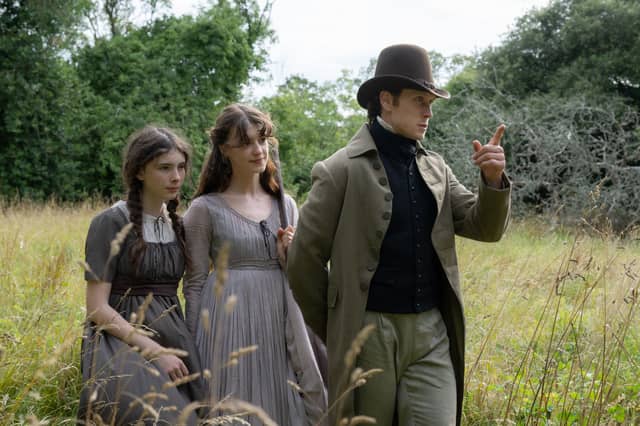
Starring Daisy Edgar-Jones as the rational Elinor Dashwood and Esmé Creed-Miles as her heart-on-sleeve younger sister Marianne, the film strands these lovelorn siblings in a world that has more in common with recent Emily Brontë or Thomas Hardy adaptations. It’s all bleak landscapes and bleaker fates as the inheritance laws of the day force the sisters’ once well-to-do family to downsize to a small Devonshire cottage in the hope that a good marriage will be their salvation.
For Elinor that means secretly pining for Edward Ferrars (George McKay), a decent young man from a rich family who’s as reticent to admit his true feelings for Elinor as she is for him. For Marianne it means spurning the attentions of the dreary Colonel Brandon (Norwegian actor Herbert Nordrum) and throwing herself at the caddish Mr Willoughby (Frank Dillane).
READ MORE: Film reviews: Shaun The Sheep: The Beast Of Mossy Bottom | Pulp: What Do You Do For an Encore?
Romantic misunderstandings fuelled by economic complications duly follow, but Oakley seems so intent on teasing out the tragedy of the Dashwoods’ predicament that initially neither sister is much fun to be around and, in fact, you can see the confusion on some of the actors’ faces as they search for humour in scenes that have been purposefully muted and drained of colour. It’s only when Fiona Shaw pops up as the Dashwoods’ kindly but crass relative Mrs Jennings that the film starts clicking into place, dragged by the sheer force of her charisma and good humour into a register a little more in tune with Austen.
The Scotsman’s arts newsletter is now sent twice a week - subscribe today
Enjoying the Arts & Culture journalism on scotsman.com? Make it easier to find by selecting us as a preferred Google source
Want the latest Scottish headlines sent directly to your phone? Sign up to our new WhatsApp channel here
Comments
Want to join the conversation? Please or to comment on this article.