
Exclusive:Fringe 'could pop up anywhere' if Edinburgh does not cement solid base, warns Summerhall boss
Summerhall Arts boss Sam Gough said the Fringe was not likely to move in the coming years, but warned it could go past a “point of no return”.

The soaring costs of performing at the Fringe and a lack of investment in the year-round festival infrastructure could risk the event eventually being moved to a different UK city, following in the footsteps of the TV Festival, the head of a major venue has warned.
Summerhall Arts boss Sam Gough has warned year-round venues in Edinburgh such as his own need funding from the visitor levy to create a “solid base” for new work in Edinburgh, warning that if all venues “just pop up” for August, the Fringe could potentially “just pop up anywhere” and do not have to remain in the city.
The TV Festival is to move to Manchester from next summer after 50 years in Edinburgh, citing the high price of accommodation in the city.
Mr Gough said the Fringe was not likely to move in the coming years, but warned it could go past a “point of no return”.


He said: “There's a point, let's say, when your fan belt goes in your car, that you don't notice it immediately. You get past that point, but then the lights start getting dimmer and eventually it conks out. But by the time it conks out, you're way too late, it's gone past the point of no return. At the Fringe, we might not know when that point is, until it becomes too expensive for artists to come, when it becomes the only way you can come here is for a week-long programme to showcase your stuff for Netflix or when you're only doing short runs for stand-up comedy.
“I'm not saying we're at that point now, but when we get to the point where people can't come for the full run because it's too expensive, then we start losing what the essence of it all is.”
Of the “big four” Fringe venue groups of Assembly, Underbelly, The Pleasance and Gilded Balloon, only the latter is based in Edinburgh.
Mr Gough pointed to a growing number of projects supported during the year by Summerhall programmes which have gone on to major success at the Fringe and beyond, including Edinburgh-based F-Bomb Theatre’s Float, which progressed through the Summerhall Arts Surgeries before being selected for Made in Scotland at last year’s Fringe and Corinne Salisbury’s Slayers, which was developed through the Summerhall Arts Surgeries before progressing to Assembly at the 2026 Fringe, where it won a Fringe First Award.
Mr Gough said: “It's about making that solid base. So many people - not even just Edinburgh-based artists - can come up and use the development programme to put their work in the space year-round so that it is more successful in August. But if that goes and everyone just pops up, you can just pop up anywhere: pop up in Manchester, pop up in Birmingham, pop up wherever you wanted to be - and it kind of removes the heart of what the Fringe is.”
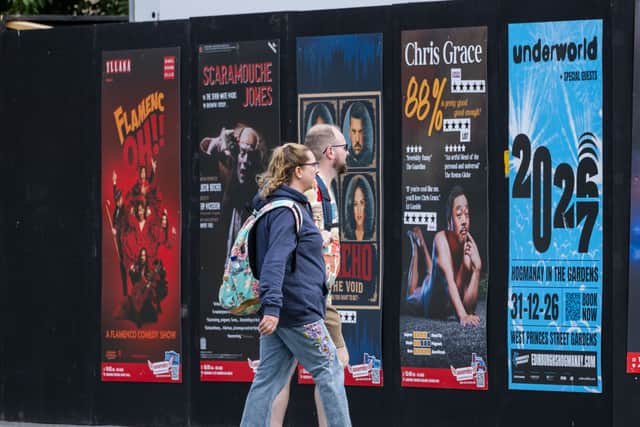
He said Edinburgh had been chosen to host the festival 80 years ago in an "arbitrary" way, relating to which city on the shortlist had the best existing infrastructure after the war that had escaped bomb damage.
Artists and visitors have raised the issue of the rising cost of accommodation in recent years. Mr Gough said visitor levy money could be used to help subsidise accommodation for artists and called for “continued advocacy” of the rental market.
He said: "It wasn't chosen for any other reason apart from that was the best and easiest way to do it. If we get to a point where the easiest place to do it isn't Edinburgh, we might lose it."
He added: “I'm not worried that the Fringe is suddenly in the next three or four years going to be somewhere else, but it's something higher on my risk register now than it ever has been. That's not saying that I think it's an immediate risk, but it's that idea of what happens if the shape and the frame of the Fringe changes so dramatically because of costs, that it then becomes different.”
Edinburgh Council leader Jane Meagher said funding was available for venues like Summerhall through the council's new Innovate and Affordable and Accessible Culture funds.
She pointed to an £8 million combined investment in revitalising the Leith Theatre and the renovation of the former Royal High School and Fringe Central, which the council made available at no cost for Edinburgh Festival Fringe Society headquarters.
She said: "This is just one example of the year-on-year support we continue to provide to our cultural partners – both financially and strategically behind the scenes.
“Councillors recently agreed our cultural funding settlement which, thanks to the visitor levy, includes a 25 per cent uplift to cover the next year. A full funding review is currently taking place and a fully redesigned cultural funding programme will be agreed in early 2027, with funding in place from April 2028.
“Our total visitor levy investments over the next three years are just the beginning, and there will be plenty of opportunities for further proposals to come forward over the years to come.”
Comments
Want to join the conversation? Please or to comment on this article.