
How far should freedom of speech go at the Edinburgh Festival Fringe?
The festival always brings controversy, and this year has been no exception. Arts Correspondent Jane Bradley investigates where the line lies

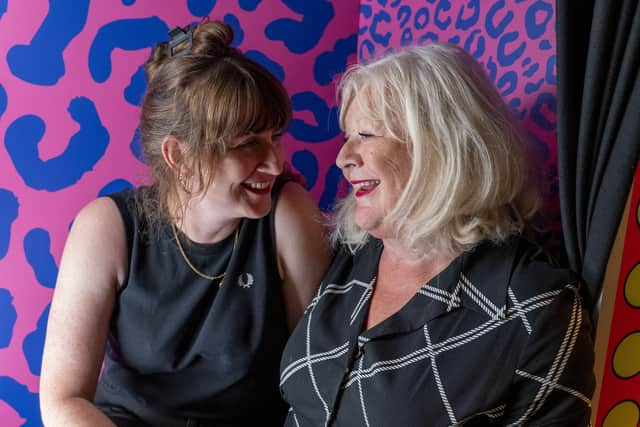
When Gilded Balloon directors Karen and Katy Koren were approached by the team behind Amanda Knox’s debut show, they understood immediately what they were getting themselves into.
“We knew it would cause controversy,” says Katy. “But we’re not going out there to be provocative at all, we want to do a good job.”
The mother and daughter team would not accept the show into their programming schedule without doing due diligence and discussed the content of the show in detail before holding an in-person meeting with Ms Knox which would ultimately sway their decision.
“Before we decided, we met Amanda face to face,” says Karen, adding that the team reviewed the script in detail and worked with Ms Knox “much more than most other performers”.
“Without that, we probably wouldn’t have done it because meeting her directly and seeing how she is as a person that decided it,” says Karen.
Katy adds: “We had an honest conversation with her and told her our worries and she addressed some of them with the script and kept showing us it when it was in development.”

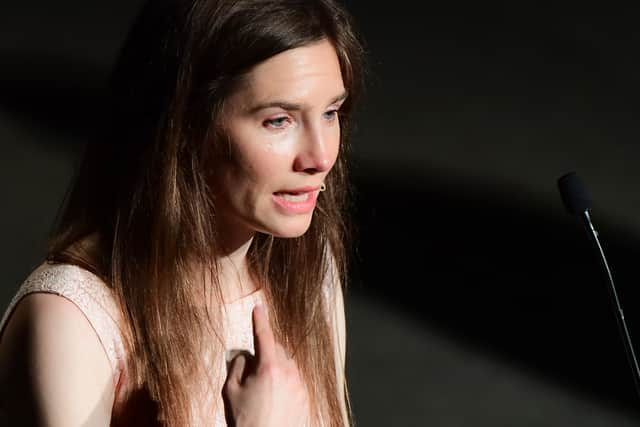
The sell-out show has arguably been the most talked-about event of this year’s Fringe. A petition launched by a friend of the family of murdered student Meredith Kercher calling for the show to be scrapped was backed by Ms Kercher’s sister, Stephanie, who said the show, which was listed in the comedy section of the online Fringe programme, turns her rape and murder into “entertainment”.
Ms Knox, who served four years behind bars for Ms Kercher’s murder, was acquitted in 2015. The petition attracted more than 30,000 signatures before Ms Knox’s show opened ten days ago.
The Edinburgh Festival Fringe Society has argued that the event is an open access festival and that the festival is dedicated to freedom of speech - so long as any show’s content falls within the law.
But although they have argued vehemently and publicly that they are doing the right thing by programming Ms Knox’s show, the Korens are adamant that they have a “line”.
“As a programmer, it’s about what we’re offered and what we go and find and what the subject matter is,” says Karen, who has been running Gilded Balloon since the 1980s. “I’ve been offered some terrible shows in the past and turned them down.
“It’s a fine line to find what is right and what isn’t and we have sometimes made mistakes in the past and we look into everything much more fully now.”
“We can curate whatever kind of programme we want and we wouldn’t programme anything that crossed our own boundaries,” says Katy.
“I think that freedom of expression is important but we’ve had some difficulties in the past and it’s something I want to stand on a soap box for because ultimately, I don’t have an open access programme, I don’t allow just anyone to perform on Gilded Balloon stages, I choose shows that we agree with.”
While venues, including the Gilded Balloon, try to read scripts as much as possible, or see shows live at other venues before they are programmed, sometimes the full content is not available until the last minute - or performers change their script live.
Karen adds: “Some shows are attacked before anyone knows what is in it and that upsets me because you can’t talk about anything unless you know what your content is.”
Tony Lankester, chief executive of the Edinburgh Festival Fringe Society, says his organisation’s “only red line is if something is illegal or not”.
He says: “The only time we would ever step in and stop a show is if someone is breaking the law, if they were performing something that promotes hate speech, homophobia or something that attacks protected characteristics.
“The Amanda Knox discussion was asking us to step in and decide what is acceptable to see or what is offensive or distasteful and we have been pretty clear that we can’t use that criteria.”
Mr Lankester points out that the Fringe is “not one entity”, but is made of of scores of disparate venues, which have their own ethical decisions to make over programming, adding venues are responsible for seeing shows in advance or reading scripts.
He says: “As the Fringe Society, our role is to coordinate the disparate elements. We can’t pre-read scripts for 4,200 shows. The venues make judgement calls and decide what to put on their stages. We are not involved in programming.
“The Gilded Balloon had read the Amanda Knox script and they were comfortable with the content of the show and went ahead.”
He points to other current Fringe shows with potentially controversial subject matter, including January 6thThe Musical - about the storming of the Capitol Building - and The Second Best School Shooting.
He says: “In both these instances, there would be people who have been affected and would find that causes them some distress. While we are sympathetic to that, the right to free speech trumps any question of taste or offence or what causes distress. In each instance, we can’t use this as criteria deciding what is or isn’t allowed.”
Earlier this week, comedian Linus Karp - whose show, Linus Karp Was Hit With An Umbrella, tells of how he was attacked with an umbrella in a homophobic hate crime - took to social media to reveal that he had berated a presenter of a right wing news channel who he had spotted in his audience.
While the audience member had not interacted with Mr Karp in any way during the performance, the comedian said in a video that he had publicly told the journalist “you should stop working for a network that attacks queer people” and added that “those kinds of people are not welcome at my show”.
He added in a message directed at “transphobes, fascists and racists”, “If I see you there I will pick on you”.
Mr Lankester does not believe audience members should be removed from shows.
Two years ago, an Israeli couple left a show by Reginald D Hunter over claims that they were mocked by the stand-up and jeered by his audience after objecting to a joke about their country.
“I don’t think performers should police who goes to their shows, unless they’re saying clearly, only people can come to the show who agree with me,” says Mr Lankester. “That said, broadcasters who are recognisable, who go to a comedy show where there is audience participation are putting their heads above the parapet - and they have agency to walk out if they want to.”
William Burdett-Coutts, founder of venue group Assembly, disagrees.
“If you own a pub, you can decide who you want in it,” he says. “If a comedian doesn’t like someone, there’s no reason they can’t poke fun at them.”
Mr Burdett-Coutts says he has never had to make a moral judgement on if a performer should be allowed a show at one of his venues.
“This is my 47th year on the Fringe and I can’t think of a time we have had to turn down a show because of the content.” he says. “The Fringe is a place for open expression and if people continue to do something that is a bit edgy, that is what we’re about. If people can’t push boundaries and express opinions, the world would be a poorer place.
In 2022, the Pleasance cancelled the second of two shows by Jerry Sadowitz after what they claimed was an "unprecedented number of complaints” and reports of audience members walking out. However, he returned the following year to perform another show in The Queen's Hall.
Meanwhile, last year, Fringe venues Whistlebinkies and Banshee Labyrinth cancelled shows by Jewish comedians Rachel Creeger and Philip Simon citing staff safety concerns. Ms Creeger, who moved her performances to alternative venues, said her show was non-political and that she had “never caused harm anywhere”.
“The Fringe Society has a legal duty, they can’t say, ‘we’re allowing hate speech,’” says Paul Levy, editor and founder of reviews website the FringeReview, which reports on Fringe festivals across the UK.
“But if you’ve got a family saying ‘I feel really hurt that you’re talking about us’, but the venue is saying you’re not breaking the law, then they probably feel that it’s good to have these conversations and then they’re making value judgements. Venues need to sit with a legal and ethical choice.
“There’s also an issue if other comedians or performers at the same venues say they don’t want to perform if that person is performing there with that content - and then that gives [the venues] peer pressure.
“In terms of Amanda Knox, she’s not been found guilty, the only moral reason it might be cancelled is that she might cancel it herself because she didn’t want to upset the family.”
Mr Levy believes venues need to ensure venues have a clear code of their own moral criteria laid out.
He says: “At least they could have a policy to approach shows and sense check and value check with them.”
Sam Gough, of Summerhall Arts, has just that.
“Summerhall Arts is built upon a strict curating ethos, with straight-forward policies and guidelines,” he says. “Our platforming policy states that Summerhall Arts recognises the privilege and responsibility we have as a building-based arts charity, when platforming artists. Whether through core programming, the Fringe festival, or commercial hires, we recognise that we have the power to uplift and legitimise work in supporting its presentation. We do not take this responsibility lightly.”
He says he does not believe it is up to the venue to decide where or if, “lines should be drawn over what appears on a stage”.
He says: “The charity does however, as an integral member of our community in Edinburgh and more broadly, have a responsibility to protect the public and artists from harmful discourse, discrimination and abuse.
"As an arts charity, we champion artists for their freedom of expression and there’s an implicit trust with audiences who come to our venues to be part of that culture of enjoying art, enjoying live performance. We have a great amount of trust in our artists as professionals, and decent people, who are simply using their great talents to present news ideas, new experiences and provoke conversation. We do seek the uncomfortable and the challenging, because why else would we be doing this?
"That being said, we do not pick random artists and acts just to fill gaps in our programming, or simply seek shock factors to fill seats.”
Fringe performer Bróccán Tyzack-Carlin, whose show Good News! It's Been Destroyed, deals with political issues, believes comedians have a specific problem that the audience does not always realise that comedy is the same as theatre.
“I think if you have an artistic intention behind it, you can joke about anything you like,” he says. “But because it’s more conversational [than theatre] and you’re speaking to an audience, people forget it’s a written art form and that maybe it’s a joke.”
Comments
Want to join the conversation? Please or to comment on this article.