
Exclusive:Scotland’s national orchestra facing 'most serious challenges in a generation' amid funding crisis
The RSNO is one of Scotland’s five national performing companies

Scotland’s national orchestra is facing “some of the most serious challenges in a generation” as it posted the first financial deficit in over a decade amid “standstill” government funding.
The chief executive of the Royal Scottish National Orchestra (RSNO) said stagnant grants were a “threat to [the] viability” of the organisation, admitting he has been forced to cut jobs - despite an 8.5 per cent rise in tickets sales income and an overall four per cent increase from core activities.
Chief executive Alistair Mackie said the orchestra could not “continue to succeed indefinitely” without more support and said a question remained as to whether the orchestra would be able to secure increased funds before it was forced to make “irreversible decisions”.
Meanwhile, writing in a statement to accompany the latest set of accounts filed with Companies House, chair Gregor Stewart said it had been a year of "extraordinary achievement" for the orchestra, but warned the "financial reality" of the funding situation, which has seen the orchestra’s grant from the Scottish Government remain at the same level as 2009, despite rocketing inflation, had left it unable to thrive.
The accounts revealed the orchestra is operating at an operating deficit of £322,000 for the 12 months to the end of March, while two redundancies were made over the period in a bid to reduce costs across all budget lines by 10 per cent.
The RSNO's total expenditure grew by £869,000 to £12m compared to 2025, due to “persistent” inflation-related increases in the cost of putting on concerts, coupled with rising employee-related costs.
However, government funding has remained stagnant, which Mr Mackie described as a 40 per cent cut in real terms. The RSNO is one of Scotland’s five national performing companies, backed by the Scottish Government. A sixth national performing company is due to be created for traditional music.
Mr Mackie said: “Standstill government funding, sustained over many years, is no longer a constraint on ambition - it is a threat to viability.
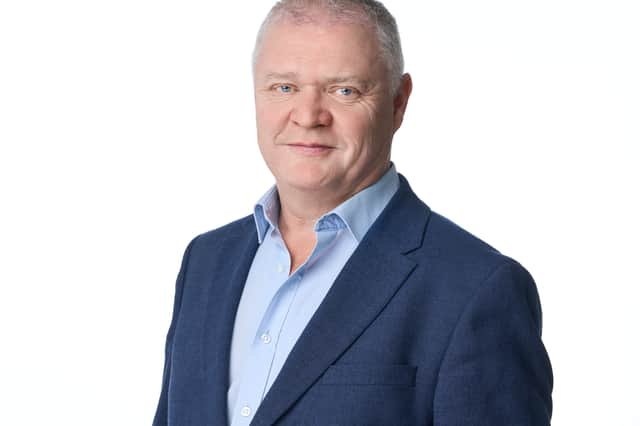

“This is not a position from which any organisation - however well led, however productive - can continue to succeed indefinitely. The efficiencies we have embedded over many years are now at risk of being consumed by cost pressures beyond our control, and as a result in 2025/26 we are reporting an operating deficit from core activities of £322k.
“The RSNO has worked tirelessly in recent years to reduce its reliance on public funding by diversifying and growing its earned income whilst Scottish Government core funding has remained unchanged. What remains cannot be addressed through efficiency alone.”
He added: “We have made the case clearly and will continue to do so: the RSNO's employed model, its community reach, its international profile and its commercial capability represent exceptional value for public investment. The question is whether increased investment can be secured before irreversible decisions are forced upon us.”
A lack of funding at the RSNO means staff musicians are paid 18 per cent less than their counterparts at BBC orchestras - and freelancers paid the lowest rates in the UK - while the organisation's administrative team is "significantly stretched".
Mr Stewart said: “This has been a year of extraordinary achievement for the Royal Scottish National Orchestra - a year in which we. earned some of the most significant recognition in our recent history, while confronting some of the most serious challenges we have faced in a generation.
“However, I must speak plainly about the financial reality in which all of this has been achieved.”
He said the 2025/26 government grant of £4.2m remains at the same cash level as that received in 2008/09, while Orchestra Tax Relief has been reduced and local authority support has been entirely withdrawn and employer costs have risen.
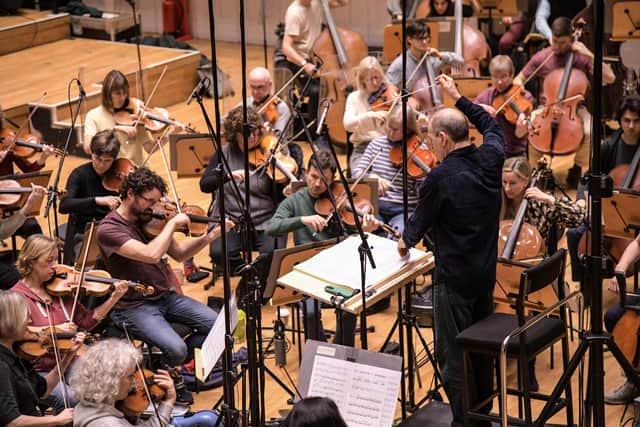
Mr Stewart pointed to a report released earlier this year which found that for each £1 of Scottish Government funding, the RSNO contributes £6.90 of economic and wellbeing benefits to Scotland.
He said the RSNO's fully employed model - currently 69 permanent musicians who carry out community music work including Sistema Scotland as well as performing in concerts with the orchestra - is one of the “most efficient uses of public cultural investment in Scotland”.
He said: “Let me be clear, continued delivery of such outcomes for Scotland and the UK is currently at risk due to a lack of financial support.”
The accounts showed ticket sales increased by 8.5 per cent to £1.75m, up from £1.60m a year earlier, reflecting audience growth across a number of concert series, particularly its “movie and pops concerts”, which include events such as a screening of Ghostbusters, conducted by Anthony Parnther with the 1980s film projected on the big screen and accompanied by the RSNO - as well as classic children’s film The Snowman, also screened with a live orchestra.
Meanwhile, demand for concerts in Edinburgh remained strong, whilst growth in Dundee reflected increased engagement activity coupled with targeted marketing. However, the overall increase in sales was achieved despite a more challenging year for the Glasgow season concerts, where several programmes attracted lower-than-expected audiences.
Recording facility Scotland's Studio has recorded tracks for major filmmaking organisations including Warner Bros, Netflix, Disney, Ubisoft and Apple TV, while two new concert films were produced during the period.
Mr Mackie told The Scotsman he had had “fruitful discussions” with the Scottish Government in the months since the accounts were signed off - but said the deficit posted by the RSNO was the first in many years.
He said: “We can post that deficit for one year, but we can't post it for successive years. We need to know that help is coming and manage our finances accordingly.”
He said a rise in National Insurance contributions had cost the orchestra an extra £120,000, while changes to the UK Government’s Orchestra Tax Relief had cost £220,000 and additional pension payments totalled £110,000. In 2024, the RSNO was told funding from Glasgow City Council would be phased out over a two year period.
Mr Mackie said: “I do think now that Scottish Government is really understanding of the fact that these things are outwith our control. I think they are understanding of the consequences of that and I do believe they will act on that.”
A Scottish Government spokesperson said: “We have provided an uplift of £1 million in funding across our five National Performing Companies in 2025/26 and they received an additional £700,000 of funding in 2024/25. This investment takes their core funding to the highest-level funding since 2011/12.
“We will continue to fund the internationally acclaimed work of our National Performing Companies in 2026/2027 with a view to providing them with additional funding in future financial years as part of the commitment towards an additional £100 million for culture.”
Comments
Want to join the conversation? Please or to comment on this article.