
Scottish photographer who died age 29 after capturing first Glasgow Home Office raids remembered in exhibition

Robin Taudevin died aged 29
The sister of a Scottish photographer who was killed free diving aged 29 has launched an exhibition of his work to mark the 20th anniversary of his death.
Robin Taudevin died in 2006 while free diving alone off the coast of Cristo Rai in Timor-Leste during a civil conflict.
His work, documenting human rights and international aid issues, which spanned from covering the first Home Office dawn raids in Glasgow in 2005 to the struggle for independence in Timor-Leste, is to be shown in the Glasgow University Memorial Chapel.


Julia Taudevin, a theatre maker and co-artistic director of Glasgow-based theatre company Disaster Plan, has curated the exhibition of his photography, entitled Momentary and Fleeting, to document what has changed in the 20 years since Mr Taudevin’s death.
A graduate of the University of Glasgow, Mr Taudevin worked in international humanitarian aid, documenting conflict and the people and natural world affected by it.
Ms Taudevin said her brother had aimed to expose injustice, understand complexity and inspire compassion.
The siblings grew up in Indonesia where their Lewis-born mother worked as an English teacher. Their father was an Australian diplomat who worked around the region, including in Timor-Leste.
She said: “We came home to my mother's family in Lewis every summer, so a lot of people describe it as quite an idyllic childhood, because we had Hebridean summers and the rest of the time we were in Indonesia.
“But actually, we were witness to a lot of conflict and displacement and violence and that white expatriate privilege was heavy on my brother's conscience.”
Mr Taudevin returned to Scotland to study at the University of Glasgow.
Ms Taudevin said: “When my brother went to Glasgow uni, he joined two clubs: what was then the East Timor Solidarity movement and the skydiving club. Those two defined his quite young life, because he went on to work in humanitarian aid and moved around the world for different NGOs, but kept going back to Timor-Leste and had a real passion for the place and an affinity with the people.

“Then there was the other side of him, the extreme sports person within him, who moved from skydiving to to base jumping to free diving, which is how he died.”
He returned to Glasgow in 2005, shortly after the city had signed up to the Dispersal Act, which committed it to taking in 2,000 asylum seekers a year. Keen to make the transition from film to digital camera, he decided to stay to work on home soil using his new equipment and came across the first Home Office raids.
In 2006, Mr Taudevin had been covering the conflict in Timor-Leste when a 12-day ceasefire was called. Fighting had broken out a year after United Nations peacekeepers left the country, initially breaking out due to a dispute within the armed forces and eventually leading to a coup.
“He was out in the hills with the rebel soldiers and coming back and documenting the riots, living the full blown life of a conflict photographer,” Ms Taudevin said. “I really believe that he felt that this was the next step, like it was his calling.”
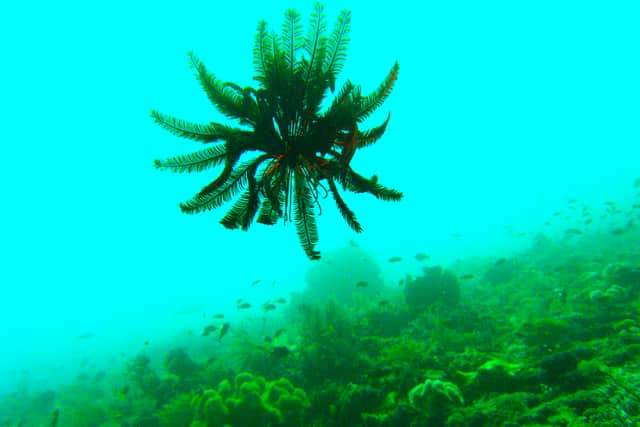
An extreme athlete since his teens, Mr Taudevin began free-diving in his late 20s, opening the door to underwater photography.
During the ceasefire, he went to the beach and went free diving alone, where he died. His funeral was attended by people from both sides of the conflict.
“He was very courageous, he had a lot of drive and a lot of purpose,” said Ms Taudevin. “One of the big things he wanted was to inspire compassion, so that people will inform themselves. Hopefully the exhibition will do that.”
The exhibition is on from 19 May to 2 June.
Comments
Want to join the conversation? Please or to comment on this article.