
Former Edinburgh police chief on unsolved murder case which 'changed his mind' on the sex trade
Tom Wood worked on the case of murdered Sheila Anderson, in 1983, as a young officer and he said it opened his eyes to the changing face of the Scottish sex industry
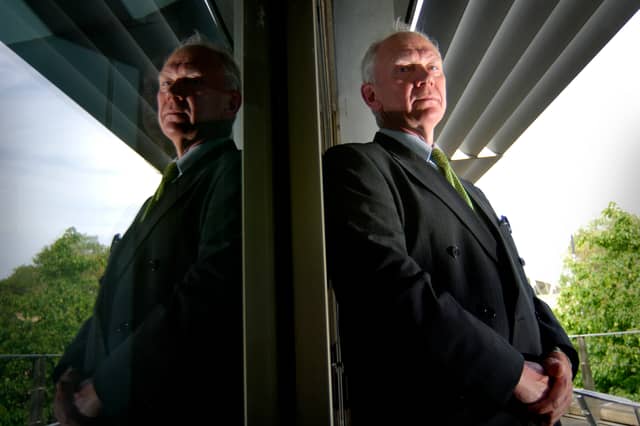


A former Edinburgh police chief has revealed he still hopes a cold murder case which “changed his mind on the sex trade” could still be solved.
Tom Wood, who has published a book of short stories about notorious and lesser known criminal cases in Edinburgh's history, said the case of Sheila Anderson, which he has a personal connection to after being put on the case as a young officer, had opened his eyes to the changing face of the Scottish sex industry as heroin began to flood the market in the 1980s.
In his latest book, Sex, Spies and Bloody Murder, Wood, who was deputy chief inspector at Lothian and Borders Police until 2005 and led the decades-long investigation into the 1977 World's End murders, said he still had hopes the case could eventually be solved.
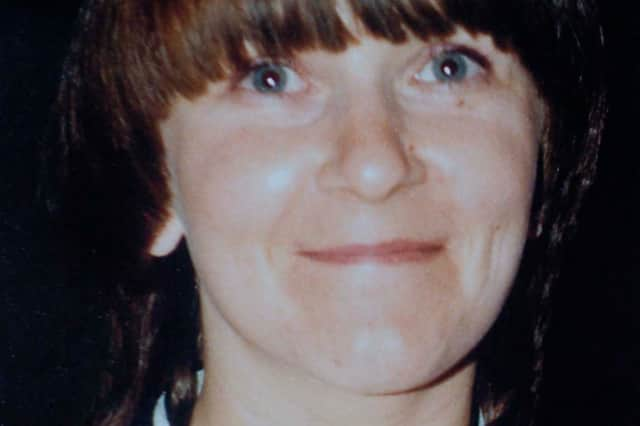
The book also details the life of brothel keeper Dora Noyce, who Wood also met personally while working as an officer on the beat, as well as case studies of current sex workers interviewed by Wood.
Wood told Scotland on Sunday that before the introduction of heroin and Ms Anderson’s murder, which has been credited with a change in policing of sex workers, prostitutes were regarded as “nuisance offenders”.
Ms Anderson, 27, died in 1983. Her body was found on the promenade at Gypsy Brae in Edinburgh, having been run over. Married with two children, she had become addicted to heroin and subsequently turned to prostitution to pay for drugs.
Wood said: “I'll never forget in the early days after Sheila, when we set up the big operation to see who was who was involved in the sex trade down in the streets of Leith, the horror when we discovered how young and how vulnerable some of the girls were and how violent and horrible some of the punters were.

”When we turned over the stones and when we saw all the very young girls who were on the streets, we recognised that these these were vulnerable people who required our protection. Our attitude changed and it became from being a criminal justice issue, it became a public safety issue and then when HIV and AIDS came in, it became a public health and public safety issue.
“It was no longer the streetwise street women and the regular punters, they were violent predatory criminals coming from all over the place to prey upon these very young and vulnerable girls, many of them, drug addicted, and that changed the whole complexion.”
He added: “It was like drawing a curtain. We realised that the picture was had completely changed and it had changed in remarkably quick time, and it all was brought about by the arrival of heroin, which changed everything, changed policing, changed society, and still does, of course.”

Ms Noyce, whose brothel on Danube Street Mr Wood says was described as “a house of leisure and pleasure” or “A YMCA with benefits”, died in 1977.
She had an unofficial relationships with senior police officers, dropping gossip heard in her business in discreet phone calls to CID.
“Dora was a cunning and manipulative law breaker who you could not help but admire, albeit grudgingly,” he writes in his book. “Little wonder that many would look back on the extraordinary life and times of Dora Noyce, that shrewd, mischievous mistress of distraction, as ‘The Good Old Days’.”
Wood believes that a sex industry where police can work in partnership with sex workers creates a safer environment for prostitutes.
“The sex industry is inherently unsafe,” he said. “You could never make it completely safe, but you could make it safer. The saunas were safe. You see, right now the sex industry is all online, and nobody knows where it is. Nobody knows what's happening. It's completely unregulated, and nobody has an oversight of it.
“It so happened that the end of Dora's time and the death of Dora, in fact, coincided exactly, almost exactly, by by complete coincidence, with the arrival of heroin onto the streets and that changed the sex industry entirely. I don't know how Dora would have coped with that, because everything changed and I suspect all the old order that she had would have been swept away.”

He says all but a couple of Edinburgh’s saunas have now closed down, replaced by online bookings sites and meetings in hotel rooms and private flats.
“Some people, of course, say, ‘Oh, that's wonderful. Get rid of these terrible places’ in the sort of the in the naive belief, in my view, that the whole problem has gone away, that the trade has gone away. The trade has not gone away: it's just gone underground.”
“We knew who the [sauna] license holders were. We also knew that there were usually other people behind the license holders, but the great thing about them being license holders is they gave access. They gave accountability. We knew who they were, we could contact them. We could go and see them. It was all part of harm reduction. That’s not to be naive and to say the sex industry was safe and I keep emphasising this: it will never be safe, just safer.”
When Mr Wood decided he wanted to interview present-day sex workers in his book, he called upon contacts from his days on the force.
He said: “I had some old phone numbers in my book and one of them answered the phone, and I said, ‘Look, this is what I'm doing’. And they said, ‘Hang on, I'll see if any of the girls or the guys want to speak to you, come down, have a coffee. And I just sat down, relaxed with them and spoke to them.
“I thought I knew pretty well what was going on, but sitting down with these girls, I wish I'd done it 10 years earlier. I'd have known a lot more.
“They bridled at this idea that they were victims, they were not victims. They had made conscious choices, not necessarily choices that others would have made, but they had made the decisions.”
A full review of Ms Anderson’s murder was carried out in 2008. The case remains live.
“I still hope that Sheila’s case can be solved,” he said. “Any time I'm speaking to my colleagues in Police Scotland, who do a super job on cold cases, much better much better than than we ever did, I always say to them, ‘Don't forget Sheila.’”
The book describes how “vital evidence” of an isolated DNA profile of Ms Anderson’s killer created then still lies in a secure refrigerated area of the Police Scotland Forensic Laboratory at Howdenhall, “waiting for a match” on the Criminal Justice database.
“One day a knock may come on the door of a late-middle-aged man, he may have tried to forget what happened all those years ago at Gypsy Brae,” Mr Wood wrote in the book. “Like an increasing number of historic offenders, he may discover that justice has a long reach and a nasty habit of catching up.”
Comments
Want to join the conversation? Please or to comment on this article.