
Budget 2026: Chancellor’s U-turn on ISA allowance branded ‘backward step’ by Scottish experts

“For those who can put money away for the long term and can accept investment risk, investing offers the potential for better returns” – Kevin Brown, Scottish Friendly
The Chancellor’s decision to reverse the cut to the annual cash ISA allowance has been branded a “backward step” amid a drive to encourage greater levels of personal investing.
John Healey told the Commons that the annual tax-free cash ISA (individual savings account) limit would remain at £20,000. A cut in the cash ISA allowance to £12,000 had been announced by his predecessor Rachel Reeves in an attempt to funnel cash into UK companies through investment products such as stocks and shares ISAs.
In his maiden Budget speech, Healey said: “I am taking a new approach today to encourage people on ordinary incomes to save and to invest.
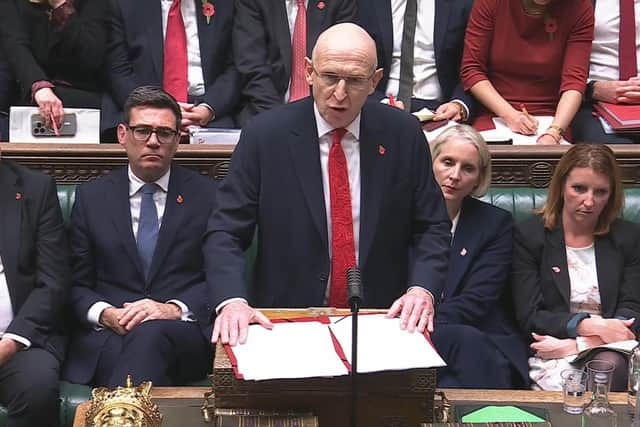

“I will not go ahead with the cut to the tax-free amount that people can put into a cash ISA. The limit will stay at £20,000 per year, tax-free, for people of all ages and to make investment accessible. I will work with the sector to create a new ‘starter ISA’ to reward first-time investors.”
However, the decision to U-turn on Reeves’ plans, which would have kicked in from April 2027, was met with a backlash from many in the savings and investment community.
Adrian Murphy, chief executive of Glasgow-based Murphy Wealth, said: “Scrapping the planned reduction in cash ISA allowances is a backward step at a time when the UK should be doing everything it can to encourage a stronger culture of long-term investing.
“While cash savings are an essential part of good financial planning, they are not always the most effective way of building wealth over time. We’ve made real progress in helping people understand the benefits of investing, and this move risks slowing that momentum.

“The danger is that many savers will continue to prioritise the perceived safety of cash without fully appreciating the long-term opportunity cost of missed returns,” he added. “For people investing for retirement or other future goals, stocks and shares have historically delivered significantly stronger returns than cash.
“The challenge for policymakers is finding ways to give people the confidence to invest, not reinforcing attitudes that could leave them with less wealth in real terms over the long run.”
Kevin Brown, savings specialist at Scottish Friendly, the Glasgow-based financial mutual, described the Chancellor’s decision as “surprising, and hugely disappointing”.
“By reversing plans, the government will have to answer the lingering question of how it will now deliver the investing culture it wants to create”, he said.
“Cash plays an essential role in household finances. It provides an emergency buffer and security for money people expect to need in the near term. But holding cash for many years also carries risks, particularly when inflation erodes its spending power.
“For those who can put money away for the long term and can accept investment risk, investing offers the potential for better returns.”
Healey said that to make investment more accessible, he would work with the sector to create a new starter ISA to reward first-time investors. The previous plans to cut the cash ISA limit for under-65s from next year had drawn criticism, with finance experts raising concerns that people may simply leave money sitting in non-ISA accounts, rather than encouraging them to invest, longer term.
ISAs have the advantage of money held in them being ringfenced from tax. Savers holding money in non-ISA accounts can potentially earn interest tax-free, but only up to certain limits.
Figures released by HMRC in September showed around £135.7 billion was subscribed to adult ISAs in the tax year 2024-25 - a £32.7bn annual increase. The hike was driven by a rise in cash ISA subscriptions, which grew by 37.5 per cent.
Stocks and shares ISA subscriptions saw a 19.7 per cent or £6.1m annual increase, and Lifetime ISA subscriptions had a 20.1 per cent or £472 million rise.
Neil Jones, tax and wealth planning specialist at Standard Life, said: “Cash plays an important role in helping people build financial resilience and meet unexpected costs, so retaining the existing limit preserves choice over how people manage their savings. The proposed cut would also have been complex to implement, so this announcement provides greater certainty for savers and providers.
“However, holding too much cash carries risks of its own. Inflation can quietly eat away at its spending power if interest rates fail to keep pace with rising prices. What £100 bought five years ago would cost around £129 today, illustrating why savers need to think not just about protecting their money, but about its potential to grow over the longer term.
“The challenge for government is how to encourage more people to consider investing for the long term, both to give their money greater potential to grow and to channel more savings into the wider economy.”
Rob Morgan, chief investment analyst at Charles Stanley Direct, part of Raymond James, said the introduction of a starter ISA would add to a “cluttered regime”.
He said: “Another ISA adds to a cluttered regime but is well intentioned in terms of encouraging cash hoarders to switch and grow their wealth more effectively. Awareness and education are the important ingredients to making it a success.
“On the other hand, the reversal of the cash ISA reforms appears to be a pragmatic move by the Chancellor. The cash ISA reforms had a sensible objective but were not particularly well targeted. They removed important flexibility from the ISA system and risked making the rules harder for consumers to understand.”
Comments
Want to join the conversation? Please or to comment on this article.