
Dairy-free product firms can’t milk trade marks
A ruling means brands selling alternative food products must watch marketing descriptions, writes Florian Traub
Alternative food manufacturers will need to show caution in marketing after a UK Supreme Court ruling over the use of the term “milk” to promote a dairy-free rival.
The Supreme Court has ruled that a UK trade mark registration owned by oat milk producer Oatly incorporating the word “milk” is invalid, in the final stage of a long-running battle with industry body Dairy UK. The ruling could have a knock-on effect for other brands producing alternative food products in how they market and describe substitutes for existing foods.
The Swedish company had been looking to overturn a ruling by the Court of Appeal that its trade mark for “Post Milk Generation” was invalid based on a strict 2013 Common Market regulation that covers the use of the word “milk” in relation to dairy and non-dairy products.


Under the 2013 regulation, strict designations of what represents “milk” and “milk products” exist, which mean the words cannot be used for any product other than those set out – with a proviso that it does not apply when “the designations are clearly used to describe a characteristic quality of the product”.
The Supreme Court unanimously rejected Oatly’s appeal. It agreed with the Court of Appeal that the inclusion of “milk” in Post-Milk Generation was caught by the regulation, as the trade mark was a designation being used in respect of a food product – despite not actually being the name of it – and was not clearly used to describe a characteristic quality of that product.
This rendered the trade mark invalid, with the Supreme Court highlighting that Post-Milk Generation was not clearly describing the characteristic of being milk-free. Instead, it described the consumers targeted by Oatly’s product, particularly younger consumers belonging to a generation with concerns about the production and consumption of milk.
There are already strict advertising regulations in place which put guardrails around ambiguous advertising. This ruling is consistent with those but goes further by confirming that registered trade marks, such as advertising slogans, will be subject to scrutiny around their potential to mislead consumers.
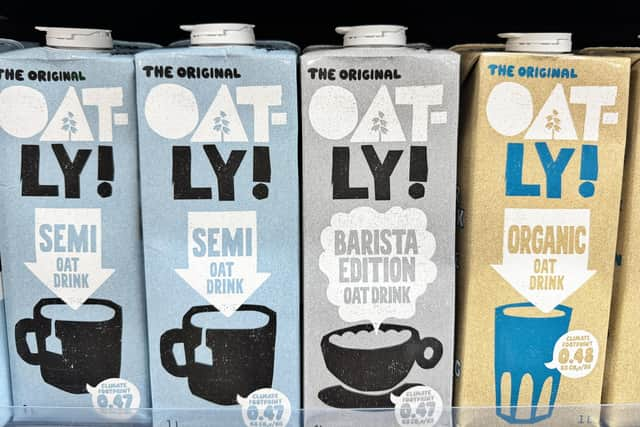
The Intellectual Property office had originally ruled that the trademarked Post Milk Generation phrase was invalid for oat-based food and drink under the 2013 regulation, but that the prohibition did not apply with regards to non-agricultural products such as t-shirts, which fell outside the scope of the regulation.
The High Court had upheld Oatly’s original appeal against that ruling, but the Court of Appeal disagreed and ruled that the trademark was invalid, leading to the case being brought to the Supreme Court.
To minimise risk, retailers should consider taking proactive advice around registering and using trade marks which include terms specifically referencing or alluding to something which their product is not, such as “milk” or “meat” when the product contains neither.
Although the matter before the Supreme Court related solely to trade mark registrability in the UK, the judgment may nonetheless shape how brand owners and retailers deploy brands and slogans in the future. We can expect a rise in disputes arising from these issues.
Florian Traub, Partner, Head of Pinsent Masons’ trademark and brand protection team
Comments
Want to join the conversation? Please or to comment on this article.