
Exploring the challenges and opportunities facing Scotch whisky

Resilience in the face of turbulence, tariffs and exports, opportunities in the Indian market, sustainability, cask investment and innovation were among the topics covered at the recent In Whisky 2026 conference in Glasgow.
Challenges and opportunities


Keynote speaker on the day, Stephanie MacLeod, director of blending, Scotch Whisky, at Bacardi’s John Dewar & Son, pointed out that Scotch exports performed better than many had expected last year.
Referencing figures published by the Scotch Whisky Association (SWA) she noted that the global export value of Scotch was £5.36bn last year, down 0.6 per cent on 2024, while volume declined 4.27 per cent to 1.3bn 70cl bottles shipped overseas. However, she explained that was equal to 43 bottles per second and referred to “resilience in the face of turbulence”.
According to Stephanie, challenges being faced by the industry include: US tariffs; rising cost of doing businesses, including excise duty increases and more expensive raw materials; and the “hangover of the post-pandemic bounce”, with talk of a “whisky loch” hitting the headlines.
However, Stephanie said “our history is studded with periods of adversity and taking advantage of opportunities”. She explained that, for example, more Scotch is enjoyed globally than American, Irish and Japanese combined and it is the number one internationally traded spirit drink in the world, exported to more than 160 countries.
While Stephanie commented that “the industry feels subdued now....many of us are rightsizing our businesses to deal with current headwinds” she added she feels “fiercely optimistic about the future”.
One such opportunity is the “renaissance of premium Blended Scotch”. Others include: channel dynamics, such as premium travel retail and whisky tourism; defending and growing market share in the US; the Indian and APAC markets where there are rising incomes, an interest in premium spirits and an openness to Scotch heritage.
In the session ‘Tariffs & Exports: Where are the Opportunities?’ Stuart Smith, head of trade, Asia-Pacific, and Ewan Bruce, head of global regulation, at the Scotch Whisky Association (SWA) examined global export trends.
Stuart explained that two challenges in the Asia Pacific market are high volumes of illicit alcohol and an “increase in disproportionate health policy”.
Meanwhile Ewan identified Turkey - where the value of Scotch exported reached £255m last year, up 43 per cent on 2024 - as a “counterpoint to what is happening in other countries” due to younger people and women drinking more whisky.
Richard Heald, chair of the UK India Business Council, explored India and the Alcoholic Beverage Market. Focusing on the UK-India Free Trade Agreement, he said the deal opens strong opportunities for UK alcoholic drinks, including Scotch.
The deal means that tariffs on UK whisky and gin exports to India will be halved from 150 per cent to 75 per cent and further reduced to 40 per cent by the tenth year of the agreement. For India, this will not only make premium imports more affordable and accessible for consumers but also lower input costs benefiting domestic liquor producers - especially as nearly 79 per cent of Scotch is imported in bulk for blending or bottling locally. Richard said that consumers in India will be more willing to buy a premium product like whisky than people in other parts of the world.
The day concluded with whisky stalwart Billy Walker, owner and master distiller at The GlenAllachie Distillers Company, discussing his whisky journey in conversation with Mark Littler, an independent whisky broker.
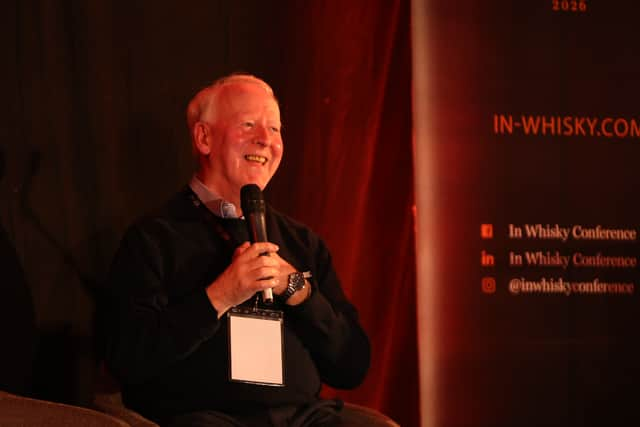
Billy cautioned against talking down the Scotch whisky industry, saying demand is still high. “Right now we can’t ship enough whisky to South East Asia,” he added.
He has acquired a number of distilleries during his career and explained he knows the “building blocks” of creating a good whisky. But he said he doesn’t think he is brave enough or has the patience to build a distillery from scratch.
Comments
Want to join the conversation? Please or to comment on this article.