
Fishing raid is a wake-up call
Immigration enforcement is happening in Scotland’s workplaces and is only set to increase, writes Jacqueline Moore
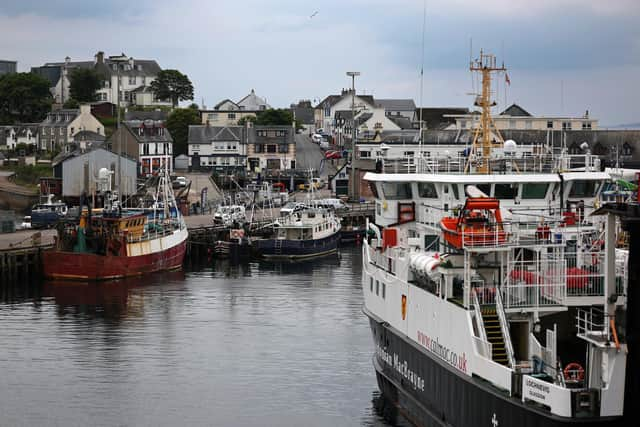
The sight of immigration officers boarding fishing vessels in Fraserburgh and Mallaig should make businesses from every sector take notice.
In July, Immigration Enforcement officers targeted fishing vessels as part of an operation across Scottish ports. Officers boarded 34 vessels and nine people were arrested under immigration legislation.
Fishing is a distinctive industry, with its own employment practices and particular reliance on overseas labour. But there is a much wider lesson from what happened.

The Home Office is stepping up enforcement against illegal working and, from 1 October, the rules businesses have to follow are changing significantly.
That combination should be a wake-up call.
The Scottish raids were part of a wider enforcement picture. Immigration Enforcement carried out 7,270 visits across the UK between January and June this year, 31% more than during the same period in 2025. Those visits resulted in 4,756 arrests.
More than 1,200 businesses received civil penalties during those six months, with potential fines totalling more than £74 million.

It would be easy to look at figures like those, or reports of enforcement raids, and assume they are primarily a concern for businesses deliberately employing people who have no right to work in the UK. That could be a costly mistake.
An employer can believe it has acted responsibly and still find itself facing a substantial penalty because the prescribed process has not been followed correctly. Civil penalties can reach £60,000 for each illegal worker.
From 1 October, there is another reason for Scottish businesses to look carefully at their arrangements.
Section 48 of the Border Security, Asylum and Immigration Act 2025 extends right-to-work requirements beyond traditional employees. Depending on the circumstances, businesses will need to consider people such as individual subcontractors, workers and people providing services through online platforms.
The legislation also introduces extended liability provisions. In certain contractual arrangements, a business could potentially face liability even where another organisation has the direct contractual relationship with the person doing the work.
That matters well beyond industries such as fishing.
Think about a business using subcontractors on a construction project, a hospitality company bringing in additional workers through another organisation, or a company routinely relying on individuals supplied through more complicated contracting arrangements.
Employers need to think beyond the usual question of: “Have we checked our employees?”
Businesses need to understand who is actually working for them, how those people are engaged, who is responsible for checking their immigration status and whether the contracts underpinning those arrangements provide the protection everyone assumes they do.
That makes this an issue for procurement and commercial contracting as well as HR and recruitment.
There is still time before 1 October to identify potential gaps.
Businesses should map the different ways people provide work or services to them, review relevant commercial contracts and check that their existing right-to-work procedures meet Home Office requirements. Staff involved in recruitment, procurement and compliance also need to understand what is changing.
The recent activity in Fraserburgh and Mallaig provides a very visible reminder that immigration enforcement is happening in Scottish workplaces and is only likely to increase.
From October, the range of businesses potentially exposed to that enforcement is about to become considerably wider. Finding weaknesses now is far preferable to discovering them when Immigration Enforcement arrives.
Jacqueline Moore is Partner and Head of Immigration, Thorntons