
‘I bleed blue. I’m an Edinburgh native and a proud Scot.’ - Euan McGlashan on building a global hospitality empire

“I started as a reluctant entrepreneur; today, I’m a serial one.” – Euan McGlashan
Euan McGlashan is the Scots-born founder and chief executive of Valor Hospitality Partners, which was launched in 2012 and has grown into a management powerhouse overseeing more than 100 properties and projects worldwide.
Among the luxury establishments operated by the management group is Seaton House in St Andrews - recently voted the best 5-star hotel in Scotland.
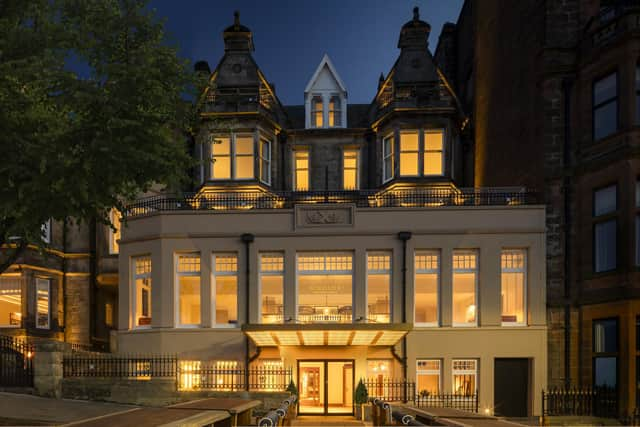
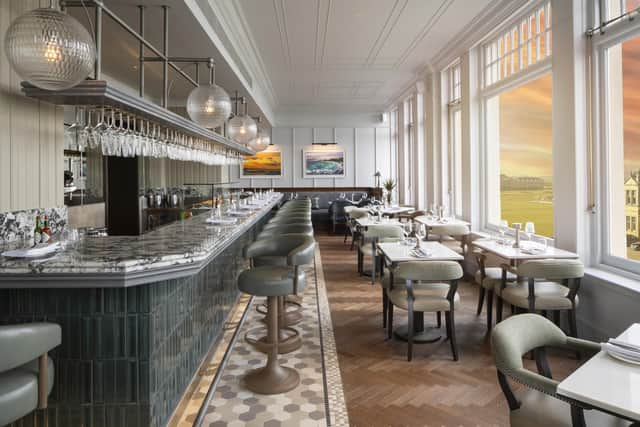
Seaton House, formerly The Scores Hotel, opened in early 2025 and is situated near the first tee of the iconic Old Course with views over West Sands Beach. It is also home to Ondine, the Edinburgh seafood institution which closed its doors in the capital in late 2024.
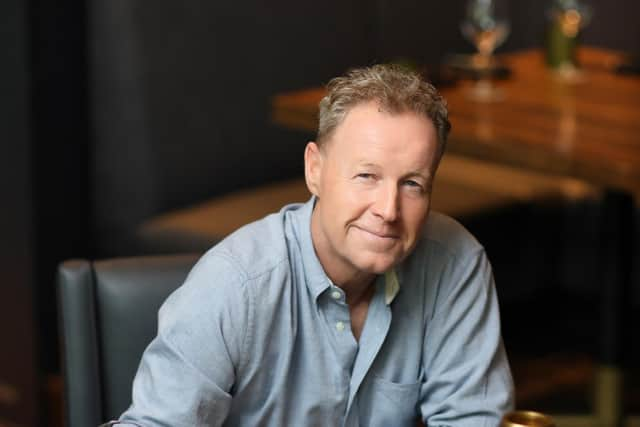

We caught up with McGlashan to discover what motivates him in the fiercely competitive hospitality sector.
Tell us a bit about your own business background:
I bleed blue. I’m an Edinburgh native and a proud Scot. Like many in this industry, I started at the sharp end, washing pots and peeling vegetables in a boutique country house hotel in Selkirk at 16. My work experience earned me one of only three specialised places at university. Since then, my career has taken me across the globe through restaurants, bars, hotels, luxury resorts and golf courses.
At its heart, hospitality is about connecting people and delivering meaningful experiences that spark personal change. You can have the most beautiful hotel in the world, but if you lack culture, authentic care, and a genuine desire to make people feel good, it simply fails.
In 2010, I decided to build something fundamentally different. Having worked for both industry legends and egomaniacs, I was done navigating dysfunction. I wanted an environment where my teams could thrive personally and professionally. I started as a reluctant entrepreneur; today, I’m a serial one.
Our founding belief was simple; there was room for a new kind of management company. One that could be fiercely commercial for owners without losing the humanity, personality, and sense of place that makes hospitality memorable. That mentality still drives us today.
What scale is the business at now?
I started as McGlashan Hospitality in 2010 from the basement of my Atlanta home. In 2012, Valor was formed. We gained early momentum in the US, and quickly expanded into the UK, taking on an 11-hotel portfolio that needed massive repositioning. Soon thereafter we opened our South Africa office in Cape Town.
Today, Valor operates four regional hubs, Atlanta, Manchester, Cape Town, and Dubai, which span more than 125 properties and projects across 80 cities and 25 countries.
Scale is something to be proud of, but my core growth principle has always focused on how we grow, rather than just how big we become.
We only partner with ownership groups we like, respect, and see a long-term future with. We never take on projects just for income; we choose properties where we can add genuine value and create something exceptional.
What about the company’s presence in Scotland and Seaton House in St Andrews in particular?
This is a dream come true. Bringing global insights back to my home country is incredibly meaningful, and I am deeply grateful to our Dallas-based owners for giving us the canvas to create a legend.
Seaton House perfectly embodies Valor’s obsession with world-class guest experiences. It is driven by an amazing team of Hotelitarians, our internal word for our global team members, led by Michael Davern, one of the world's finest hospitality leaders and guest-centric operators.
The location overlooking the West Sands, the Chariots of Fire beach, and the Old Course is extraordinary. But location isn't enough. We directed the entire journey from architecture, interior design, and project management, through to branding, recruitment and daily operations.
What I love most is that Seaton House doesn't manufacture Scottish identity with in-your-face tartan. Instead, it honours true heritage. When we took over the property, it was called The Scores Hotel; it had become run-down and cheap. It was originally built in the late 1800s for the Seaton family, and after a loving, complex restoration, we gave it its rightful name back. It belongs. To me, that is the definition of modern luxury: a genuine connection to a place, warm people, and experiences you couldn't just pick up and transfer anywhere else.
What are the main challenges facing hotel operators, here in the UK, and globally?
There is no shortage of them. Costs are escalating, global conflicts persist, labour markets remain challenging, and owners rightfully demand stronger returns. Simultaneously, guests have higher expectations and more choices than ever.
But let’s be entirely transparent about the UK; our high streets are being actively suffocated by an unsustainable tax burden.
The government needs to wake up and act fast if they want to preserve tourism and hospitality as a massive economic driver.
The compounding hits of expanded National Insurance contributions, lower entry thresholds, and rising utilities have created a perfect storm. These expenses have exploded well beyond what many independent hotels, restaurants, bars, and clubs can afford.
Hospitality is a highly sophisticated business. We have more data, technology, and systems than ever, which absolutely maximise commercial efficiency. But hospitality is fundamentally a human business driven by human emotions, your staff, your guests, your suppliers, and your neighbours. Without them, you have no business.
Our job is to strike the ultimate balance; culture wrapped in commerciality. You must run a highly viable, successful business, but you must also build a place where people genuinely want to work, eat, drink, stay, and return to. It has to be memorable.
Where do you stand on tourism and visitor levies?
I understand the underlying principle. World-class destinations require continuous investment, and high tourism volumes put real strain on infrastructure, public spaces, and local services.
However, my concern lies in the design of these levies and, crucially, how the revenue is allocated. Hospitality businesses are already fighting an incredibly hostile cost environment, constantly balancing profitability without eroding the guest experience. We must be careful about stacking upfront costs onto visitors and assuming it won't damage our global competitiveness or market demand.
If a visitor levy is introduced, absolute transparency and ironclad accountability are non-negotiable. If visitors and hospitality operators are contributing extra, we must see that money directly reinvested into the destination's infrastructure, its culture, its public realm, and the exact elements that make people want to travel here in the first place.
Done thoughtfully, there can be a sensible conversation around it. Done simply as another source of revenue, I think the industry has every right to challenge it.
Where does AI fit into things? Threat or opportunity?
AI can make us dramatically smarter and more efficient. It can help with forecasting, revenue management, analysing data, removing repetitive administrative work, and ultimately giving our people more time to focus on guests. What I don't believe is that it can replace genuine hospitality.
A computer can know what room you stayed in last time. A great Hotelitarian notices you’ve had a difficult journey, remembers how you take your coffee, or knows when to have a conversation and when to leave you alone.
That instinct, empathy, and human connection is where hospitality lives, and we cannot forget that. So I don't see AI as a replacement for people. I see it as an opportunity to remove some of the noise around them. If we use technology to shoulder the administrative burdens, we unleash our teams to do what they do best: deliver unforgettable, uniquely human experiences.
Comments
Want to join the conversation? Please or to comment on this article.