
Markets reaction: Borrowing costs rise and pound cools after Starmer resignation speech
“After years of political chop and change, investors are likely to place a premium on stability, credibility and a clear long-term economic strategy” – Susannah Streeter
The pound came under pressure and gilt yields nudged higher as investors eyed a potential seismic change in UK politics.
Sterling has lost around 3 per cent since February as Sir Keir Starmer’s leadership came under increasing threat from Labour party challengers. The pound eased a little further in the immediate wake of Starmer’s resignation speech before regaining ground.
A weaker pound can make imported goods, overseas travel and foreign currency purchases more expensive, while businesses with international suppliers may face higher costs.

It comes as Andy Burnham - the former Greater Manchester mayor - makes his return to Westminster, having won the Makerfield by-election last week, paving the way for him to mount a leadership bid.
Prem Raja, head of trading floor at Currencies 4 You, said investors faced an uncertain month or two ahead.
“For the pound, the key issue is not necessarily who becomes the next prime minister, but whether the change in leadership increases the likelihood of a general election or significant policy shifts over the coming year,” he added. “Until investors have greater certainty, sterling could remain under pressure and experience increased volatility.”
Susannah Streeter, chief investment strategist at Wealth Club, added: “Ultimately, Burnham’s challenge will be convincing investors that a more interventionist approach can sit alongside more discipline with spending and pro-growth policies. After years of political chop and change, investors are likely to place a premium on stability, credibility and a clear long-term economic strategy.”
UK government bonds will be watched closely amid a change at the top of government. Gilt yields, while having recovered from levels seen at the worst of the Iran conflict, remain higher than international peers.
These yields move counter to the value of the bonds, which means their prices fall when yields rise.
Russ Mould, investment director at AJ Bell, said: “Investors are on the edge of their seats regarding a seismic change in UK politics. Gilt yields moved up slightly on news Keir Starmer will step down as leader of the Labour Party and pave the way for a new prime minister.
“Bond markets already rate the UK as higher risk, as illustrated by the rise in gilt yields this year. There is potential for gilt yields to go even higher if markets worry about who might become the next chancellor and if there will be radically different policies under a new prime minister.”
Oliver Faizallah, head of fixed income research at Raymond James, noted: “Gilts will no doubt experience some small periods of uncertainty-driven wobbles over the coming weeks. I anticipate this largely to be driven by foreign holders of gilts who will no-doubt find the new system of musical PMs somewhat unsettling.”
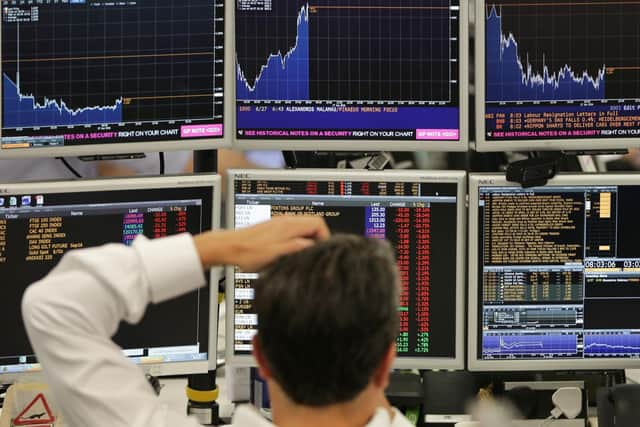
The UK’s benchmark FTSE 100 share index was little changed in the immediate aftermath of Starmer’s speech outside Number 10. Global traders appeared more focused on talks to end the conflict between the US and Iran.
The price of a barrel of Brent crude oil has eased back below $80 as tankers begin moving through the bottleneck of the Strait of Hormuz. Key oil-producing nations across the Gulf have been going all out to boost output.
Comments
Want to join the conversation? Please or to comment on this article.