
Padel growth must deliver more than just new courts
Mark Hewlett says the goal should be to create accessble sporting facilities that become part of local communities
Scotland has a proud sporting heritage, but one of its biggest emerging opportunities comes from a sport still new to many.
Padel’s rapid growth across Britain is creating opportunities for investment, employment and regeneration. With 1.5 million people now playing the sport, Scotland is also seeing significant growth. According to the LTA, Scotland had 45 courts in July 2025, while more recent figures from Padel Genie put that number at 112 in October 2026. This growing popularity presents a real opportunity for Scotland to capitalise on the sport’s momentum.
But success shouldn’t be measured by how many courts we build. The bigger opportunity is to create accessible sporting facilities that become part of local communities.
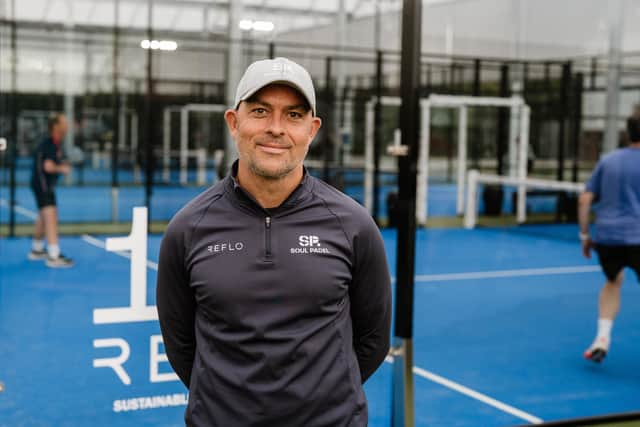

At Soul Padel, we’ve seen how the sport can thrive in places overlooked by leisure investors. Our busiest venue is in St Helens, proving that padel’s appeal extends far beyond affluent neighbourhoods.
We see similar potential in Scotland. Our investment at Braehead which opened this June, our forthcoming development at Ayr United’s Somerset Park and plans for Irvine and Dalkeith in Midlothian reflect our confidence in the market. Further clubs are planned next year, including Wigan, Rochdale, Washington in the North East and Preston, reflecting our commitment to sustainable growth across the UK.
The Ayr partnership is particularly exciting because it demonstrates how existing sporting infrastructure can be used differently, bringing new activity into established venues and creating opportunities for local businesses.
Yet the economic case for padel goes beyond construction, employment and increased footfall. Its long-term value also lies in bringing people together, improving wellbeing and encouraging participation in sport.
Through initiatives such as Soul Sisters, we create welcoming opportunities for women to discover padel, build confidence and make new connections. Soul Timers offers a similarly inclusive environment for older players, demonstrating that age needn’t be a barrier to getting involved.
Our community work extends to schools and charities. Through our What’s That Racket? programme, we offer local schools free weekly sessions with a Soul Padel coach, introducing young people to the sport. Our Play it Forward programme works with local and national charities to break down barriers and make padel accessible to more people.
These aren’t simply additional activities alongside our commercial operations. They’re central to building a sustainable business. When people feel welcome and connected to a venue, they’re more likely to return, introduce friends and become part of a growing community of players.
Of course, enthusiasm alone doesn’t guarantee commercial success. As padel expands, operators must make sensible decisions about location, investment and operating costs. Our approach prioritises quality courts, manageable property costs and lean operations rather than expensive amenities.
Keeping the model straightforward helps us focus on what matters most: making the sport accessible and building a loyal, engaged player base.
Scotland has an opportunity to shape how padel develops, ensuring growth reaches beyond major cities and affluent communities.
With the right partnerships, investment and commitment to inclusion, padel can create jobs, support local economies and provide welcoming spaces where all generations can connect.
The real measure of Scotland’s padel success won't be the number of courts we build. It will be the communities we build around them.
Mark Hewlett is the Founder of Soul Padel
Comments
Want to join the conversation? Please or to comment on this article.