
Scotland’s economic crossroads: Turning pressure into opportunity
“Scotland’s pipeline of major infrastructure and energy projects represents one of the most significant concentrations of economic opportunity the country has seen in a generation”
As political debate intensifies just days before the Holyrood election, a clear message is emerging from firms across the country: the operating environment is becoming more challenging, yet the scale of economic opportunity remains considerable.
The question is no longer whether Scotland can grow – but whether it is positioned to capture that growth.
At the forefront is the sharp rise in business rates. A Q1 2026 survey by the Scottish Chambers of Commerce showed that 48 per cent of participating firms cite them as a concern – the highest level recorded in the past five years and a striking 20-percentage point increase in just a single quarter.

Business rates have become a material cost burden for many firms, squeezing margins at a time when wider economic conditions are already fragile.
This pressure is compounded by broader headwinds - sluggish growth, elevated borrowing costs and geopolitical uncertainty - all feeding into weaker business confidence and greater caution on investment and hiring.
A further layer of complexity stems from the tax differential between Scotland and the rest of the UK. While modest in isolation, it is a factor increasingly on the minds of businesses - shaping choices on where to locate, invest and recruit.
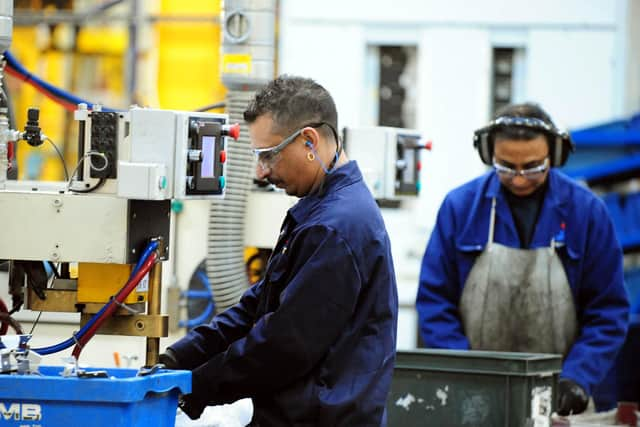
A key long-term challenge is the availability of skilled labour. Evidence across sectors such as energy, construction and engineering suggests that demand for certain specialist roles is already outstripping supply. In some cases, firms are turning to international recruitment to meet project requirements.
One uncomfortable truth stands out: even in Scotland, which typically fares better than the UK’s 15.8 per cent youth unemployment average, thousands of young people still have no clear pathway into the very sectors where demand for skills is about to surge.
That challenge becomes even more striking when set against a remarkable reality: Scotland’s pipeline of major infrastructure and energy projects represents one of the most significant concentrations of economic opportunity the country has seen in a generation.
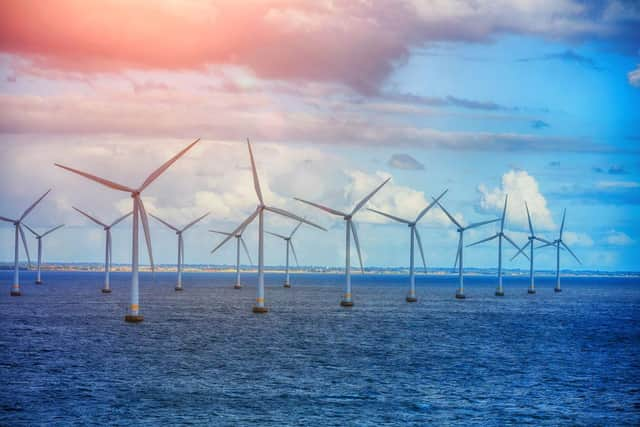
Major developments span multiple sectors. In renewables, for example, we have large-scale offshore wind initiatives such as the now-consented Berwick Bank project off the East Lothian coast and the under-construction Inch Cape wind farm off Angus. The Acorn carbon capture and storage project in Aberdeenshire, despite commercial uncertainties, remains a Track 2 project with significant UK government backing.
Elsewhere, we have pumped hydro developments such as the approved Earba project – which would become the UK’s largest ever pumped storage hydro facility - in the Highlands, alongside major investment in grid infrastructure – not least via the ongoing Eastern Green Link 2 programme connecting Peterhead to North Yorkshire. In addition, strategic developments moving forward at Ardersier and Nigg significantly strengthen Scotland’s capabilities and opportunities in areas such as offshore wind and subsea cabling support.

Collectively, they represent billions of pounds of investment, potential or realised, with a range of potential outcomes for employment and the domestic supply chain.
There is also, of course, the question of potential further oil and gas developments, including the Rosebank and Cambo fields West of Shetland and the associated implications for the industry’s long-established domestic supply chain. Both projects are currently navigating complex regulatory and legal processes.
Scotland’s supply chain capability is genuinely mixed. In areas such as subsea engineering, project management, as well as operations and maintenance, Scottish companies have genuine world-class capability, built over decades in the North Sea oil and gas industry.
In critical areas such as fabrication, manufacturing and large-scale construction, the domestic supply chain has struggled to capture the economic benefit of projects on its own doorstep. The skills dimension of that challenge is underscored by Scottish Engineering’s Q1 2026 quarterly report, which confirmed that skills shortages are being felt daily by employers across the sector.
In late 2025, the Scottish government published its Offshore Wind Skills Priorities and Action Plan, bringing together industry, enterprise agencies and trade unions to address what it described as a step-change in skills demand that current provision is not yet equipped to meet. It also acknowledged that, without urgent action, Scotland risks failing to anchor supply chain opportunities from its own 40-gigawatt project pipeline.
Offshore wind is the most immediate pressure point, but the challenge extends across the full range of infrastructure projects now in development.
If that gap is not addressed, a significant share of the economic value will leak outside Scotland – through imported labour, external contractors or overseas suppliers – and major projects will be hosted without fully capturing their economic upside.
The challenge, therefore, is not a lack of opportunity, but a gap between potential and preparedness. Closing this gap will require coordinated action:
Workforce development: accelerating skills training, particularly in engineering, construction and energy-related disciplines
Business support: ensuring SMEs can scale up and integrate into major supply chains
Investment incentives: ensuring Scotland's fiscal and regulatory environment is competitive enough to attract and retain the private capital these projects require
Policy clarity: providing long-term certainty to encourage business planning and investment
These actions, of course, are not solely a government responsibility. Businesses themselves must respond with greater ambition – investing in skills, embracing innovation and positioning themselves to compete for emerging opportunities.
Scotland stands at an economic dividing line - well-documented challenges on one side, a pipeline of transformative projects that could reshape its economic trajectory on the other.
Aligning workforce, supply chains and policy framework with the scale of opportunity ahead could deliver sustained growth, high-value employment and increased resilience. Fail to do so, and the risk is that opportunity will be realised elsewhere.
For businesses and policymakers alike, the message is clear: the window is open – but it will not remain so indefinitely.
Emeritus Professor Joe Nellis CBE is economic adviser at MHA, the UK accountancy and business advisory firm
Comments
Want to join the conversation? Please or to comment on this article.