
Scotland’s mid-market could claim £545m prize through faster decisions
“Decisions often drift because leadership teams are waiting for a perfect answer that may never arrive”
Scotland’s mid-market is no stranger to difficult decisions. From Aberdeen’s energy supply chain to Central Belt manufacturers, food and drink exporters, tourism operators and professional services firms in Edinburgh and Glasgow, our country’s economy is built on businesses used to navigating change.
These firms form a key pillar of the Scottish economy, with recent research from FRP estimating that the country is now home to around 2,600 mid-tier businesses, generating around £79 billion in turnover and contributing £31bn in GVA.
Their resilience becomes increasingly impressive when recognised in the context of the past decade of policy uncertainty, surging energy prices and geopolitical instability. Scotland is a regional outlier, too - FRP’s research shows that our mid-market firms already reach major decisions relatively quickly, taking an average of 4.2 weeks compared with a UK average of 4.7 weeks.


Even so, the modelling estimates that making the right calls sooner could still unlock a further £545 million in potential additional annual GVA across Scotland’s mid-market.
The prize lies in making decisions within the crucial time period during which they can have maximum impact. A few short weeks can change funding options, supplier negotiations, investment costs or the commercial return on a project, particularly when external pressures are moving quickly.
This thinking underpinned FRP’s recent Decision Economy report, which looked at how quickly firms make major decisions, what faster decision making could mean for growth and what pressures hinder its progress.
Crucially, some of those pressures are being felt more acutely in Scotland than elsewhere. Energy costs are cited as a major factor shaping decisions by 55 per cent of Scottish mid-market leaders, compared with 43 per cent nationally. Supply chain disruption is also weighing heavily, cited by 37 per cent of Scottish leaders against a UK average of 24 per cent.
It’s not hard to reconcile these figures with what’s happening on the ground. For manufacturers, higher energy costs are changing the timing and return on investment in new equipment. For food and drink exporters, disruption to packaging, ingredients and logistics is affecting pricing, margins and the reliability of customer orders. For businesses linked to Scotland’s energy transition, uncertainty around infrastructure, policy and demand is making it harder to decide when to commit capital.
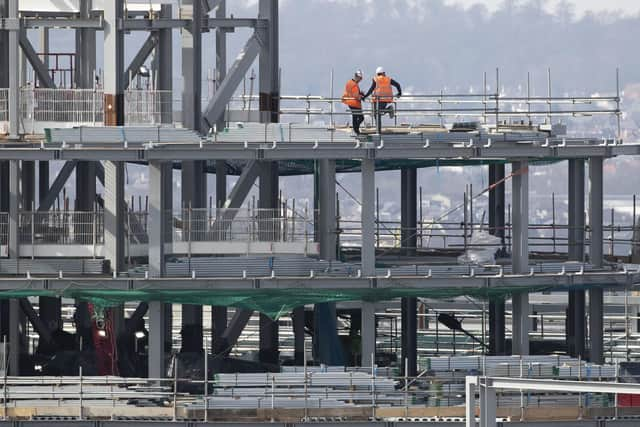
Construction in particular is feeling the strain, with viability concerns colliding with extended planning processes to make it harder for developers to commit to project timelines.
In each case, waiting may feel sensible. But the longer a decision drifts, the more its value can erode. Faster decision-making, in this context, is about protecting the commercial upside of a decision rather than rushing the judgement behind it.
The barriers are often practical. In Scotland the time needed to appraise options is the most common factor affecting the speed and quality of decisions, cited by 33 per cent of mid-market leaders. This is followed by risk or uncertainty around available options at 31 per cent, and competing business priorities at 27 per cent.
Of course, the answer is not to push businesses into unnecessary risk. Instead, we need to identify ways that businesses can make better decisions while conditions remain imperfect.
A practical starting point is to stop treating every decision as though it carries the same level of risk. Some calls, such as piloting new technology, changing a supplier or testing a pricing move, can be reviewed and adjusted. Others, including major capital projects, acquisitions or long-term funding agreements, need deeper scrutiny. Knowing the difference can help management teams move faster without lowering the quality of decision-making.
Firms can also set clearer thresholds for action. Decisions often drift because leadership teams are waiting for a perfect answer that may never arrive, but waiting for every variable to settle is rarely realistic. It can be more effective to agree in advance what level of margin pressure triggers a pricing review, what order book visibility is needed before investing in capacity, or what funding terms would make a project viable.
This discipline is particularly important when firms are dealing with pressures that do not move in a straight line. Energy costs, supply chain disruption and customer demand can all change quickly, which means fixed plans can become outdated before they are acted on.
Rolling scenarios can help management teams avoid that trap. Rather than relying on one forecast, businesses should regularly test what different outcomes and scenarios would mean for cash, margins, working capital and investment plans.
There is also a wider role for policymakers, lenders and advisers. If Scotland’s mid-market firms are to keep investing, hiring and growing, businesses need clear engagement on the issues shaping long-term decisions, from energy and infrastructure to skills and access to finance.
That means working with mid-market firms to understand where decisions are getting harder and what would help them keep moving. For energy transition businesses, that may mean greater clarity around planning, consenting and infrastructure timelines. For exporters, it may mean practical support around supply chain disruption and changing international demand.
Lenders and advisers can help too, particularly through faster funding decisions, better scenario planning and earlier conversations around refinancing, investment and working capital.
Scotland’s mid-market has already shown it can adapt. The next challenge is to turn that resilience into growth by helping firms make better decisions while they still have room to shape the outcome.
And for a part of the economy that supports hundreds of thousands of jobs and contributes billions in GVA, better decision-making is one of the clearest routes to unlocking much more of Scotland’s economic potential.
Michelle Elliot, partner, restructuring advisory, FRP
Comments
Want to join the conversation? Please or to comment on this article.