
Scottish firms ‘resilient’ despite slide in business confidence - KPMG
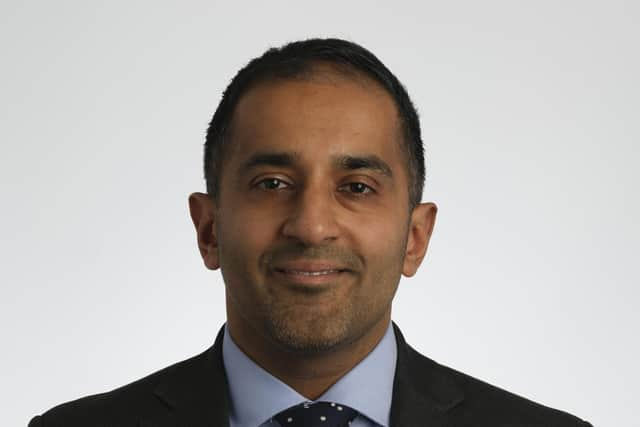
“What’s particularly striking is that more businesses are choosing to back themselves” – Vishal Chopra, Scotland senior partner
Business confidence in Scotland has tumbled as firms grapple with inflation, rising overheads and global trade disruption, a new survey has revealed.
Just over two thirds - 68 per cent - of private business owners in Scotland are confident of delivering growth in the second half of 2026, according to the latest Private Enterprise Barometer from accountancy and professional services giant KPMG. At the start of the year, that percentage stood at 87 per cent.
The decrease follows a challenging period for the economy amid instability in global energy markets, persistent inflation and trade restrictions.


The barometer is based on a sample of 1,500 privately owned businesses, spanning sectors such as professional services, financial services, technology, manufacturing and retail, to gauge their growth ambitions and priorities for the year ahead.
Technology continued to dominate as a leading investment priority for Scottish businesses, according to the latest findings, with 44 per cent of firms identifying areas such as artificial intelligence (AI), cyber security and broader digital transformation as key focuses. And while this is 22 percentage points below the UK average, it represents a six-point increase compared with the beginning of the year.
Diversification also remains firmly on the agenda, with more than half - 52 per cent - of businesses across the country looking to expand their service offerings and broaden their client base. This does, however, represent a decrease from 63 per cent at the start of 2026.
Of businesses considering how to fund their growth plans, nearly a third - 30 per cent - of firms continue to say they are open to private equity investment. Notably, however, 59 per cent of Scottish businesses are looking to focus on driving investment through their own balance sheets, above the UK average of 57 per cent and just a two-point decrease from the beginning of the year.
Amid a fall in confidence, businesses remain alert to the challenges ahead, KPMG noted. More than half - 55 per cent - of businesses identified inflation and ongoing cost pressures, and global disruption impacting UK supply chains and trade as the two biggest short-term risks facing their organisations. At the same time, firms are looking to policymakers to help strengthen long-term resilience.
When asked about the autumn Budget, some 37 per cent of Scottish businesses would like to see growth focused investment and an industrial strategy prioritised by the new Chancellor.
Looking further ahead, the wider economic picture remains front of mind, with 50 per cent of respondents pointing to the UK economic outlook as the biggest external factor shaping decisions around investment, growth and exit planning.
Vishal Chopra, Scotland senior partner at KPMG UK, said: “Scotland’s private businesses are proving resilient and are taking a pragmatic approach to the current economic environment. While confidence has eased slightly as firms continue to navigate inflation and global uncertainty, the ambition to grow remains clear.

“What’s particularly striking is that more businesses are choosing to back themselves. Rather than looking outside for funding, many are relying on their own balance sheets to invest and grow, giving them greater control at a time when the economic outlook remains uncertain.
“Now that the Scottish Parliament elections have passed, businesses will be looking for that renewed political focus to translate into greater economic certainty with a clear commitment to creating the conditions for investment and giving businesses the confidence to plan for long-term growth.”
UK-wide, private businesses also outlined plans to continue to invest in technology and skills as part of efforts to boost growth. The survey found that 80 per cent of UK business owners were confident in their firm’s growth prospects, down from 87 per cent when asked earlier this year.
Euan West, head of KPMG private enterprise in the UK and Europe, the Middle East and Africa, said: “2026 has continued to present private businesses with a challenging operating environment, shaped by uncertainty both at home and abroad.
“Against that backdrop, it is encouraging that eight in ten UK business leaders remain confident about their growth prospects. While confidence has eased since the end of last year, the overall picture remains one of resilience and determination.”
Meanwhile, a separate survey has found that almost three quarters - 73 per cent - of new Scottish businesses launched with support from Business Gateway are still trading a year after launch.
The annual impact report from the business support organisation also revealed a record number of start-ups, with 7,251 businesses receiving support from Business Gateway in 2025-26, up from the 6,810 supported the previous year.
According to the latest data, 52 per cent of start-ups supported were women-led, 30 per cent came from rural areas, and about 19 per cent were based in disadvantaged communities, underlining the national reach of the service.
Over the past five years, Business Gateway, which is run by local authorities, has helped in excess of 200,000 businesses and individuals.
Gail Macgregor, chair of the Business Gateway board, said: “The fact that three in four businesses we support are still trading a year later is what we’re most proud of. Start-up numbers are important, but it’s the businesses that sustain and grow that make a real difference to Scottish communities and local economies.
“We supported more than 7,000 new businesses across Scotland in the last year, and importantly that support is reaching every corner of the country, from cities to our most remote rural communities.
“Being a business owner in the current climate is not easy, but these figures demonstrate Scotland’s resilience and the very real difference that accessible, free business support delivered in our communities can make.”
Comments
Want to join the conversation? Please or to comment on this article.