
Scottish housebuilder Springfield eyes homebuying boost as interest rates fall
“We are continuing to discuss further projects with infrastructure providers, and we remain very excited about the substantial opportunities in the region” – Innes Smith, CEO
One of Scotland’s largest housebuilders is hopeful that lower interest rates and a rebound in consumer confidence will provide a much-needed boost to homebuying as it posted “solid” interim results.
Unveiling a modest rise in first-half revenues to £108 million alongside a sharp reduction in bank debt, Springfield Properties’ chief executive Innes Smith said the group remained on track to deliver results for the full year in line with market expectations.
“We are pleased to have performed in line with our expectations for the first half,” he told investors, “with an increase in profit and a significant reduction in bank debt compared with the same time last year.
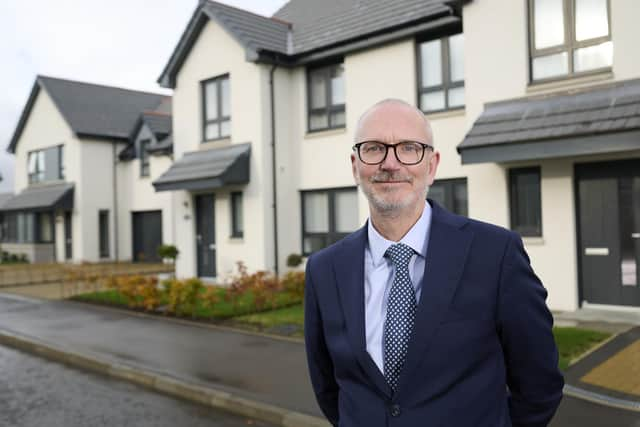

“We are hopeful that an increase in consumer confidence following the publication of the UK Budget, along with interest rate cuts, will provide a boost to homebuying,” he added. “We are continuing to perform well in affordable housing, with almost all of our [full-year] 2026 forecast revenue already delivered or contracted.
“Accordingly, we remain on track to deliver results for the full year in line with market expectations and look forward to reporting on our progress.”
The results for the six months to the end of November 2025 show that overall revenues were up 2 per cent, year on year, to £108m. Private housing revenue was down 9 per cent at £65.4m while affordable housing revenue grew by 26 per cent to £25.8m. Revenue from land sales almost doubled, up 92 per cent to £9.8m.
Adjusted profit before tax rose 8 per cent to £4.1m though adjusted operating profit was down 13 per cent at £5.6m. Net bank debt fell to £39.6m, from £62.9m a year earlier - a reduction of about 37 per cent.
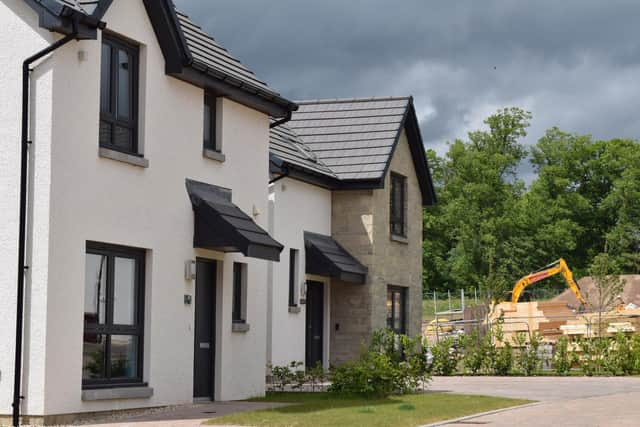
Smith added: “We also achieved an important strategic milestone with the signing, post period, of our first agreement to provide housing to support the delivery of crucial infrastructure upgrades across the north of Scotland.
“We are continuing to discuss further projects with infrastructure providers, and we remain very excited about the substantial opportunities in the region.”
Make sure you keep up to date with breaking news from across Scotland by signing up to our free newsletter here.
In December, Springfield announced that it was to supply some 300 homes to house workers upgrading the country’s electricity network.
In a unique industry tie-up, the housebuilder said it had signed an initial agreement with Scottish Hydro Electric Transmission - part of energy giant SSE - to deliver 293 homes, at six sites across Highland, Moray and Aberdeenshire. The properties will be leased for an initial four-year period to accommodate workers involved in the company’s major energy upgrade projects.
It is expected that the homes will be delivered by Springfield on a phased basis over the next three years.
At the conclusion of the lease period, the housebuilder said it would have “multiple attractive options”, including making the properties available for private housing sales, sales to private rented sector providers or to affordable housing specialists.
The firm is looking to capitalise on green energy growth in its core North-east market after sealing a milestone £64.2m deal earlier in 2025 with industry major Barratt Redrow. That agreement saw Springfield offload 2,480 plots of undeveloped land with planning consent across six sites, primarily in central Scotland.
The group said it was continuing to discuss further agreements with SSEN Transmission and other major infrastructure providers to deliver new housing on a similar basis to support the upgrade of “crucial” energy infrastructure in the north of Scotland.
Rob McDonald, managing director of SSEN Transmission, added: “This agreement with Springfield represents a milestone in our housing legacy commitment. It’s more than just bricks and mortar - it’s about creating long-lasting value for communities, providing much-needed homes, and supporting the workforce delivering vital grid upgrades.
“Alongside our other housing agreements, we are proud to be working in partnership with Springfield to deliver homes that will benefit local people for decades to come.”
Springfield’s first-half results also confirmed that the group was on track to deliver revenue growth in private housing for the full year based on the order book and “usual seasonality”.
It also highlighted its “high-quality” land bank of 7,305 owned and contracted plots, 63 per cent of which have planning permission, and 6,293 strategic plots.
Within private housing, prices remained “resilient” across the group’s brands with an increase in the average selling price of a home to £344,000, from £313,000, as a result of changes to the housing mix. This served to partly mitigate the reduction, as expected, in completions to 190, from 230 previously.
The reservation rate was said to be slightly lower than the first half of the prior year due to a lengthening of the sales cycle in line with the wider housebuilding industry. This led to increased time and cost to complete sites, which impacted gross margin in private housing during the period.
The group said it had performed well in “affordable housing”, with growth in the number of completions to 113 from 95. The average selling price in affordable housing increased to £228,000 from £215,000.
In contract housing, Springfield provides development services to third-party private organisations and receives revenue based on costs incurred plus fixed mark-up. To date, this has largely consisted of services provided to Bertha Park, on the outskirts of Perth.
As of the end of November, the contract housing land bank with planning consent consisted of 487 plots.
Comments
Want to join the conversation? Please or to comment on this article.