
Storage will be key in the renewable energy revolution
Long Duration Energy Storage has a huge role to play in the transition to a system majoring in renewables, writes Laura Sandys
It’s no secret that as a nation Scotland is playing a pivotal role in the energy transition – with figures showing it produces over 100 per cent of its electricity needs from renewable sources, placing it among the top producers in Europe. As a powerhouse of clean energy generation, this brings vast benefits to the UK and its ability to meet its binding 2050 net zero target.
In 2024, 42.3 per cent of the UK’s energy came from renewables according to data from National Grid, with 48 per cent of the ongoing target of 30GW located in Scotland. While increasing the share of energy coming from clean sources remains paramount, we also have to prepare the whole system for this change to clean, intermittent forms of energy as our mainstay power source.
Storage has a huge role to play in the transition to a system that is majoring in renewables – specifically Long Duration Energy Storage or LDES. LDES is generally considered to be storage of over eight hours, although definitions can vary. Lithium-ion batteries are a short duration form of storage which is less than four hours. I call Long Duration Energy Storage the frozen food of the energy system; capturing the energy as ‘harvested’ and then releasing it to the system when it needs it, storing it much longer than batteries and offering many more system services to support the resilience of our grid networks or our ‘energy highways’.
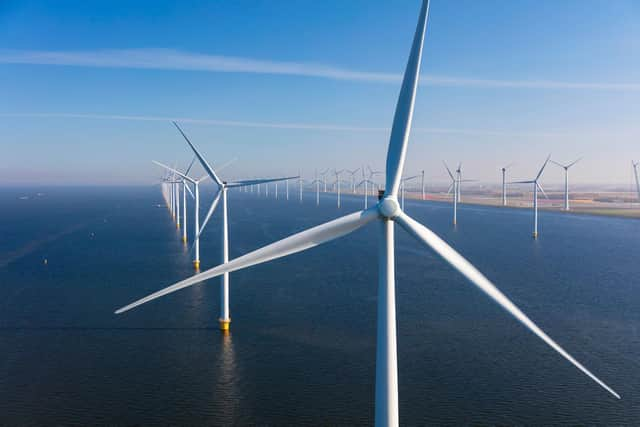

Scotland has been long acquainted with one of the oldest forms of LDES – pumped hydro – which has a major role to play storing and releasing dispatchable power when we need it. The difference with “new” forms of LDES such as liquid air is that it is fully locatable – plants can be built anywhere the grid requires, delivering flexibility and reinforcing system stability. This means that the grid remains balanced and reliable and is much less likely to experience black outs.
Put plainly, storage isn’t a nice to have, it’s an absolute essential to deliver a decarbonised grid by 2030 or our 2050 net zero targets. Storage saves the system money, because it reduces the amount of what we call ‘curtailed wind’. This is when wind farms are producing energy, but because demand is low, operators are paid to turn down power output. In the UK in 2024, over £1bn was spent curtailing wind which is simply not sustainable.
With so much offshore wind located north of the Border, storage and grid balancing is going to be especially important. The co-location of Long Duration Energy Storage with offshore wind in Scotland is something that is currently being investigated by Long Duration Energy Storage company, Highview Power. Initial results show that there is value to combining offshore wind with LDES to support reducing wind curtailment, increasing productivity, and helping the move to a more flexible, resilient zero carbon grid.
The company has also already committed to building one of its grid-scale LDES facilities at Hunterston in Ayrshire after getting the go-ahead in October 2024. The 2.5GWh LDES plant will deliver eight times Scotland’s current operational battery capacity. It will be strategically placed in the grid transmission network to maximise the use of Scottish-produced renewable electricity delivering enough power for 650,000 homes for 12.5 hours. This is the first of many plants planned for Scotland.
What is abundantly clear is that Scotland is at the centre of the UK’s ability to deliver its energy strategy and climate targets through its offshore wind capacity, transmission line upgrades and investment, and now with the advent of critical grid-scale storage. With that, Scotland should reap the economic benefits and jobs associated with being at the forefront of the energy transition.
It’s an exciting, and critical, time for delivering the infrastructure and technology that will provide a clean energy transition, to both reduce emissions, deliver clean power and, vitally, bring down bills. If Scotland unleashes the power of storage in its energy system, it’s possible that we can achieve the clean energy goals of the entire United Kingdom.
Laura Sandys, Non-Executive Director, Highview Power
Comments
Want to join the conversation? Please or to comment on this article.