
Third of Scottish firms say economic conditions better now than a year ago
“The findings also point to more positive perceptions of both the Scottish and UK governments” – Scott Edgar, Diffley Partnership
More than a third of Scottish businesses believe economic conditions are better now than they were a year ago, a survey today suggests.
The latest quarterly Understanding Business poll of more than 500 Scottish companies reveals that turnover and profitability expectations are also on the rise, with nearly half of those firms surveyed expecting both measures to increase over the coming year.
Perceptions of both the Scottish and UK governments have improved, with half of companies saying the Scottish government is acting to address business concerns and more than a third saying the same of Westminster.


The Understanding Business survey is designed and conducted by research consultancy Diffley Partnership and strategic communications firm Charlotte Street Partners. The latest snapshot was conducted during September, soon after John Swinney secured his first personal mandate as Scottish First Minister and a new UK government was formed under Andy Burnham’s leadership.
In the latest research, more than one-third (35 per cent) of firms believe economic conditions are better now than they were a year ago, an uptick of 11 points since the last survey in June and the highest level recorded since the tracker began in June 2023. Roughly two-in-five (43 per cent) believe economic conditions have worsened in the last year, while 22 per cent believe they are about the same.
Similarly, almost two-in-five (38 per cent) of companies expect economic headwinds to ease in a year’s time, also an 11-point increase since June’s survey. A quarter (25 per cent) believe they will be about the same, while 37 per cent anticipate worsening headwinds.
Optimism also extends to individual business performance, with almost half (46 per cent) of firms expecting their profitability to increase over the next 12 months (up eight points from June) and 45 per cent expecting their turnover to increase (a rise of five points).
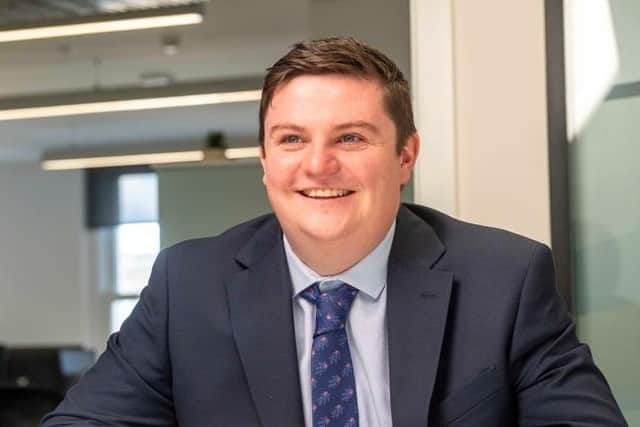
When asked about politicians’ interest in Scottish businesses, a majority (56 per cent) feel the Scottish government is concerned with industry needs (up six percentage points from June), while 43 per cent say the same of the UK government (up eight points). The proportion that disagree stands at 28 per cent for the Scottish government and 36 per cent for the UK government.
There has also been an increase in the proportion of those who believe governments are taking action to address business concerns. The Scottish government is viewed more favourably, with half (50 per cent) agreeing it is taking action (up ten points from June), compared to 35 per cent who believe the same of the UK government (up eight points). The proportion that disagree stands at 32 per cent for the Scottish government and 42 per cent for the UK government.
When asked to evaluate the new Scottish administration’s first 100 days in power, more than half (56 per cent) of business leaders are confident that ministers are focused on business growth in Scotland. However, about two-in-five (39 per cent) reported that they were not confident that their actions will support business growth in Scotland.
There is strong support too among Scottish businesses for some of PM Burnham’s early policy announcements, including his move to cut business rates for pubs, clubs and live music venues, with more than three-quarters (77 per cent) saying the 20 per cent reduction should be adopted in Scotland. Businesses are also supportive of further devolution of decision-making within Scotland, with almost three-in-five (58 per cent) of firms agreeing that establishing metro mayors would promote economic growth.
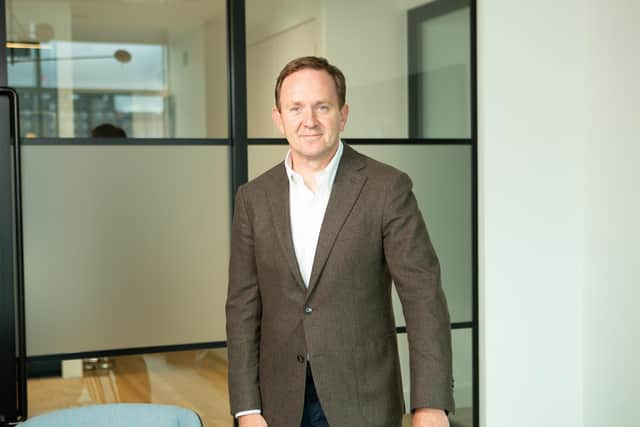
Scott Edgar, head of analysis and insights at Diffley Partnership, said: “This wave of Understanding Business points to a notable improvement in sentiment among Scottish businesses. While firms continue to identify significant challenges around costs, taxation and economic uncertainty, they are more likely than they were earlier this year to say that economic conditions are improving rather than deteriorating.
“The findings also point to more positive perceptions of both the Scottish and UK governments. Taken together, the results suggest businesses remain alert to the challenges they face but are taking a more positive outlook than they were just a few months ago.”
Want more stories like this? Subscribe to our business newsletter here.
Malcolm Robertson, founding partner at Edinburgh-based Charlotte Street Partners, said: “These numbers suggest that businesses are encouraged by what are essentially two new governments. John Swinney has talked much more about economic growth, and Andy Burnham is indicating that he will take on some of the big challenges facing the country.
“However, politicians – like the rest of us – will be judged on whether these early signs of support and action are converted into good policy and the economic growth that is the key to bringing down the cost of living for people up and down the country.”
Within the survey’s quarterly tracker, Understanding Business also asked business leaders for their views about the development of artificial intelligence (AI) data centres in Scotland, an issue that appears to divide opinion almost straight down the middle.
Around half of Scottish companies (49 per cent) believe there should be a temporary pause on approvals for new AI data centres until their impact on energy infrastructure, communities and the environment has been fully assessed. Nearly the same proportion (48 per cent) believe Scotland should support the development of new AI data centres to attract investment, jobs and economic growth, underlining the competing and complex considerations that remain at the heart of the debate.
Comments
Want to join the conversation? Please or to comment on this article.