
What's behind the roaring resurgence of Aberdeen-Angus beef
The brand has made an impressive comeback, even as some meat consumption has been in decline


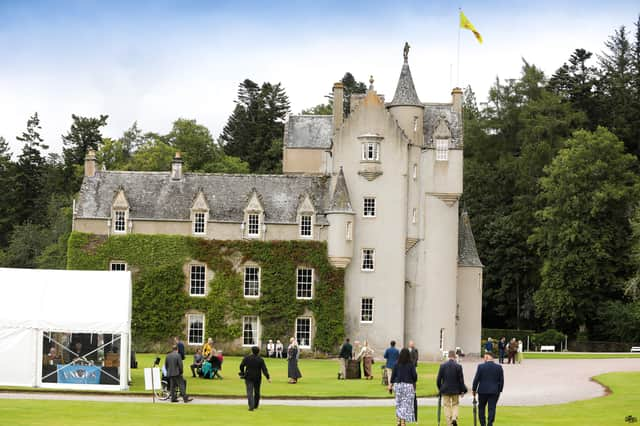
With its turrets and imposing tower set in sweeping grounds, Ballindalloch Castle has been a fixture in the Scottish baronial style of architecture since it was completed on the confluence of the rivers Spey and Avon southwest of Craigellachie in 1850.
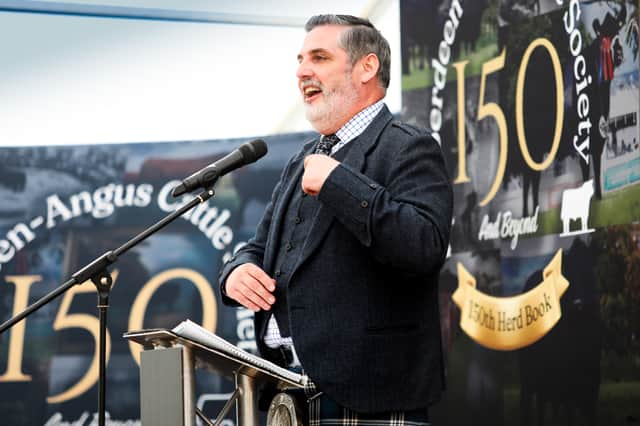
Last week the castle and its gardens – home for the past 23 generations to the Macpherson-Grant family – hosted a special event in the agricultural calendar: the unveiling of the 150th Aberdeen-Angus Cattle Society “herd book”.
Unless you are familiar with matters bovine, you are unlikely to know what this document represents. But it has almost talismanic status to the men – and they seem mostly to be men – who inhabit the world of the Aberdeen-Angus beef cow.
That’s because, ever since 1862, it has been the record of all pedigree Aberdeen-Angus animals registered with the Society in that particular year. It was created to provide a record of breeding lineage for the black, hornless, hardy cattle that were – and remain - typical of the northeast of Scotland.
A year earlier, Sir George Macpherson-Grant of Ballindalloch had refined the breed to what we now know as Aberdeen-Angus, building on work by the breed’s pioneers, Aberdeenshire farmer William McCombie and Angus farmer Hugh Watson. As part of this, he established a herd that grazed fields in front of the castle.
A herd of 90 Aberdeen-Angus cattle - owned by current laird Guy Macpherson-Grant – feeds on those same fields today. Not only can those cattle can trace their roots to those first animals but the Ballindalloch herd is the only one to have appeared in the herd book every year since it was first published.
Such consistent longevity contrasts with the uneven trajectory of the Aberdeen-Angus breed itself in the past century.
While it has long been one of the most recognisable food brands in the world, with a global herd across the US, Australia and Argentina, the breed in Scotland and the UK went through near-existential decline in the 1960s and 1970s as breeders reduced the size of the animal to send live bulls to the Americas with an eye to shipping carcasses back to the UK. That benefited rival, larger continental European breeds, chiefly the Charolais and Limousin of France, which became favoured in the UK for their size.
Yet in recent years Aberdeen-Angus has made a roaring comeback, even as some meat consumption has been in decline.
Breeders realised it made sense to bulk the cow back up to its original, boxy shape to maximise cuts of meat. In the noughties, retailers capitalised on an increasing consumer preference for premium food, stocking Aberdeen-Angus beef for its distinctive flavour. The meat started appearing at M&S, Waitrose and Costco. Today, you can even buy a range of matured Aberdeen-Angus steaks at Lidl.
The UK herd has gradually expanded. Aberdeen-Angus calf registrations jumped by 62 per cent in the decade to 2025, according to the latest data available from Quality Meat Scotland, which promotes the meat sector. Last year, registrations were two percentage points higher than they were in 2022, at 27 per cent of the total beef herd in the UK.
The rising price of meat does not seem to be putting shoppers off, either. Appetite for premium beef products has been increasing, with volume up by 8.8 per cent year-on-year in the period to November 2025, according to World Panel by Numerator, a data firm. Beef steaks marketed as Aberdeen-Angus are generally priced around 20-50 per cent higher than standard lines.
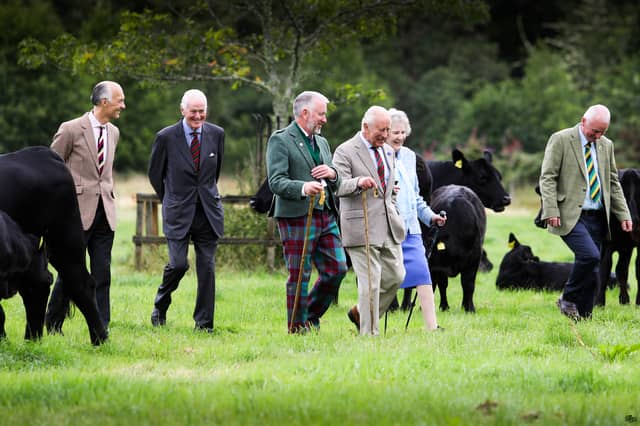
“People may be eating less meat generally but they are happy to pay more for a properly provenanced, quality tasting product,” says Guy Macpherson-Grant, who hosted King Charles, Aberdeen-Angus Cattle Society patron, as he inspected the Ballindalloch herd last week. That was before this week’s discovery of a case of bovine spongiform encephalopathy (BSE) in a cow on a farm in Dumfries and Galloway.
As the monarch greeted some of the breeders present, including some from Canada and the Czech Republic, a certain bullishness about the future of the industry prevailed, whether the issue was cattle’s role in climate change, changing consumption habits, or the imminent prospect of US beef imports under the recently greed UK-US Economic Prosperity Deal.
I met Ken Howie, owner of a pedigree herd of Aberdeen-Angus on the Cairnton Farm near Banchory, who on his farm’s website describes his job as “heaven with an overdraft”.
“As long as we import good beef it’s no big deal,” Howie told me, adding that the last 30 years had seen a “massive resurgence” of the breed. “The breeders have stepped up big time.”
Jim Fairlie, agriculture minister at Holyrood, told me the Scottish government had resisted calls by the Climate Change Commission to cut the Scottish beef herd by 20 per cent. “We’re going to look at other ways to reduce emissions. There are good gains through genetics to be had over time,” he said.
Indeed, use of genetics to improve herd quality is set to be a key element of the Society’s work from this autumn, when a new database is released that builds on existing ways to improve parentage verification.
Robert Gilchrist, the organisation’s chief executive, says the database will be also part of work using software developed by New Zealand-based company Helical to explore Aberdeen-Angus DNA to find markers on the genome that are associated with characteristics like meat tenderness.
“This is the dawning of a whole new era in the DNA landscape for us, to ensure we are breeding the very best animals,” he says. “The aim is to retain the brand at the forefront of consumers’ minds.”
Comments
Want to join the conversation? Please or to comment on this article.