
Why agility will be the key to sustaining growth in 2026
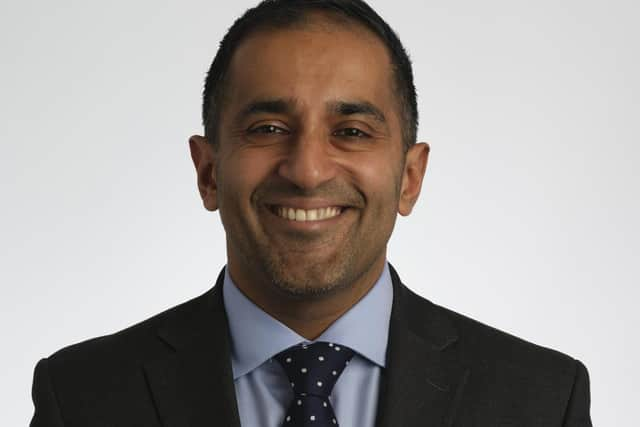
The level of confidence among Scottish businesses in the midst of challenging conditions is encouraging, writes Vishal Chopra
The past few years have tested even the most experienced leadership teams.
Inflation squeezed margins, labour shortages constrained growth and geopolitical shocks disrupted supply chains. For many businesses, planning became an exercise in constant revision.
Rather than retreating however, Scottish firms have recalibrated.

There is a cautiously positive mood among Scotland’s private businesses as the first few months of 2026 have bedded in. While 2025 was widely seen as a year of uncertainty, many leaders now describe this year as one of unreliability, demanding flexibility and the need to adapt quickly.
KPMG’s latest Private Enterprise Barometer underlines that sentiment, with 87 per cent of privately owned firms in Scotland saying they feel optimistic about their growth prospects this year. That level of confidence is encouraging, particularly given the backdrop but what is most striking is the nature of that optimism. It is grounded, pragmatic and deliberate.
Business leaders have learned to operate in a more volatile environment so that resilience is no longer reactive, it is embedded.
Investing with purpose
One of the clearest signals from this year’s findings is the strength of investment intent. Half of Scottish businesses (50 per cent) plan to introduce new technology over the next 12 months, significantly above the UK average of 39 per cent.
This goes beyond enthusiasm for digital transformation, it reflects a deliberate effort to address structural challenges, particularly productivity. Leaders are investing in systems including AI that streamline operations, enhance customer insight and strengthen financial reporting.
However, implementation is not simply a case of switching technology on. Organisations must tackle data integration and risk considerations, while equipping their workforce to use new tools responsibly. Those that succeed in 2026 will pair digital ambition with clear oversight, targeted skills investment and transparent reporting.
Sustainability embedded in strategy
Scotland also stands out in its approach to sustainability with nearly three-quarters (73 per cent) of Scottish businesses planning to review their use of sustainable materials – the highest proportion anywhere in the UK.
Scotland has positioned itself as a leader in the energy transition, supported by significant public investment in climate initiatives and green jobs and private enterprise is increasingly aligning with that direction.
For many firms, sustainability considerations now influence procurement, capital investment and long-term growth planning. Investors are paying closer attention to environmental credentials and customers expect credible action. Meanwhile employees want to work for organisations that reflect their values.
If Scotland can successfully align public policy, private capital and entrepreneurial drive around the transition to a lower-carbon economy, the opportunity extends far beyond environmental benefit. At KPMG we are committed to playing our part aiming to achieve net zero emissions by 2050 and become a zero-waste business by 2030.
An outward-looking mindset
Growth ambitions are not confined to the domestic market either. Two-thirds (66 per cent) of Scottish firms report a growing appetite for international expansion, while four in ten (40 per cent) of businesses are open to private equity investment and 35 per cent are actively pursuing acquisitions.
This signals both confidence and pragmatism. Leaders recognise that scaling in a competitive global environment often requires new partnerships or fresh capital. In high-growth sectors such as space, early-stage businesses are already being encouraged to think internationally from the outset. That’s why we are supporting the UK Space Agency’s Accelerating Investment Export Pathway (AIEP) programme, helping high-potential space SMEs identify the right international markets.
Balancing confidence with caution
Yet cost pressures persist, geopolitical uncertainty remains a factor and two fifths (40 per cent) of private firms see their outlook on the UK economy, and the same proportion on changes to tax policy, as top factors undermining their confidence in business growth over the next year.
This tension between strong business-level optimism against a volatile macroeconomic backdrop will define 2026.
What’s clear is that businesses are investing, innovating and looking outward but measured confidence, underpinned by resilience and adaptability, may well prove to be Scotland's greatest asset in the year ahead.
Vishal Chopra, Office Senior Partner for Scotland at KPMG UK
Comments
Want to join the conversation? Please or to comment on this article.