
Why it’s never too soon to start thinking about succession planning
“I still feel deeply connected to the business and committed to the team I helped to build over a significant period of time”
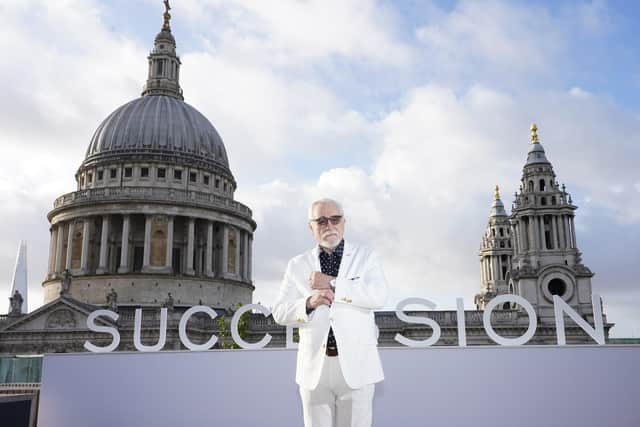
The Roy family jostling for position during four series of Succession may have been enough to put most management teams off the topic for a generation. But the reality is that planning who should take up the reins when a business leader moves on is a bit like painting the Forth Bridge – as soon as you have appointed someone, it is probably time to start thinking about who could be next.
Yet, succession planning is often treated as an issue to worry about later – a distant milestone that only becomes relevant when someone is preparing to step down or retire. In reality, it is one of the most important decisions for any organisation, and it is never too early to start thinking about it.
I can speak from personal experience, having recently handed Livingston James Group over to a newly promoted leadership team and having advised clients on the topic for more than 20 years. It was a topic we considered right from the early days and, whilst in no way a fait accompli, it is no coincidence that the third person to join our business back in 2010, Mark Lewis, is now our CEO.


Planning for succession at such an early stage maximised our options. It gave us the time to prepare people properly, to test any assumptions built into the process, and to ensure the organisation was ready – both culturally and operationally – for the change to come into effect.
That is not to mention the emotional side, which matters more than you might imagine. I still feel deeply connected to the business and committed to the team I helped to build over a significant period of time. Stepping back from the CEO role has felt a little strange at first, and it would have felt even stranger had I walked away entirely. Having supported a range of other leaders through the process, I know that it is a familiar feeling for many.
However, my change in role was crucial for creating the space the business’s new leaders needed to take on the roles they have been preparing for – even where that means recognising elements of the role I thoroughly enjoyed now belong to someone else. Our team is preparing for our annual offsite event and, for the first time in 16 years, I will not be attending. That is a deliberate choice: stepping away gives the new leadership team the authority they need and deserve to really step into their new positions.
Succession planning is not just about moving people around an organisation chart when the time is right - the horizons you are working to are equally important. For some businesses, that can mean thinking in generational terms. I recently met with the leader of a family-owned firm who was thinking about potential successors among relatives in their 20s, and the experience those individuals may need over the next couple of decades to prepare them to take on the business.
For organisations with different ownership structures, however, the window will be shorter – often three to five years. Even working to that timeframe allows you to pose the right questions: What will this role require in future? Who might be interested within the existing team? Will they be ready? What development plan will get them there? Considering these questions at this stage will help you identify and develop your candidate – hopefully plural – to put them in the best place possible to do the job.
That is why structured development pathways are hugely important. Potential successors need a strong track record of delivery in a number of areas of the organisation, and they also need to have enough literacy in disciplines they are less familiar with to be able to ask the right questions of any part of the business.
While they do not need to be experts in everything, all leaders need resilience, strategic agility, a growth mindset, and the ability to lead through ambiguity. Some of that can be taught, but much of it comes from experience. If you have a longer time horizon, you can deliberately provide them with it.
Organisations that leave it too late in the process often find themselves forced into the external market because internal candidates simply have not had the chance to prepare. An optimal process would see internal candidates given the time, exposure, and mentoring they need – coupled with a robust process that benchmarks them against the best candidates from outside the organisation. For the business, that means optionality and, for whoever gets the job, they and all other key stakeholders know they have earned the role on merit, which gives them the best opportunity to succeed.
Finally, succession plans need to be embedded in relationships that are critical to your business. Key clients and stakeholders should meet potential successors early, build shared experiences, and feel confident that they know the person taking the helm. That provides assurance that continuity is being protected and the culture they are used to – often the main differentiator in sectors like professional services – will be maintained through any transition.
There are always risks when appointing a new leader, whether you recruit internally or externally. Choosing the former, by design, you have no proof that they can do the new job before they start; with the latter, there is always a chance the organisation may reject the candidate.
Whichever succession path you choose, giving yourself enough time to plan and lay the groundwork will help to mitigate those challenges. A development plan thought of far in advance, thoughtful onboarding, clear communication, and a robust 100-day plan will give leaders the foundations they need to build on.
Succession planning is not about a single moment in time – it is a long-term process. The earlier you set it in motion, the stronger your business will be as a result.
Jamie Livingston, chair of Livingston James Group
Comments
Want to join the conversation? Please or to comment on this article.