
Winds blow again over Ming Yang dilemma
Scottish and UK governments need to be aligned for long-term security
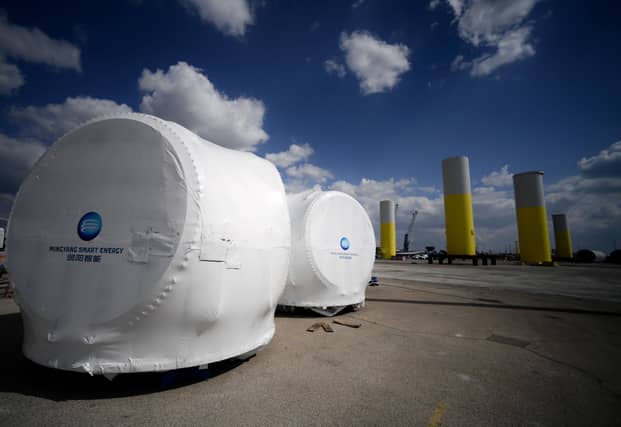


When Westminster in March turned down plans by Chinese wind turbine manufacturer Ming Yang to break into the UK’s offshore wind market by building a £1.5 billion factory in Scotland, two governments were united in their displeasure: those of China and Scotland.
China’s commerce ministry fumed that the decision, which would have “a negative impact on pragmatic bilateral economic and trade cooperation”.
Then-deputy first minister Kate Forbes called the decision “sabotage of Scotland’s industrial future”, over a plan that could have created up to 1,500 jobs at a factory at Ardersier, near Inverness.
Ever since then Ming Yang, one of a handful of fast-growing Chinese wind turbine groups, has continued to make the case for its UK proposition.
It also moved quickly on a Plan B for building its long-desired European beachhead, courting Spain as an alternative, hosting Spanish prime minister Pedro Sánchez at its Guangdong headquarters weeks after the UK decision.
Now, the company’s lobbying efforts to overturn the UK decision, made under the premiership of Keir Starmer, have revived debate about the merits of Chinese involvement in the UK’s critical national energy infrastructure.

The commercially compelling case in favour of Ming Yang boils down to jobs in the Highlands and helping build a supply chain for the UK’s offshore wind ambitions - especially for floating wind farms designed to harness windier conditions far out to sea off Scotland. Ming Yang’s turbines are also cheaper than those of its European rivals Vestas and Siemens Gamesa.
The case against comes down to perceived security threats to the UK’s energy infrastructure, and supply chain dependency. Given that operational software embedded in a turbine remains in the control of the manufacturer after installation, a wind farm using Chinese turbines could be switched off, causing damage to downstream transmission and grid. Cyber espionage is another worry - and caused Germany’s security establishment last year to recommend the exclusion of Chinese wind turbines from its wind system. .
Ming Yang has said it would use a proposed technical joint venture with UK energy company Octopus, with ringfenced UK governance, to handle any security concerns. This week its UK chief executive, Aman Wang, said: “We fully respect the [UK] government's duty to protect national security, and have always been clear that we will meet the requirements the UK sets.”
This is clearly a good faith effort. But experts I have spoken to say there is no copper-bottomed way around the fact that Chinese IP and algorithms embedded in a turbine’s digital systems remain controlled by the manufacturer. And Ming Yang would be required under the Chinese system to obey whatever the ruling communist party may tell it to do.
I know of one European rival to Ming Yang that has long been able to access its turbines installed on wind farms through a “back door”, without the wind farm operator necessarily being aware.
In this circumstance, where you can’t be completely sure of a technical workaround or governance guardrails, it would seem to be irresponsible for any UK government to allow a wind turbine manufacturer into the UK’s offshore wind ecosystem – especially after the UK described China in last year’s Strategic Defence Review as a “sophisticated and persistent challenge” (a claim that Beijing has frequently dismissed).
Moreover, asking for forgiveness later is not a workable principle for any government in such a situation. It’s a point that surely must have occurred to John Swinney as the first minister listened to the briefing given to him at the invitation of UK energy minister Michael Shanks on the national security aspects of Westminster’s Ming Yang decision.
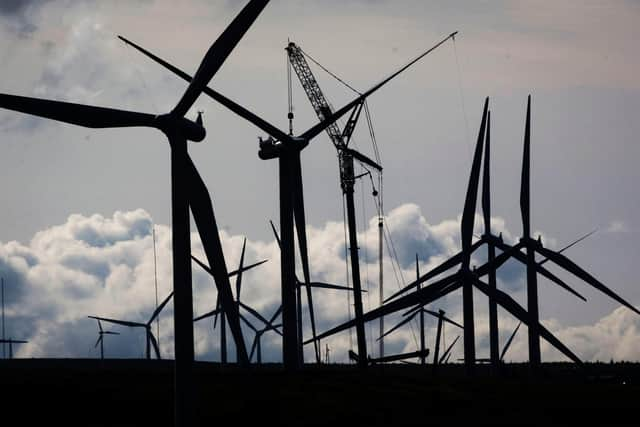
In any event, the security issue is inextricably linked to something bigger: long- term economic and national security. This is about who you want building, and connected to, your critical national infrastructure for the long term.
The lesson of British Steel, where Chinese steel company Jingye appeared to have held the UK government to ransom over supply of critical feedstock to keep furnaces running, shows that economic dependency risks are real in the currently fraught geopolitical landscape.
It's also worth bearing in mind that a wind turbine isn’t simply sold to a developer. The wind turbine manufacturer will also enter into a contract with the developer to provide turbine operations and maintenance. This locks in a supply chain relationship – indeed, dependency - for a long time, often up to 15 years.
In such a context, care needs to be taken with strategic partnerships. It’s no accident of diplomacy that the UK and Japan two months ago signed a landmark offshore wind pact, making the UK “Japan’s leading clean energy partner in Europe”.
Jobs flow from such alliances, too, as we saw this week when the Japanese owner of Port of Nigg, Mitsui, announced the creation of 180 offshore wind-related jobs at the Scottish site.
The UK and European states are also moving closer on offshore wind, in January signing the Hamburg Declaration on pan-European cooperation in the North Sea. Vestas is set soon to make a final decision on investing €250m in a nacelle factory at Port of Leith in Edinburgh, potentially creating 500 jobs. For a Scottish government that rarely misses an opportunity to tout closer relations with Europe, these ought to be geopolitically welcome developments.
Yet Stephen Gethins, Scotland’s energy minister, said yesterday that national security “goes both ways”, appearing to present Ming Yang as a part of a Scottish context for energy security. He has written to the U.K. government asking for its initial assessment of Ming Yang to be reviewed.
This is to reveal a worrying constitutional fracture between Holyrood and Westminster on the essence of the issue. It is the UK and Scottish governments that should be lining up. The only beneficiary of division is China.
Comments
Want to join the conversation? Please or to comment on this article.