
Tachmed teams up with Scottish Development International
Medtech innovator, Tachmed, has teamed up with Scottish Development International [SDI] to help fund growth and development, while capitalising on the country’s world class technology, life sciences and engineering pedigree. Co-founded by Paul Christie, CEO, and Lord Maxwell Beaverbrook in 2018, Tachmed is dedicated to enabling people to diagnose a multitude of medical conditions from the comfort of their own home using just one digital device.
Co-founded by Paul Christie, CEO, and Lord Maxwell Beaverbrook in 2018, Tachmed is dedicated to enabling people to diagnose a multitude of medical conditions from the comfort of their own home using just one digital device.
With plans to officially launch to market during the second half of 2025, its advanced smart health platform will have the capability to significantly reduce healthcare waiting lists, while saving vital costs, resource, and even lives through early diagnosis.
In working closely with Scottish Development International, Tachmed is now tapping into Scotland’s rich seam of data, biomedical and life sciences experience by working with universities and tech companies to develop its home healthcare system and support its launch.
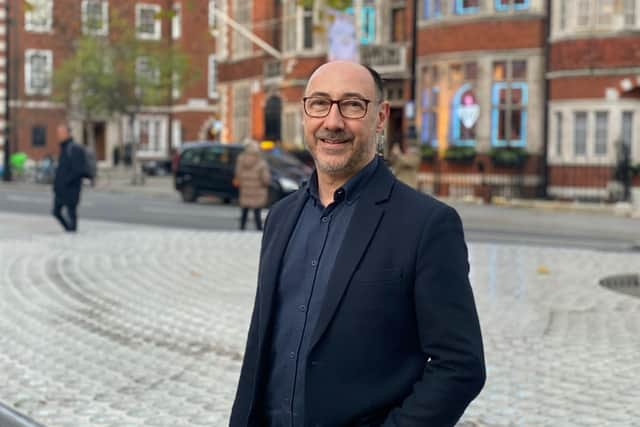

As the international arm of Scottish Enterprise, Scottish Development International [SDI] has not only helped Tachmed to get boots on the ground in Scotland, but has also supported the start-up in obtaining a £900,000 Grant Award to establish a facility in the Glasgow area, and to fund up to 40 permanent full-time jobs.
With around 770 organisations employing over 42,500 people, Scotland has one of Europe's largest life sciences sectors. It includes global pharma services companies and medical technology startups.
Attracted to Scotland on the strength of its “huge pool” of life and data science talent, together with invaluable engineering experience, Tachmed’s scientific advisor professor, Paul Townsend, now Deputy Principal of Research and Innovation at the University of Stirling, helped facilitate several conversations with other universities. These included Glasgow, Strathclyde and Dundee.
Further collaborations in Scotland have involved work with FlexMedical Solutions, a life sciences business based in Livingston.
Paul Christie, CEO of Tachmed, explained: “When we looked at tech companies and engineers who’ve developed businesses in our field in Scotland, we soon discovered the country is full of innovation. I view Scotland as a Silicon Valley of the North, hosting a UK-renowned technology centre.”
“In addition to our work with local Scottish businesses and universities, we've also entered a strategic partnership with Amazon Web Services (AWS), which is helping us to build a scalable solution architecture in the cloud. This works with ground-breaking and proprietary generative AI-based tools based on Anthropic’s Claude Models. Through the partnership we have accelerated our Research and Development (R&D) software and test functions.”
On the strength of accrued data, Tachmed believes its home based diagnostic test could eliminate a significant number of GP appointments and A&E visits, preventing medical conditions from becoming worse or turning into life-threating illnesses.
Paul finished: “Scotland has given us a fresh and futuristic approach to how we can design and develop our products. Our business is benefiting from the nation’s strong life sciences and scientific capability. The transition of data science into iterative AI applications will form the next generation of primary health services. And this is the vision we’re so excited about.”