
'Our bilingual pupils are an asset for Glasgow': Teachers hit back at Nigel Farage's anti-immigrant comments

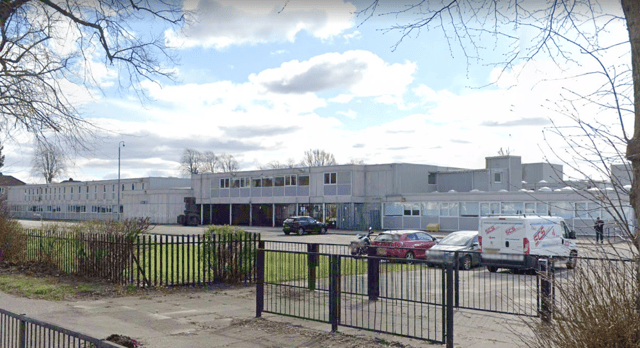

Glasgow’s English as an additional language pupils are an asset to the city, say teachers appalled at the comments of Nigel Farage
Glasgow's English as an additional language (EAL) pupils are outperforming their monolingual peers across attainment measures from exam results to attendance.
Despite this success, a recent surge in anti-immigration sentiment has prompted the city’s EAL support service to change its social media processes over fears it cannot keep learners safe.
Recent protests outside school campuses - including in Glasgow’s east end - where adult ESOL lessons take place have caused grave concern among language tutors.
This week, leader of Reform UK, Nigel Farage, posted a viral social media video claiming that the number of EAL pupils in Glasgow amounts to a “culture smashing” in the city.
Conflating small boat arrivals, illegal immigration and asylum seeking families, Mr Farage said earlier this week: “An incredible fact has come out today, that nearly one in three pupils in Scottish schools only has English as a second language.
“Nearly one in three students do not speak English as their first language.
“Now that tells you something. This actually is the cultural smashing of Glasgow.
“It's turning it into a completely different city in every way.
“Who stood up and fought back? No one, and that's why Reform are here.”
Going on to describe EAL pupils as “unfair on taxpayers” he said “that the people like this should come into Britain illegally, and we should spend this amount of money on them.”
The city’s schools would strongly disagree with what the number of EAL pupils tells Mr Farage.
“The thought of young people being othered in this way because they speak another language is appalling and completely against the ethos of Bannerman where every young person is treated equally,” says headteacher Seonaidh Black.
“I hear really only positive stories about young people who are speakers of additional languages,” Mrs Black said.
“From my perspective, bilingualism, multilingualism, is a real strength in our learners.
“There's so much about the benefits of being able to be a speaker of more than one language, in terms of cognitive ability.
“There’s also lots of other social and cultural benefits that come from that.”
She described accommodating classes of pupils who speak various languages as “relatively straightforward”, aided by technology.
“This richness that comes from diversity is something that we should celebrate in schools, and it certainly shouldn't be something that's used as an argument for negative things in our society.
“I'm appalled that is what the narrative seems to be at the moment, and it's only a good thing to have as many different perspectives and as many different ideas and cultures as possible.
“It is not a negative in any way at all.”
Across Glasgow, some 27.8 per cent of pupils have English as an additional language.
Laura Goff, head of the city’s EAL service, was clear, however, that this does not mean these pupils are new arrivals to the city, nor that they are not competent in English.
“That’s a wide, wide range of young people,” she said. “That’s not all people who are very new to English.
“That can be some young people who are Scottish-born bilingual learners.
“For adults, it can be people who are here through work and study visas, who are here temporarily working in universities and hospitals.
“It can be refugees and asylum seekers, which is something we're very proud of, how Glasgow welcomes refugees and asylum seeking families.”
While Mr Farage referenced the figure as demonstrating the “culture smashing” of the city, in fact the number of overseas enrolments are significantly down over the past two years - falling by around 1000 pupils in the last year alone.
Overseas enrolments came from 104 countries, with the highest numbers including Nigeria, who will already speak English, Pakistan, India and Syria.
Figures shared with Scotland on Sunday will not go before the council’s education committee until February or March next year so are the latest available.
They show that 31 per cent of the school population has a home language that is not English, Scottish or Gaelic.
Of those, some 28 per cent - or 20,106 pupils - have English as an additional language but, again, this covers a wide range of skills and competency.
Some pupils will arrive in schools already fluent in English while some will be completely new to the language - there are four levels of competency.
For those who are new to English, the figure stands at 16.4 per cent of EAL pupils.
This means that just 4.6 per cent of Glasgow pupils are brand new to the language.
It can take between seven and 11 years to learn a language to fluency so for some young people, English competency can overtake their home language.
Across Glasgow some 167 languages are spoken, a number Ms Goff says she is “very, very proud”.
That compares to 197 languages for the whole of Scotland.
The top 10 languages spoken in Glasgow’s schools include Urdu, Arabic, Polish, Punjabi, Mandarin, Kurdish, Romanian, Yoruba, Portuguese and French.
To assess how well pupils with EAL are faring in Glasgow’s schools, Ms Goff has collated the figures for the usual markers of attainment - exam results, exclusions, attendance and positive leaver destinations (PLD).
“They are always generally very favourable to EAL learners,” Ms Goff said, “In that they attend in greater numbers than non-EAL learners, they are far less likely to be excluded.”
The exam picture is also interesting. In the early years of primary school, the gap between EAL learners and their classmates is “quite significant” for listening, talking, reading and writing.
However, this gap shrinks continuously until S3 when it is “very marginal”. But by the time young people sit their National 5s, Higher and Advanced Highers, the EAL pupils outperform their monolingual peers.
“So the narrative that EAL learners are bringing attainment figures down is false as well,” Ms Goff added, “Because in the bigger picture, as young people get more fluent in their language, they actually outperform in the general figures.
“What we see is that the diversity within the city is actually - in terms of attainment - favourable.
“We know that EAL learners can outperform monolingual learners.”
Work is currently ongoing in the city to work out a more nuanced picture within the EAL cohort to support young people who don’t do quite as well.
Ms Goff said this can be down to young people who are in the asylum system being moved from home to home in Glasgow, or due to racial bullying.
Ms Goff rhymes off a laundry list of the benefits of bilingualism.
“Your brain works in different ways if you are a fluent, bilingual learner,” she said.
“So that's what we try to promote. It's not a deficit model of being an EAL learner.
“It's an asset-based model where if you have two, three, four languages at your disposal, your brain works in different ways.
“You have this different cognitive ability to be able to switch between your languages, which really just gives you a more developed sense within your learning as to how to explain yourself, how to describe things, how to hypothesise.
“There are so many cognitive benefits.”
The young people the EAL department works with, Ms Goff adds, are “desperate to be in school and really, really value education”.
She remembers one boy in particular who had travelled from Ethiopia to Eritrea to finally be reunited with his family in Scotland.
He and his parents had been separated and since arriving in Glasgow the family had been moved around three different accommodations.
“But honestly,” Ms Goff, who has worked in the EAL service for 17 years, said, “He was so dedicated to his schoolwork and so happy to have a school to go to.
“He was so grateful, even when he was moved schools.”
Some young people will sit Higher ESOL, which Ms Goff describes as “phenomenal”.
“To suggest that in some way, the EAL learners are a drain on the Glasgow system is just so unfair.”
On Mr Farage’s comments, Ms Goff said: “I feel sad. I know that's a very simplistic way to put it, but I do.
“I feel sad. I feel sad for the learners. I feel sad for the families. I feel sad for Glasgow teachers who have for years really embraced diversity within their classrooms, and do so much to ensure that young people feel an ethos of multilingualism within their schools and are proud of their languages and proud of their cultures.
“And I just feel very, very sad for young people that some of this rhetoric might be getting through to them.
“I’m just shocked it has come to this.”
A demonstration took place last week at Dalmarnock primary where community members gathered outside the school gates in protest at an ESOL class for four mums.
One ESOL tutor who spoke to Scotland on Sunday but asked not to have her comments attributed, said: “I ran an ESOL class within that same building about eight or 10 years ago.
“And never in a million years would I have imagined I would have come out of this class - which we were doing in the nursery for the parents - to find a protest outside.”
Ms Goff said it is “disturbing” to see EAL young people spoken about as a homogenous block because they come from such different backgrounds.
Glasgow has 20 EAL teachers in secondary schools, 62 across the city’s primary schools and five working in early years.
Some are based in a school and some move around different schools depending on need and capacity.
The team uses an inclusive model of learning where the EAL pupils are supported in the classroom alongside their peers.
They also strongly encourage parents to maintain and develop their home language so the young person can become a skilled multilingual learners rather than replacing one language with another.
On pressures for teachers in the classroom, Laura Goff, head of the EAL service in the city, said teachers are balancing the needs of all children in every class.
She added: “With many of the bilingual learners that are in class, they're an absolute asset to the class, because often they are the role models in terms of learning and behaviour.”
Glasgow City Council provided every child with an iPad as part of a digital strategy developed almost 10 years ago.
The iPads’ translation apps are used to help young people start learning in their own language and learn independently in English.
She describes the iPad provision as a “real game changer” with accessibility tools helping young people learn.
Mrs Black’s school, in the east end of Glasgow, features a range of pupils with EAL - from those who are new to English to those who are competent in the language.
Some 29 languages are spoken in Bannerman High School and Mrs Black says the array of languages does nothing but enhance the secondary.
She firmly disputes any suggestion that EAL pupils disrupt learning.
“Just like with any additional support need, we assess the individual child,” she said, “So it's not a blanket approach to any kind of support.
“A teacher from the EAL service works in our school for part of the week and we look at what supports to put in place for pupils within mainstream classes.”
Only around 15 per cent of Bannerman EAL pupils are early acquisition English learners so, Mrs Black adds, to “say they can’t speak any English at all is complete nonsense.”
“It is enriching to have so many languages spoken in one school and it is a broad range - we have Yoruba and Somali and Swahili.
“It's something to celebrate, not something to be concerned about and I speak for myself and my staff on that perspective.”
The EAL service has changed how it shares information about classes because there are fears about the safety of those taking part.
They also stopped using social media platform X, formerly known as Twitter, because of offensive responses online.
“We are feeling a bit of pressure to be a bit more careful just to make sure the information is only going to the people that we're intending it to because you're trying to minimise any upset for them as well.
“But to be clear, every parent is welcome to come in for family learning opportunities in Glasgow schools and their children are nothing but an asset to us.”
Comments
Want to join the conversation? Please or to comment on this article.