
Scotland’s colleges power a skilled workforce through quality apprenticeships
Modern Apprenticeships (MAs) are a cornerstone of Scotland’s strategy to develop a skilled, adaptable and resilient workforce.
At the heart of this effort lies Scotland’s college sector ─ an often unsung but highly effective network of institutions equipping thousands of learners with the real-world skills demanded by employers.
As the national voice for colleges, Colleges Scotland proudly highlights the critical role education institutions play in delivering high-quality apprenticeship programmes, and a shining example of this is Dumfries and Galloway College (DGC).
A recent report by Education Scotland, External Review of Modern Apprenticeship Delivery by Dumfries and Galloway College (April 2025), confirms what many in the sector already know: colleges are not just delivery agents ─ they are innovators, collaborators and community anchors.
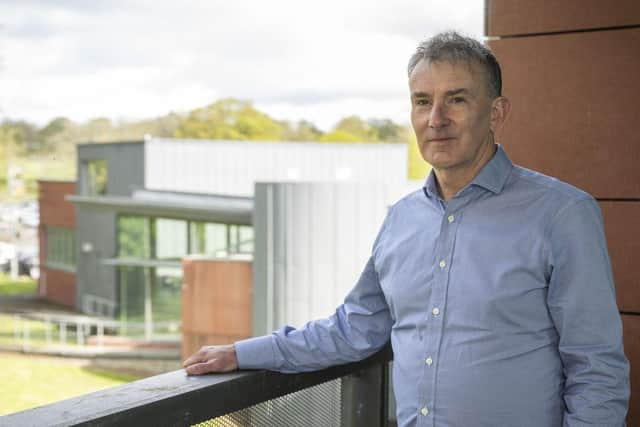

The college, with campuses in Dumfries and Stranraer, and under the leadership of Principal and CEO Douglas Dickson, received a 'Very Good' rating for leadership and quality culture. This endorsement is not merely a badge of honour… it is evidence of a system working at its best.
One of the core strengths of Dumfries and Galloway College lies in its enhanced management structure dedicated to work-based learning. This strategic overhaul has strengthened oversight and coordination across apprenticeship programmes, directly leading to higher success rates and improved learner outcomes. It’s a model that other institutions across the country can emulate; especially as we strive to close skills gaps and support regional economic priorities.
Collaboration is a hallmark of effective apprenticeship delivery. And Dumfries and Galloway College certainly excels in this area, from its leadership team working hand-in-hand with employers to the college’s staff participating in self-evaluation and portfolio review processes. This inclusive approach ensures apprenticeship provision remains dynamic and aligned with the needs of both learners and industries.
The establishment of employer reference groups within each curriculum area further enhances the DGC’s responsiveness. These groups identify skills shortages and emerging trends, helping the college design and refine apprenticeship frameworks which are aligned with current and future job market demands. This targeted alignment ensures apprentices gain skills that are not only academically sound, but also practically valuable.
The college’s Business Development team also plays a pivotal role in maintaining strong employer relations. Through biannual visits and post-induction reviews, the team ensures onboarding arrangements are effective and apprentices receive the support they need from the outset. The improved onboarding process has significantly boosted retention and performance across the board, which is a testament to the value of proactive engagement.
Another commendable feature of the college’s model is its strategic approach to subcontracting. By working with external providers for specific MA frameworks, the college broadens its delivery capacity without compromising quality, allowing even the most specialised sectors to receive comprehensive training solutions.
It is worth noting that about 70% of the college’s apprentices are in engineering and health and social care ─ two sectors which are vital to the South of Scotland’s and, indeed, the country’s economic health.
By concentrating on these high-demand areas, DGC demonstrates an acute awareness of regional workforce needs and a steadfast commitment to supporting them. The emphasis on data-driven decision making further reinforces the college’s effectiveness. Eligibility and suitability tests ensure that apprentices are matched with programmes that are best suited to their existing qualifications and skill levels. This level of scrutiny optimises learner success and ensures that employers receive well-prepared, capable trainees.
However, perhaps, most importantly, Dumfries and Galloway College fosters a culture of continuous improvement. Structured self-evaluation and stakeholder involvement initiatives are designed to never allow that apprenticeship delivery to stagnate. Instead, it evolves in tandem with industry developments as well as educational best practices.
“The future of Scotland’s workforce won’t be built in distant boardrooms,” says Douglas Dickson, Principal and CEO of Dumfries and Galloway College. “It will be built in classrooms, workshops and on the ground, with apprentices, employers and colleges working side by side. That’s where real change happens. And we’re proud to be leading that change here in Dumfries and Galloway.”
All of this feeds into a broader mission: supporting Scotland’s regional and national economic priorities. Modern Apprenticeships are not just a pathway to employment, they are a strategic tool for workforce planning, growth and social mobility. Colleges are uniquely positioned to deliver on these objectives due to their long-standing roots in local communities and their relationships with local employers that allow them to continually adapt curricula swiftly and effectively.
As Scotland works toward a greener and more resilient economy, the importance of high-quality vocational education has never been greater. We urge policymakers, industry leaders and communities to recognise and support the role of colleges ─ as education providers and as catalysts for economic renewal.