
Exclusive:Scotland's private schools reveal long-term 'damage' of Labour's VAT rise
The long term harm of the end of the VAT exemption for Scotland’s private schools will not be undone quickly.

Scotland’s independent schools have revealed the extent of the long-term harm caused by new VAT rules, claiming the tax rise is not a “one-year problem”.
Head teachers sounded the alarm last year when Chancellor Rachel Reeves announced the end of the VAT exemption for fee-paying schools.

Now they say their worst predictions have come true - and the damage to pupils will be irreparable.
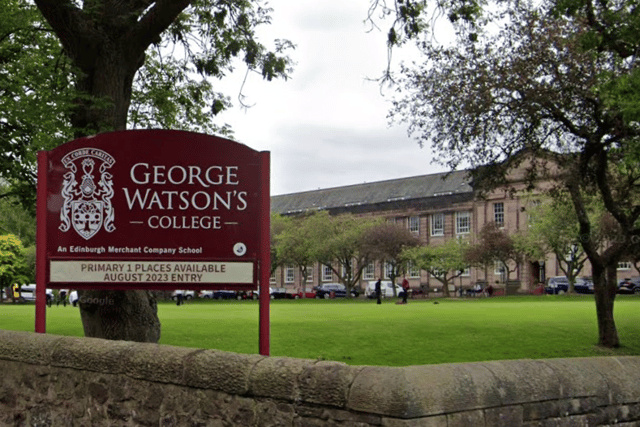
At Edinburgh’s George Watson’s College, like other schools, the priority post-January 1, when the tax came into force, was to provide as much protection to parents as possible.
The school reduced fees and introduced a three-year fee affordability strategy guaranteeing no fee increase in 2025/26 and a maximum increase of 3 per cent in the following two years.
Watson’s also introduced bridging support for any parent struggling with the imposition of VAT, with the aim that no child should have to leave the school immediately because of VAT.
Lisa Kerr, principal at George Watson’s College, said: “By acting swiftly, we are ensuring that Watson’s is prepared for a post-VAT world. But we have seen a drop in applications and pupils leaving us for the state sector.
“This is not an issue that will be a one-year problem, and these numbers are likely just the start for the sector.”
There are no specific figures for Scotland, but some 13,000 young people in England alone, the Independent Schools Council has said, have moved into the state system, bringing pressures there. This is more than four times the government estimate.
In Edinburgh, parents report struggling to afford school fees, but being unable to access a state school placement.
One Glasgow headteacher told The Scotsman moves often happened at extreme short notice when a child came to the top of the waiting list for a local school place and they were gone within the week. The uncertainty, especially in crucial exam years, can have long-lasting ramifications, another head teacher said.
A George Watson’s spokeswoman said the VAT policy was bad news for state schools as well as the private sector. The larger than predicted number of pupils moving from independent schools placed a burden on the taxpayer, local councils and the state schools themselves.
“Scotland can't afford not to have independent schools,” the spokeswoman said.
Last year, a study by Biggar Economics revealed Scottish independent schools contributed half a billion pounds to the Scottish economy, supported 12,000 jobs across the country and saved the taxpayer £200 million in education costs.
The Scottish Council for Independent Schools (SCIS) said it gave ample warning to the government of the pressures the VAT measure would bring to bear on the state system.
“At a time when political debate is centred on economic growth, VAT on fees is doing significant damage to the economy and to Scottish education,” a spokeswoman for SCIS said.
“Our schools are adapting and supporting families who are dealing with the imposition of this punitive tax, and they continue to provide an outstanding educational experience for children and young people.”
Dan Wyatt, rector of Kelvinside Academy makes the argument that Eton has been largely unaffected due to its vast capital investment, while smaller independent schools have closed.
Scotland’s better known public schools, such as Gordonstoun, have been affected. King Charles’s former school revealed a range of fee rises of up to 15.67 per cent in the wake of Labour’s decision to end the sector’s VAT exemption.
A spokesman for Gordonstoun said the school avoided passing the full 20 per cent VAT charge onto parents by looking at new revenue streams, as well as international expansion and cost controls.
A UK government spokesperson said: “Ending tax breaks for private schools will raise £1.8 billion a year by 2029/30 to help deliver 6,500 new teachers and raise school standards, supporting the 94 per cent of children in state schools to achieve and thrive.”
Comments
Want to join the conversation? Please or to comment on this article.