
Exclusive:The massive sums paid by Scottish universities to overseas recruiting agents revealed
Heriot Watt, Strathclyde and Aberdeen universities are among those spending significant amounts on overseas recruiting agents.

Scottish universities are spending soaring sums of money on overseas recruiting agents to attract wealthy foreign students.
New figures show seven of Scotland’s mainstream higher education institutions spent £15.2 million on payments and commission for specialist operatives in one year to attract rich international students to enrol in courses.
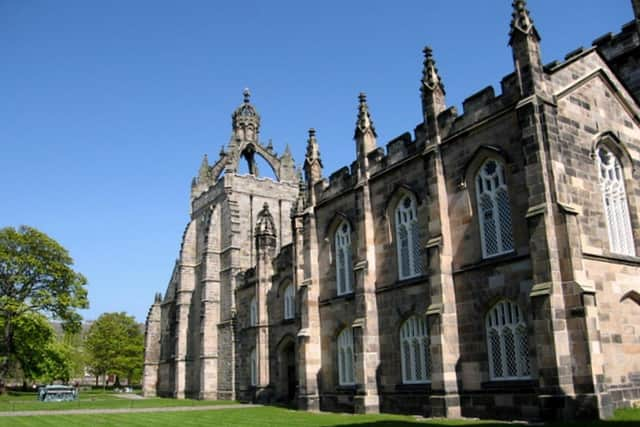

Heriot Watt, Strathclyde and Aberdeen universities all spent more than £4m each on agent fees, the figures for 2023/24 show.
The total spent since the 2019/20 academic year is £88.2m for the institutions which responded to Freedom of Information requests. But the true amount for the sector will be far higher, given the small number of the 15 universities surveyed that agreed to disclose the data.
Others said the information was “commercially sensitive” and opted not to share it.
Neither Edinburgh nor Glasgow universities disclosed the level of payments made to overseas recruiting agents for 2023/24.
Universities Scotland, the umbrella body for the sector, said foreign students had become “essential” to propping up cash-strapped organisations.
Scottish Conservative shadow education secretary Miles Briggs said universities were “enhanced” by international students who make a “positive social and economic impact”. However, he added: “Clearly cash-strapped institutions are having to speculate to accumulate. They know the SNP has created a near impossible environment, and they rely heavily now on foreign students for their fees.

“We also know that the SNP’s approach to higher education is freezing out Scottish students from their own universities.”
Two years ago spending on recruitment agents was at a high of at least £18m - an increase of 50 per cent on the 2019/20 academic year.
Fees for overseas students are an average of £22,000 per year while there is an SNP-imposed cap on places for resident Scottish students.
The University of Aberdeen has 102 “active agents”, who it said were “active in all regions except for the United States of America”. The university spent £5m on these workers.
By contrast, the University of the Highlands and Islands employs five operatives working in areas as diverse as Brunei, Cambodia, Lebanon and Kuwait.
Agents are usually paid a referral fee for candidates who sign up for courses, either as a flat rate per student or a percentage of their fees. They can help applicants navigate the application and immigration process.
Concerns have been raised the agents may prioritise chasing commissions over the best interests of students.
The number of 18-year-olds from Scotland’s most deprived areas securing places at university has increased by 100 to 1,960, which is a record high. The number of young Scots who have secured a place at university this year has also increased to a new high of 16,340 acceptances for 18-year-olds, up 4 per cent on last year.
While there are caps on the number of home students who can access a place at a Scottish university - and receive free tuition - there is no limit on the number of overseas students.
A Universities Scotland spokeswoman said: “A decade of public underinvestment in university teaching and research has meant that cross-subsidy from international student fees has become essential.
“Recruitment, particularly where institutions look to diversify into new markets, does require upfront investment.”
The spokeswoman said investment delivered a “strong return” for both universities and the wider Scottish economy, saying international students contributed £4.75 billion between 2018/19 and 2021/22.
“The fact tens of millions have been spent on these agents, working in literally every corner of the globe, shows how the SNP has forced universities out into the world just to make ends meet,” Mr Briggs added.
A Scottish Government spokeswoman said international students played a positive economic, social and cultural role in Scotland.
"They add to the diversity of our communities, enrich the learning experience and support local businesses and jobs,” the spokeswoman said.
“It is right that Scotland continues to welcome international students. International students and those from other parts of the UK are not able to access funded places available to Scots domiciled students – and it is welcome that there are a record number of 18-year old Scots securing a place at Scottish universities this year.”
Comments
Want to join the conversation? Please or to comment on this article.