
A quintessential ferry disruption as Hay's Way reaches Arran


A week spent on the island learning about estate management, seeing ferry crisis impact first-hand and enjoying an island that serves solitude.
It wouldn’t be a true Arran experience without a ferry disruption.
Caledonian MacBrayne (CalMac) provided just that when I was trying to get from Cloanaig, on the Kintyre Peninsula, across to the island’s northern ferry terminal at Lochranza.
Having marched up the east coast of Kintyre, I thought I had timed it perfectly. It was a Sunday, the last day of the extended summer timetable, and I arrived at Cloanaig in time for the final sailing at 7pm. Except there was no sailing. The vessel had been diverted to Tarbert, around 12 miles away along the Kintyre Way. Still in summer mode at the beginning of September, it had barely occurred to me that the weather might have other plans.
That night, sparsely furnished ferry terminal became much-needed shelter as rain lashed down and the wind gathered pace. I soon discovered I wasn’t the only person stranded.

Callum Paterson, resident estate manager at Arran Estate, had also found himself on “the wrong side” and ended up sleeping in his ranger vehicle.
Meeting under unfortunate, and slightly comic, circumstances eventually led to a more civilised encounter once I reached Arran. Callum introduced me to the estate’s landowner, Charles Fforde, who inherited stewardship of the family’s remaining ancestral lands from his mother, Lady Jean Fforde, daughter of the 6th Duke of Montrose and granddaughter of the 12th Duke of Hamilton.
He is the latest in a direct line to have held land on Arran for more than 550 years. While it is significantly less than its initial size, the estate covers large stretches from the north to the south of the island. Brodick Castle was once a seat of the family, but it was handed over to the National Trust for Scotland by Lady Fforde in the 1950s and remains in its care.

Callum, who had taken up his resident role only a couple of months earlier, told me he was the first official estate manager the family had appointed, having previously managed the land themselves.
The challenges of managing an estate, he explained, are familiar to ones felt across Scotland. Deer were an obvious example. Walking through Lochranza, it is hard to miss them. Roadsides, residents’ gardens and hillsides are speckled with their tawny coats as they wander around the northern end of the island. With the rutting season approaching, the hamlet will soon be filled with the unmistakable chorus of stags.

Once a stronghold for black grouse, Arran has seen the species become locally extinct despite the determined efforts of the established Arran Black Grouse Group. Callum said a number of factors had contributed to the decline, including increased predation. Charles told me that hen harriers were also becoming less frequent visitors to the island “because there’s nothing left for them to eat”.
It was interesting to hear the island, as with others across Scotland, including Shetland, had no foxes or stoats. What Arran does have, Callum said, is plenty of badgers, which were introduced to in the 1800s for hunting and can be a cause for concern over the island’s declining waders.
Off the hill, islanders face their own frustrations. At public meetings in the north of Arran, deer wandering in and out of residents’ gardens are an unsurprisingly regular topic. Then there are, of course, the ferries.
For holidaymakers, the Glen Sannox, the CalMac vessel that has come to epitomise the wider chaos surrounding Scotland’s ageing ferry network, can make life on Arran feel considerably less predictable.
The problem has been compounded by the recent temporary closure of Ardrossan Port, normally the island’s principal mainland connection, with services redirected to Troon.
While working for several days from Brodick Library, the impact was brought into sharp focus. The library’s community space is regularly used for essential services including temporary NHS health clinics, a banking hub and a hearing-aid support session. On more than one occasion, the representative for one of these hubs had either packed up early or left a note on the noticeboard explaining that the drop-in session had been cut short “because of the ferries and the weather”, leaving residents who had travelled from across the island for appointments understandably frustrated.
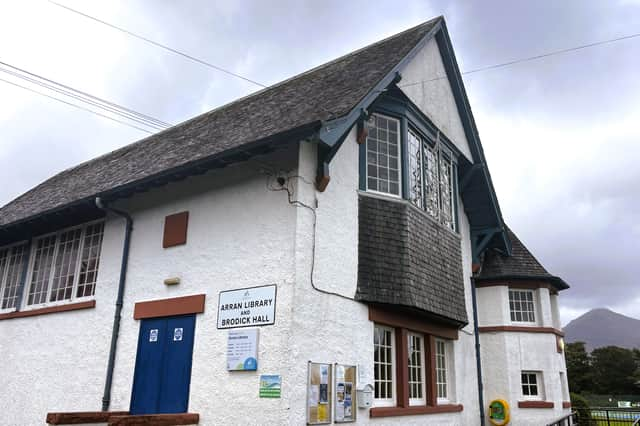
“The same happened last week and the week before,” said one elderly islander who, cheque book in hand, turned on his heel after realising the bank hub had closed early.
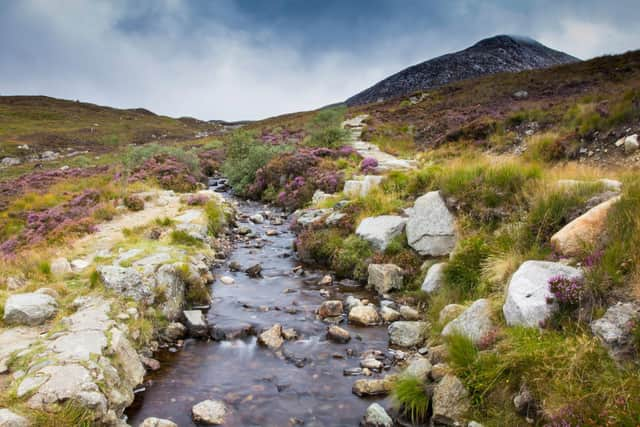
For all the talk of ferries, however, it happened that a lot of my time on Arran ended up being spent away from people. It was no deliberate move but, despite it being a popular spot for a recurring stream of visitors, the island is one that rewards solitude. Spending hours alone (and often offline given Arran’s sparse signal) drinking in the scenery and gawping at its staggering geology, the island felt markedly different from other places I’ve walked in Scotland. Though after following its roughly 55-mile coastline, it’s easy to understand why it gets the nickname “Scotland in miniature”. In a relatively compact space, Arran manages to squeeze in an extraordinary variety of landscapes from the rugged 2,867ft Corbett of Goatfell to deep glens, rolling hills and long sandy beaches.
But Arran has been changing in other ways too, shaped by people drawn to the promise of island life. There is, I sensed, an occasional tension between those who have grown up with the practical limitations of living on an island and those who arrive expecting the conveniences they left behind.
I met Arran resident Monica Steele at Cloanaig ferry terminal on my way back to Kintyre. Her grandfather had retired to the island and her family’s connection with the place has continued ever since. She told me that some new residents in recent years want to see changes that to her are inseparable from what makes island life in the first place, including building more roads and bringing in more convenience, such as supermarkets.
“You can just have those on the mainland, so why move here if you want those things?” she said.
My departure from the island involved another anticipated ferry disruption. As the only foot passenger from the Lochranza side, I was asked to sit patiently on a bench until the vehicles were fully loaded. After snapping out of my daze looking back over to the picturesque Lochranza Castle, I was startled to see the ramp going up. Waving frantically and shouting, the captain eventually noticed I’d been left behind and, to my surprise pulled back in and lowered the ramp for me to hop on. I suppose I can’t entirely blame CalMac for that one.
Comments
Want to join the conversation? Please or to comment on this article.