
Calls to block fish farm's plan to double waste dump into Loch Tay


Fish farm owners said research shows the proposed waste production level would not change the loch’s ecological status
Calls have been made to block a fish farm’s plans to double the amount of waste it can discharge into a freshwater loch as anglers warn Scotland’s endangered Atlantic salmon face extinction.
Kames Fish Farming Limited, which claims to own the country’s last family-run trout farm, lodged an application to expand its aquaculture operation in Loch Tay, in the central highlands.
The expansion would require permission to more than double the annual phosphorus limit that can be discharged into the loch from 2730kg to 5784kg. Phosphorus is a key ingredient in fish feeds and a higher limit would allow Kames to rear more steelhead trout, a type of rainbow trout, at its farm.
Campaigners warn the chemical, however, can cause eutrophication, triggering harmful algal blooms, reducing water clarity and depleting oxygen levels.
Fishing and tourism groups around the loch and the River Tay have called for the planning application to be rejected.
Bob Mason, from the Tay Catchment Salmon Alliance, a Scottish charity working to protect Atlantic salmon and the Tay catchment area, said: “We would be against any expansion.
“It’s really important to do what we can to help prevent the decline of Atlantic salmon in the Tay catchment because it’s important for the whole of Scotland.
“There’s a risk of extinction so more pollution into the loch itself is not acceptable and it should be stopped.”
Kames also wants to add the cleaning and parasite fighting chemicals Divosan and Hypofoam to the substances it uses at its fish farm, which campaigners said will bring more harm to aquatic life. They said while the Scottish Environment Protection Agency (Sepa) has rated Loch Tay’s water quality as ‘moderate’, doubling the amount of fish farm waste could tip a delicate balance.
Meanwhile, Kames pointed to Sepa’s rating of the loch’s phosphorus level as ‘good’. The company said its application is supported by a detailed assessment from scientists at the University of Stirling who predict that the proposed production level will not change the phosphorus status nor the overall ecological classification of the loch.
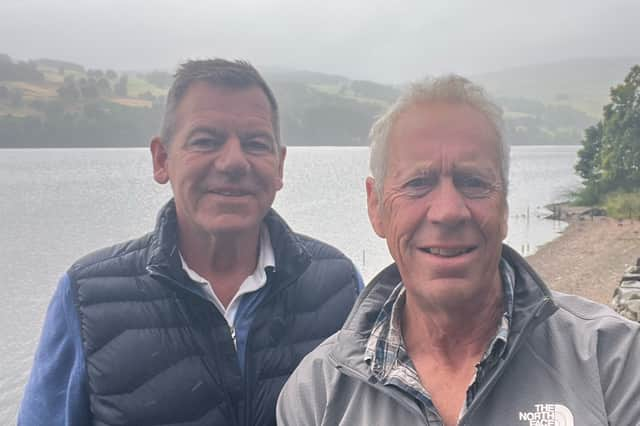
Robin Menzies, of the Loch Tay Association, which represents residents and businesses on the banks of the loch, said a main concern has been a lack of research on the impact of the fish farm since it was first established four decades ago.
He pointed to a study carried out in 2007 by the Wild Trout Trust, which provides conservation guidance and reports for local angling groups. The conclusion said the benthic layer - relating to the bottom of a body of water - directly underneath the area of the fish cages “remains contaminated by waste food and faecal material and appears to have deteriorated markedly since last years survey.”
It read: “ This pollution is causing a major shift in the natural faunal community, an effect which can be observed out to a distance of approx. 35m. Resumption of production at this site has rapidly returned the loch bed below the cages to a grossly perturbed state.
“Sustainability of this type of operation would thus appear to hinge on the ability of the operator to minimise the net input of nutrients to the loch.”
Mr Menzies added: “It is obvious as an observer over decades that the water quality has changed and blooming algae is more of a problem, natural fish like salmon and brown trout have drastically declined and fly life is less.
“Every potential source of contamination needs to be investigated.”
Campaigners also warned that increasing the number of trout at the farm could increase the risk of escapee fish which can be very damaging to Scotland's native ecosystems.
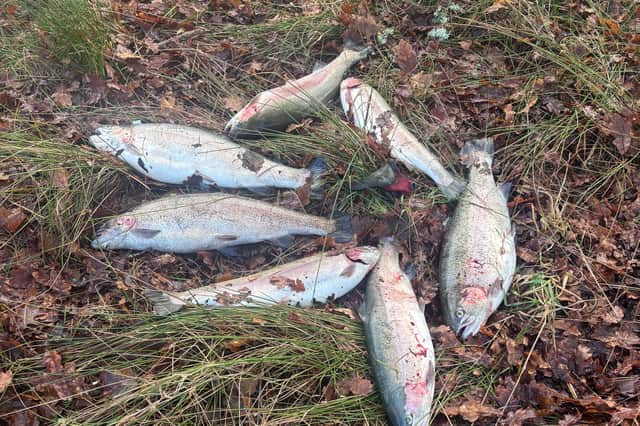
While Kames' trout cannot interbreed with wild salmon, unlike escaped farmed salmon, which can weaken the genetics of wild populations, they can still pose ecological threats through competition, predation and disease transmission.
Mr Mason said the already fragile wild salmon population brings a wider risk to rural communities built on the angling sector and tourism.
“We’re talking loss of jobs, tourism, hospitality,” he said.
“It’s really serious. If the wild fish do go extinct it’s a catastrophe for Scotland.
“There needs to be better regulation because any further pollution is just plain wrong.
“We would like to see the application refused and, ideally, we would like to see it off the loch.”
Kames said it fully recognises the serious decline in wild salmon and supports effective, evidence-based action to protect them.
The company said any accusations that the fish farm contributes to the extinction of salmon and subsequent impact on rural communities is not supported by evidence. It argued that Loch Tay and the wider catchment face numerous environmental pressures including agriculture, forestry and wastewater treatment that will threaten the species.
Andrew Cannon, managing director at Kames, said, if the application is approved, the Loch Tay operation will create two additional local jobs, without changing the farm’s physical footprint.
“We believe environmental protection and responsible rural employment can coexist, provided decisions are based on measured scientific evidence and robust independent regulation,” he said.
Mr Cannon added: “This application should ultimately be judged on evidence.
“We welcome rigorous scrutiny because that is exactly how Scotland’s environmental regulatory system should work. We have every confidence that Sepa’s independent assessment will consider all the scientific information before reaching its decision.
“We recognise that people will hold different views on aquaculture. However, decisions on environmental permits should ultimately be based on robust scientific evidence and independent regulatory assessment. That is the process Kames has followed.
“Our commitment remains unchanged: protecting Loch Tay, producing healthy Scottish trout, supporting rural employment and farming responsibly for future generations.”
Sepa said it is currently reviewing the application and that a consultation on the proposed development is running until 13 August.
A spokesperson for the environmental watchdog said: “Any increase will only be authorised if Sepa are satisfied that the nutrients or ecology of the loch won't be significantly impacted by the changes proposed.”
Comments
Want to join the conversation? Please or to comment on this article.