
Ease muirburn rules and secure guaranteed helicopter support for wildfires, rural experts say

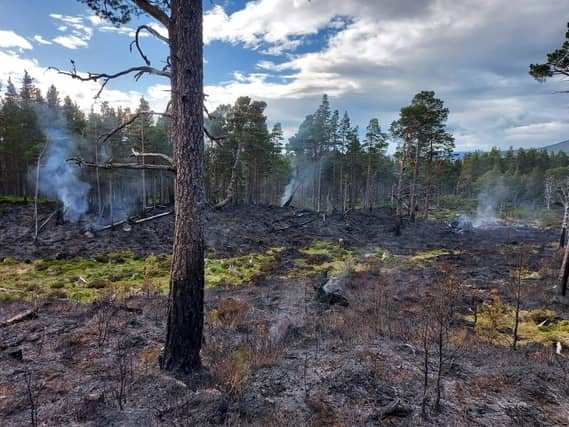

Calls come after a large-scale wildfire swept through the Cairngorms National Park
Rural leaders have renewed calls to ministers to loosen new licensing rules for muirburn and explore the use of dual-purpose helicopters in the wake of the Cairngorms wildfire.
Crews responding to the blaze, which has been burning for over a week in the Glenmore area of the national park, were unable to secure helicopter support on the first day of the blaze, which experts said has already been a problem in previous large-scale wildfire incidents.
Ross Ewing, director of moorland at estate membership organisation Scottish Land and Estates (SLE), said Scotland could not afford a repeat of the situation.
"We can't have a situation next time round where we can't activate a helicopter on day one," he said.
"If that happens again, it would be scandalous."
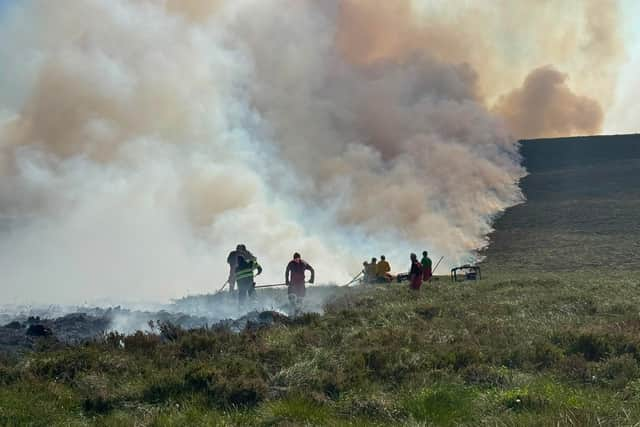
Mr Ewing pointed to similar difficulties in locating helicopter support early on during the Carrbridge and Dava wildfires last year which, combined, were recorded as the country’s largest wildfire incident on record. He argued that the Scottish Government's Wildfire Strategic Action Plan following the fires had not addressed the issue, and that “we need to be much more ambitious” in prevention measures.
After First Minister John Swinney visited the scenes at Glenmore on Tuesday, the Scottish Government said it will consider a dedicated air service to tackle wildfires.
Some suggestions that have been put forward include dual-purposing of existing helicopters used elsewhere in the public sector rather than relying solely on private operators, which the Scottish Fire and Rescue Service (SFRS) currently does. Exploring the use of drones and Unmanned Aerial Vehicles (UAVs) as per other wildfire-prone countries has also been recommended.

“Unfortunately at the moment it’s private companies who do a fantastic job when they are available but they do have other obligations and contracts so it’s not fair to rely exclusively on them,” Mr Ewing said.
“We saw that on day one of this latest fire. The situation as it is at the moment is deeply unsustainable.”
Land managers have also called for ministers to simplify the licensing system for muirburn—the controlled burning of heather. While the practice is used for helping boost grouse numbers by generating young shoots of heather for the chicks to feed on, the method is also heavily relied upon for reducing vegetation in wildfire-prone areas and creating firebreaks to help prevent the intensity of fires.
Opponents of muirburn favour alternatives such as rewetting, which raises the water table to keep soils saturated and help slow the spread of wildfires. Critics also point to cases where managed burns have become out of control during the September to March muirburn season. A recent Scottish Government-funded study by the James Hutton Institute, however, found that 96 per cent of wildfires occurred outside moorlands managed by muirburn, with wildfires affecting just 1.1 per cent of managed moorland.

The new licensing regime for muirburn, which comes into force on 15 September, requires estate owners to obtain permission from NatureScot before carrying out controlled burning. Land managers said they support the principle of licensing but believe the application process has become unnecessarily burdensome.
“As long as the licence is workable, that’s all we’re asking for,” Mr Ewing said.
“But, unfortunately, early indications that we’ve seen show if you want to make muirburn to reduce the risk of wildfire, you’ve got to jump through a lot of hoops to get a licence for that particular purpose. We don’t think that’s right.
“We think that burning for preventing the risk of wildfire should be a relatively seamless process.”
A NatureScot spokesperson said the agency recognised the importance of well-managed muirburn and that the new legislation was to ensure it is carried out safely.
The spokesperson added: "We believe that the final scheme and code are both robust and workable. We have also worked hard to ensure that the application process is as straightforward as possible while meeting the requirements that are set out in the legislation.”
Comments
Want to join the conversation? Please or to comment on this article.