
Former west coast landfill site discovered to be temperate rainforest

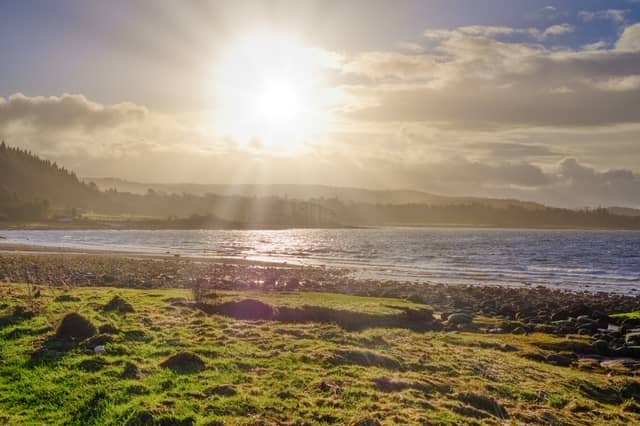

Researchers said the findings prove that post-industrial landscapes can have immense ecological value
A former industrial landfill site on the west coast of Scotland, where trees and various plants have emerged over the past eight decades, has been categorised as temperate rainforest.
The 75-year-old site, located within Holy Loch Nature Reserve, a 24-acre community-run area near Dunoon, in Argyll and Bute, has developed the hallmarks of a ‘hyper-oceanic’ ecosystem more typically associated with ancient west coast rainforests, according to researchers.
Among the most striking discoveries is the presence of multiple Ancient Woodland Indicator (AWIs) species—plants ordinarily confined to forests several centuries old. Bluebells, wood-sorrel and wood-sedge have established themselves across the site.


The survey also identified a rich carpet of mosses, liverworts, and rare lichens, specifically lungwort (Lobaria pulmonaria) and Coenogonium luteum, which resembles mini apricots. The discoveries, researchers said, are widely regarded as key indicators of high-quality, moisture-rich rainforest environments.
Dr Neil Hammatt, author of the study and a researcher at the reserve, described the findings as “significant”, pointing to the site’s unusual beginnings.
“The woodland grew over an industrial landfill and roadside saltmarsh,” he said.
“The constant inflow of fresh water into this corner of the Holy Loch has helped wash away salinity, allowing the site to develop a complex ecosystem in record time.”
The implications, he argued, extend beyond the confines of the reserve.
“These findings prove that post-industrial landscapes can have immense ecological value.
“The coexistence of these rare lichens and ancient woodland plants confirms that this is a developing temperate rainforest.”

Dr Hammatt said the vast majority of Scotland's rainforests are dominated by oak and alder planted for timber and claimed heavy grazing by red deer and sheep has curtailed biodiversity in similar areas.
“Holy Loch Nature Reserve, by contrast, features a mixture of self-regenerated native tree species, shrubs and climbers with a rich carpet of flowering plants and mosses providing opportunities for a rich diversity of animals,” he said.
“Over 1,400 species of animal, plant and fungus have been recorded here to date, supported by a good supply of decaying wood, a freshwater swamp and regenerating wet woodland.”
The findings were made after a three-year environmental survey which concluded in 2025. They have been published on the online access platform EcoEvoRxiv, a free, not-for-profit, community-driven preprint server specifically for ecology and conservation sciences.
The ecological resurgence is not confined to the woodland itself. Along the shoreline, a self-regenerating seagrass meadow—sometimes referred to as “underwater forests”—is also flourishing.
Once rich in marine life, Holy Loch’s beds were badly damaged in the mid to late 20th century when the sea loch became home to a United States Navy nuclear submarine base.
Dredging, chemical contamination — notably copper and zinc — and run-off from agriculture and forestry are thought to have driven the seagrass habitat to local extinction.
However a new report released earlier this year found the underwater forests of the area have made a spectacular and spontaneous comeback.
The findings are based on a detailed field survey carried out in mid-2025, covering about 20 hectares of shoreline at low tide.
The species identified, Zostera noltii, plays a vital ecological role, acting as nurseries for fish and invertebrates, recycling nutrients and locking away carbon in sediments.
The recovery follows decades of gradual ecological improvement since the American base closed in 1992. Given the loch’s industrial past, the authors describe the findings as “ecologically significant” and a rare insight into the conditions under which passive recovery can occur.
Comments
Want to join the conversation? Please or to comment on this article.