
Hay's Way: Reaching the Mull of Kintyre and the Wee Toon

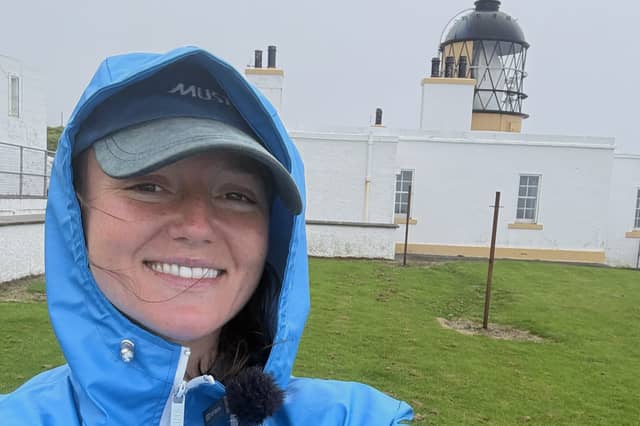

Reaching the southern tip of Argyll as Hay’s Way reaches two and a half years.
Reaching the Mull of Kintyre was a bit of a moment for me on Hay’s Way.
This time last year, I was walking on Unst in Shetland to see Muckle Flugga, the most northerly lighthouse and point of the British Isles. While the Mull is not the most southerly point in Scotland, it felt like a small achievement to reach the southern tip of the Kintyre peninsula, which I have been walking down over the past few weeks.
The mist was rolling in thick, blocking visibility to just metres in front of me for the hours it took to reach the edge. But after the steep descent to the Mull of Kintyre lighthouse, the clouds finally parted and Northern Ireland came into view.


It is uncanny how close it is, some 12 miles across the water, and yet there is no official ferry service between the two locations. Nor is there one from Campbeltown to mainland Scotland.
“Ireland is close today” is a local phrase used when visibility is good. At one point, a fixed link between Scotland and Ireland was being looked into, but this was abandoned in 2021.
“Northern Ireland is so close but it takes about two days to get there,” local historian and former postie Angus Martin tells me during a talk he gave in the Wee Toon about the connections between Kintyre and County Antrim.

That is, of course, unless you hop on the seasonal Kintyre Express, which runs through the summer. But CalMac ferry services from Campbeltown, including to the south of Scotland, ceased in 2023.
Angus talked about the joy of travelling to the mainland by boat — a civilised and social way of getting there, with a meal on board and a sea view. It is a journey that has now been lost.
“We’re not a priority when it comes to the ferries because we’re not an island,” he said.
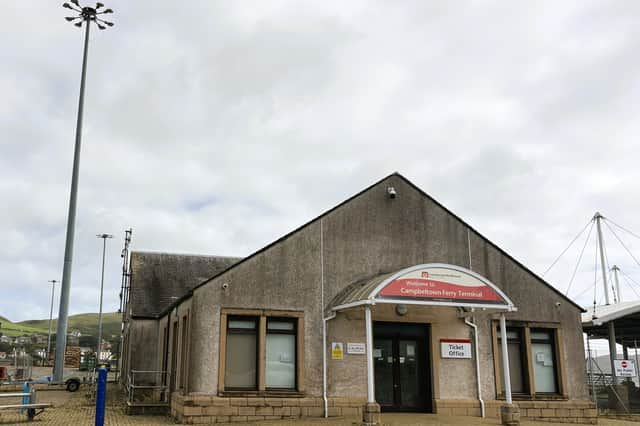
Instead, those living in the south of the peninsula face a roughly five-hour journey by bus, if they can get a seat, or slightly less by car to reach the Central Belt. And that is if the often-closed Rest and Be Thankful is open.
Some locals, as well as residents on the Isle of Gigha, told me they do their main monthly shop in Oban, some 87 miles from Campbeltown, because the smaller local shops can be more expensive.
Whisky appears to be one of the main draws for visitors heading to Campbeltown. Once nicknamed “Whiskyopolis”, the town had about 30 active distilleries during the Victorian era. Now there are only three: Springbank, Glen Scotia and Glengyle.

But it is an industry that has survived while others have been lost. The creamery behind the award-winning Campbeltown cheddar was demolished after it closed in 2019, despite best efforts by farmers who rallied together to try to keep it open. Local haulage company McFadyens Transport, a major employer in the Kintyre area, has taken on the site.
At one point, local district nurse Eleanor O’Riordan, who put me up for a couple of nights in nearby Southend, told me the area used to have “the best dressed men” thanks to a Jaeger factory in the town. That closed in the early 2000s.
Historically a fishing town, Campbeltown Loch no longer lands any fish, but it still bears the marks of the industries that remain. I noticed timber logs stacked up at the harbour and Mowi-stamped fish farm boats berthed showing the trade that continues in this rural corner of the country. The Norwegian aquaculture giant recently bought the nearby Isle of Sanda and has plans to establish a large fish farm and renovate the former hotel and residential buildings on the island to boost tourism.
Wind farm vans were also parked up in the streets, a reminder of the renewable energy development that this southern point is no stranger to, as with other parts of rural Scotland. Locals shared their concerns with me about the proposed Breackerie wind farm on the southern tip of the peninsula, which is currently awaiting confirmation from Scottish ministers. They said the development could disrupt wildlife and the sense of wildness on the relatively undeveloped Mull of Kintyre.
“We have golden eagles, sea eagles, otters, the lot,” said one of the staff members at the popular Putt Stop cafe in Southend, with a twinkle in her eye.
The less-trodden path that is Kintyre is an obvious spot for golf lovers, with its renowned Machrihanish Golf Club. Pictures of Southend locals Belle Robertson MBE, one of Scotland's most decorated and legendary amateur golfers, and Scottish Daily Express golf journalist Jock McVicar hang proudly on the wall in the Putt Stop.
Nearby is Campbeltown Airport, with its runway historically part of RAF Machrihanish and, at one point, one of the longest in Europe. A local, whom I won’t mention for fear of getting us into trouble, drove me across it to have a look.
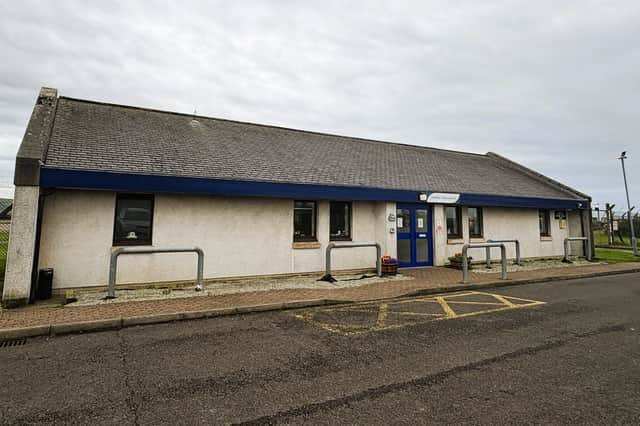

The airport building was not far off Scotland’s smallest airport on Papa Westray, Orkney, where I was last October.
A return flight from Glasgow on the 16-seat Loganair service starts at around £100. It keeps this corner of Scotland a little harder to access. But perhaps that is part of what helps to keep its magic.
The east coast, stretching through villages including Carradale and the impressive Torrisdale Estate, which has its own gin school, offers a tranquillity that few beauty spots in Scotland can match during the summer months.
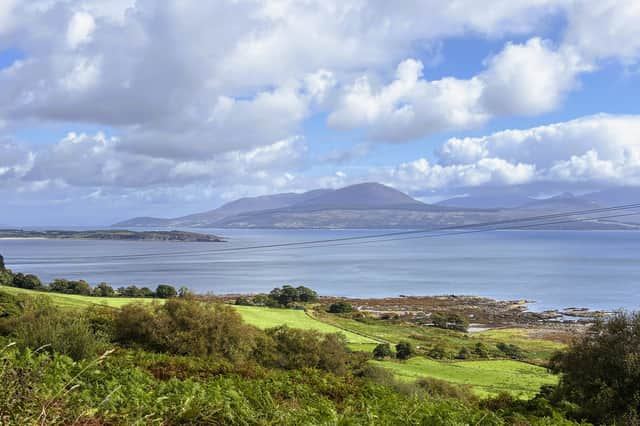
“We get the people who make the effort to come here,” said Southend local, Rolline McKerall.
Another location that brings a sense of peace and discovery, if it weren’t too obvious, is Kilkerran Cemetery in Campbeltown. Tucked away at the foot of Beinn Ghuilean and overlooking Davaar Island, it holds a diverse history of headstones from ancient to medieval to modern. The location is reputed to be one of the most interesting and beautiful cemeteries in Argyll.
“Not so much use when you’re in the ground,” Angus quipped as he gave me a guided tour of interesting gravestones.
Comments
Want to join the conversation? Please or to comment on this article.