
Mountain peatland restored by hand to help highland ecosystem

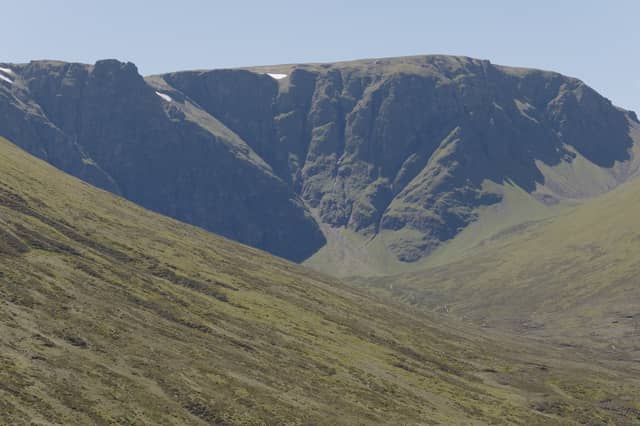

The project is intended to halt erosion, slow the movement of water and give damaged peatland the chance to recover.
High on the mountainside at Creag Meagaidh, where the weather can turn in minutes and the landscape is more rock than soil, a small team has been restoring one of Scotland’s most important environmental assets.
For ten days, NatureScot staff and volunteers worked by hand in the remote Coire Ardair area of Creag Meagaidh National Nature Reserve, repairing eroded peat with little more than hand tools, wooden dams and rolls of coconut fibre.
In the steep Highland landscape, heavy machinery is not always an option to carry out such restoration work.
Excavators have become a familiar sight on Scotland’s peatlands as restoration work has become more widespread. Yet in remote or inaccessible terrain like at Creag Meagaidh, the answer was to do the job the old-fashioned way by carrying the materials in and building the defences by hand.
The project is intended to halt erosion, slow the movement of water and give damaged peatland the chance to recover naturally, the nature agency said.
Neil Mitchell, NatureScot’s regional reserves manager, said Creag Meagaidh was an unusual setting for the work.

“Creag Meagaidh NNR is a dramatic mountainous place, home to three Munros and specially protected for its wildlife, birds and other species,” he said. “It’s generally quite a rocky site so we’ve not got massive amounts of peatland.”
He said thanks to reduced deer numbers on the hill, peatland is recovering, but the team wanted to accelerate its recovery.
“The peatland here may be of a smaller scale but it’s still really important, and we want to see it in tip-top condition,” Mr Mitchell added.
The materials needed for the work were delivered by helicopter, which was already being used to carry materials for path maintenance on the mountain. The team then installed a mixture of wooden dams and coir dams — barriers made from tightly packed coconut fibre — across bare, eroded gullies.
Mr Mitchell said some of the first signs of recovery are already visible.
“It’s great to see the newly formed pools behind the dams, which provide vital habitats for many plants and insects on the reserve, including the larvae of rare and endangered dragonflies.
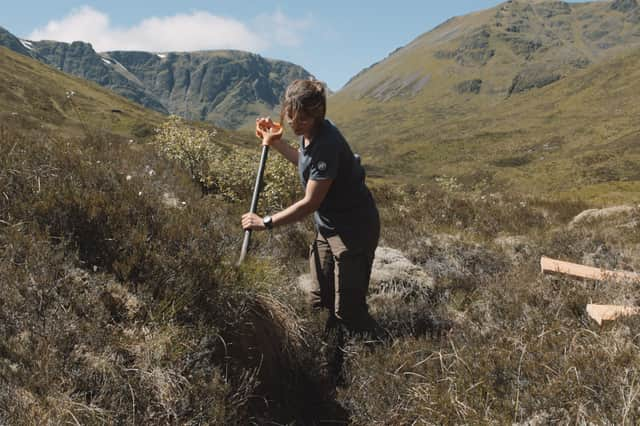
“We hope that these improvements will support the next generation of dragonflies like the azure hawker and white-faced darter, as well as promote the growth of cotton grass, sphagnum moss and sundews, transforming this part of the reserve from bare peat into a thriving ecosystem.”
Scotland has about two million hectares of peatland, making it one of the country’s most important natural assets. Healthy peatlands store vast quantities of carbon and provide habitat for a range of plants and animals. But much of Scotland’s peatland is degraded. Researchers say when it is damaged and drying out, peat can cease to function as an effective carbon store and instead contribute to climate change.
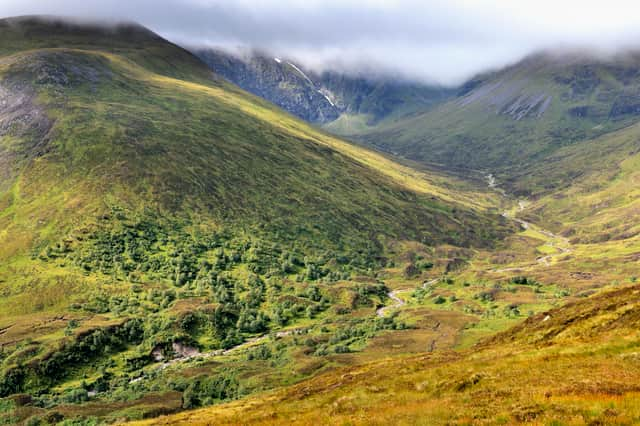
Peadar O’Connell, a Peatland ACTION project officer, said hand restoration could be arduous, particularly in mountainous terrain.
“Restoring peatlands by hand like this can be a difficult job logistically and is hard work,” he said.
“You’re up against the elements, often working at a high altitude and contending with rain, wind and sometimes snow.
“It can be challenging, but it’s also very rewarding in that you can start to see the benefits really quickly afterwards and you’re tackling the erosion that otherwise wouldn’t get done.”
The Creag Meagaidh project is a relatively small intervention in a much bigger national effort but one that has shown that not every restoration project needs an excavator.
For land managers with smaller areas of damaged peatland, Mr O’Connell said the project demonstrated that restoration did not necessarily have to depend on large machinery and that Peatland ACTION can provide advice on the design of projects and the materials required.
Comments
Want to join the conversation? Please or to comment on this article.