
Petition in response to Langholm feral goat cull reaches 20,000

Plans for more trees and a wind farm have been put forward for where the goats roam.
They may not be Scotland’s most talked about roaming herbivore.
But the public is rallying together to bring stronger protection to one of the country’s semi-wild beasts: the goat.
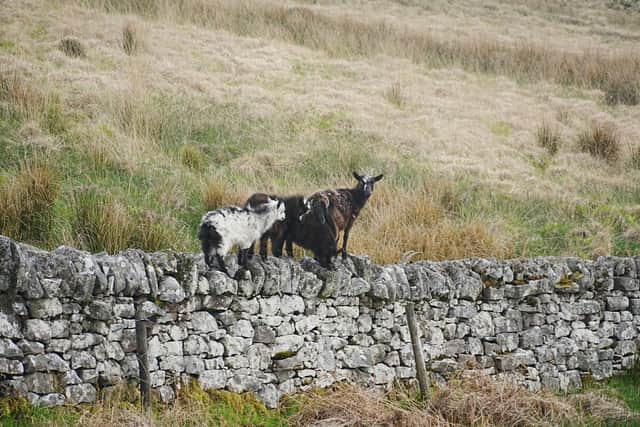
A Scottish Parliament petition was opened earlier this year calling for a herd of feral goats in Langholm, in Dumfries and Galloway, to be given protected status following news of a planned cull.

The paper, launched in March, has now amassed some 20,000 signatures.
Campaigners claim the document is the biggest ever petition linked to wildlife protection to be put before Scotland’s decision makers to date.
It has been backed by Scottish Tory MSPs Rachael Hamilton and Craig Hoy and MP John Lamont.
The momentum to protect the goats came after relatively new landowner and natural capital firm Oxygen Conservation moved in to start rewilding two farms in the Langholm area.

The Exeter-based company acquired some 11,000 acres of the moorland in 2023, that was previously Hartsgarth and Blackburn hill farm, where it plans to plant trees for carbon credits. Last month, it was revealed the company is now looking at plans for 18 220m-high turbines to go on the moors where the goats are being culled.

Campaigners claimed earlier this year that Oxygen Conservation started shooting the wild goats on its land during the breeding season to drastically reduce a population of 138 goats by about 85 per cent.
The feral goats have historically been culled across the south of Scotland moors to manage numbers. But the company’s announcement shocked the community and led to calls for protection of the feral animals.
David Braithwaite, chairman of the campaigning group The Wild Goat Conservation Trust (TWGCT) said: “Given the diabolical way the wild goats are being treated by new landowners, it comes as no surprise that so many people are signing the petition and standing up for these defenceless animals.”


Gail Brown, of TWGCT and who started the local petition “Stop the Cull” in February this year, said: “Local people were furious that a company like this could just come along and start the slaughter of over 100 wild goats in the middle of their breeding season.
“They said they were focussing only on males, but how could that be when at least half of 138-strong herd were obviously females and they intended to reduce the numbers to a mere 20 animals. It just didn’t stack up.
“The goats have roamed these hills for centuries, harming no one and contributing to the ecology of a moorland that is recognised both nationally and internationally for its diverse wildlife. People from near and far value these magnificent animals and want to see them left alone.”
Oxygen Conservation has been contacted for comment.
The Langholm Initiative, which owns the neighbouring Tarras Valley Nature Reserve, initially said it would not take part in a goat cull but has since changed its position.
In September this year, the group said: “As with any wild or feral grazing herbivore population in the UK – for example, deer or feral goats – in the absence of natural predation, it falls to people to manage their numbers to ensure things are kept in balance.
“There has always historically been population management of feral goats and deer on the moor to keep numbers at sustainable levels.”
The semi-wild Langholm goats are believed to be descendants of abandoned or escaped livestock. Campaigners claim they are direct descendants of the original goats that arrived in Britain 4,000 years ago with Neolithic herds-people.
For generations, the herd has been popular with locals and visitors alike.
Comments
Want to join the conversation? Please or to comment on this article.