
Langholm Moor: Plans for 18-turbine wind farm revealed where goats are being culled for 'rewilding'

The semi-wild goats are being culled for certain habitat projects.
Proposals for an 18-turbine wind farm have been brought forward for a site where feral goats are being culled to allow trees to grow.
Renewable energy investors Low Carbon UK revealed last week it wanted to erect the 220m-high turbines on land owned by Oxygen Conservation in the Borders.
The proposed site is near the village of Newcastleton and where feral goats are being culled for nature restoration work.


Exeter-based Oxygen Conservation, which owns two upland farms measuring 11,400 acres on Langholm Moor, said the semi-wild animals were bad for trees and the surrounding habitat. The goats, believed to be descendants from escaped or abandoned livestock, have roamed the moors for generations.
The company, which plans to rewild the land it owns in the UK, said when it purchased the farms two years ago, surveys showed there were some 20 goats in the area. The firm claimed a drone search earlier this year, however, revealed there were well over 100 of the animals.
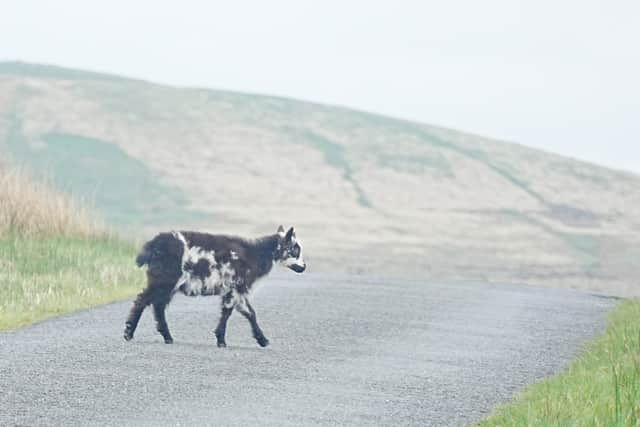
Campaigners have since lodged a petition to the Scottish Government calling for better protection of the goats.
Scoping requests for the wind farm have been submitted to the government's Energy Consents Unit (ECU) and Scottish Borders Council. A battery energy storage system (BESS) has also be included as part of the proposals.
Low Carbon said the development is to help with Scotland reaching its renewable energy targets. Research on the potential impact of the development on the environment and local wildlife in the area is yet to be carried out before a planning application is due to be submitted.
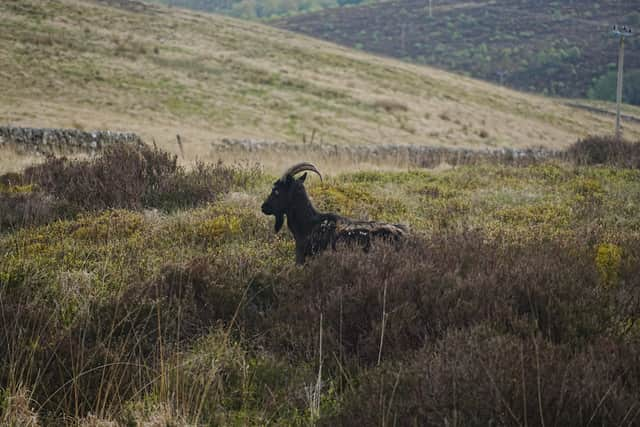
To inform its herbivore management plan, which was required by the Scottish Government, Oxygen Conservation said a team spent 18 months surveying the land to understand the habitats and pressure from herbivores, including the goats. The organisation said it had consulted with stakeholders, including NatureScot, Scottish Forestry, and neighbouring communities to inform its decision to cull some of the herd.
Having initially said it would not take part in the goat cull, the Langholm Initiative, a community development trust responsible for completing the largest-ever community buy-out of land in southern Scotland, said it would start managing the grazers.
The trust owns land next door to Oxygen Conservation.
In a statement released in September, the trust said: “The 10,500 acres of the Langholm and Newcastleton hills owned by the Langholm Initiative charity are inhabited by a free roaming population of feral goats, which move frequently across multiple landholdings.
“As with any wild or feral grazing herbivore population in the UK – for example, deer or feral goats – in the absence of natural predation, it falls to people to manage their numbers to ensure things are kept in balance.
“There has always historically been population management of feral goats and deer on the moor to keep numbers at sustainable levels. Prior to our community buy-out in 2021, the 2014 records show the goat population was reduced to a target of 100 individuals.”
Oxygen Conservation has some 50,000 acres across 13 estates in the UK.
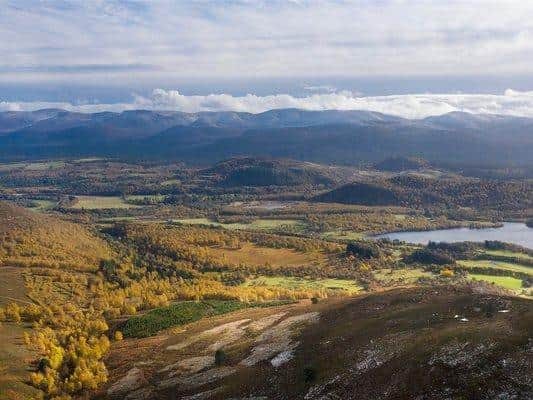
The company invests in the acquisition of land for nature projects to develop ‘natural capital’ plans, such as marketing carbon credits from forest creation. In the past year, the firm has acquired Kinrara Estate, formerly owned by BrewDog, which has been heavily criticised for its management of the land, and Dorback Estate.
Comments
Want to join the conversation? Please or to comment on this article.