
Scotland's first onshore fish farm and the rise of home-raised halibut


Should Scotland focus on halibut when it comes to a more sustainable farm-raised fish?
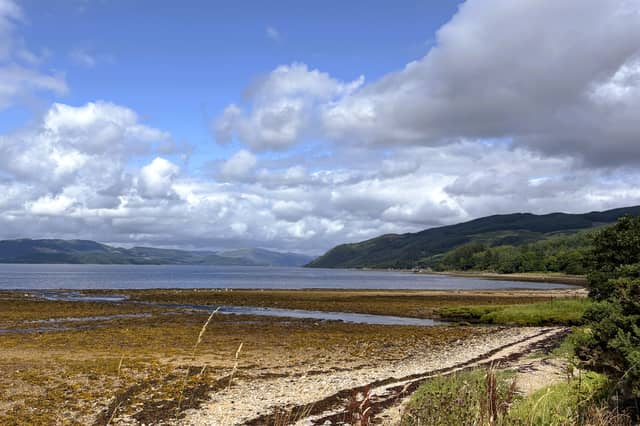
Next door to a farm on the banks of Loch Fyne, where a combine harvester rolls down a hillside cutting oats, a former sheep field is home to a rather less conventional farm.
Here, in tanks filled with salt water pumped from the loch, Otter Ferry Seafish (OFS) runs Scotland’s first onshore fish farm — and one of the world's handful of onshore halibut hatcheries .
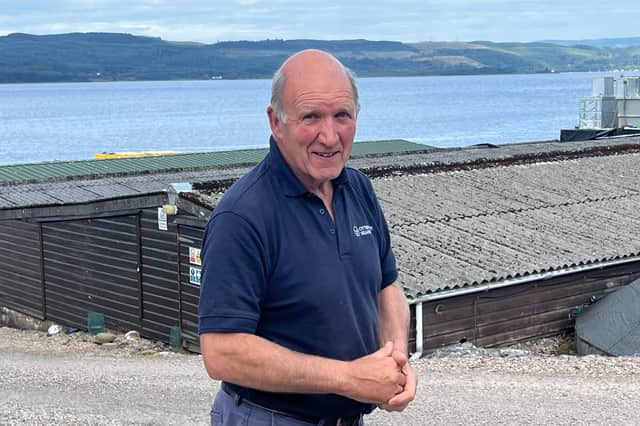
“Having the fish farm on land means we can treat and filter the water we pump in from the loch,” said Alastair Barge, the company’s managing director, pointing across a line of green sheds containing tanks of pedigree halibut broodstock at various stages of growth.
“High levels of filtration mean we have more control, there are no parasites and we don’t need any medicines.”

On land fish farms are widely viewed as a major environmental improvement over open-net ocean pens because they eliminate fish escapes and contain and treat waste.
The farm raises halibut from eggs collected from its broodstock to baby size before the fish are shipped abroad to grow to market size.
But now OFS is looking to establish partnerships with existing sites to grow the fish in Scotland to keep the sea-to-plate process on home soil. Mr Barge said he hoped agreements, some of which are with sites in Shetland, would be in place by the end of the year.

“We need more people to grow halibut in Scotland,” he said. “We have very good conditions for it. The water surrounding our coasts is an amazing resource.”
The company estimates that an annual intake of 500,000 juvenile halibut into Scottish-based farms could eventually produce about 4,000 tonnes of fish, with a first-sale value of more than £50 million.
Isle of Gigha site
OFS spent almost two decades growing halibut to full size at an old salmon-farming site on the Isle of Gigha, producing Scottish-grown fish that won the approval of Michelin star-studded chefs including Gordon Ramsay, Andrew Fairlie and Martin Wishart.

But the award-winning site eventually proved unviable with a major refurbishment required . The surrounding waters were too shallow to allow the company to pump water of sufficient quality, and Atlantic swells on the west coast island could stir up sediment, making the water harder to treat, forcing the site to close in 2023.
Mr Barge said existing aquaculture infrastructure can be adapted for halibut, including smaller salmon pen sites that are no longer being used.
“We are looking at various options for on-growing on land and in cages, or a hybrid of the two systems,” he said.
“The idea is to still keep the fish on land as long as possible.”
The company’s interest in sea cages marks a departure from its traditional approach, but one that Mr Barge believes could make economic sense. Building land-based capacity is expensive and requires considerable infrastructure, so using existing marine infrastructure for just the later growing stage provides a ready-made alternative.
Less environmental impact

For halibut, many environmental concerns associated with salmon are less acute, the aquaculture veteran said.
“Interaction with a wild species is not an issue ,” Mr Barge said. “Evolutionary-wise it’s an old species and very robust.
“There are no parasites. It is proven to be a very good species to farm. As with agriculture and aquaculture it is about welfare and up to the farmer to make sure the species in your care has the everything it needs to thrive.”
OFS's move into halibut began in the late 80s as Scotland’s salmon industry was still encountering problems with disease, environmental concerns and falling prices.
“We’ve always been on land,” Mr Barge said. “But as salmon started to go down in price we had to look at other things. We looked at marine species because of all the salt water facilities here.
“Halibut ticked all the boxes. It was a good price and it grew well in these waters.”
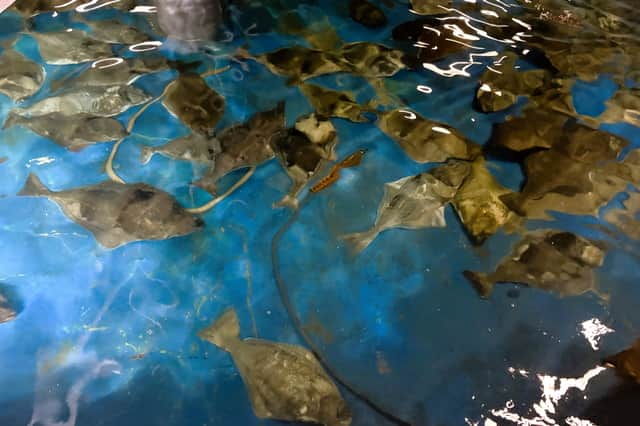
The company received its first halibut broodstock from Iceland in 1991. The adult fish produce eggs which are fertilised at the farm and raised for about six months in the onshore tanks until they reach juvenile size 5grm. They are then transported to Norway, where they are grown to market size.
Mr Barge said that halibut could offer a way of diversifying Scotland’s aquaculture industry and avoid some of the environmental controversies surrounding fish farms at sea.
The wider salmon farming sector faces concerns over escaped fish weakening wild Atlantic salmon genetics, alongside disease, pollution and damage to the marine environment. It has led to some leading restaurants removing salmon from their menus.
Mr Barge said such controversies should be viewed in the context of a successful industry that remains relatively young and that has experienced rapid growth with associated growing pains.
“We have been doing halibut for 35 years and it’s taken that long to have success in the hatchery,” he said.
“When we moved into Marine Species we didn’t realise that we had chosen one of the most tricky sea fish to rear in the hatchery , mastering the small larval stage and domestication of the wild broodstock took time. Good things take time.”
For him, the answer is not to abandon aquaculture but to broaden it.
“Halibut is one species that has potential,” he said. “Monoculture, be it Sitka spruce or salmon, is a dangerous thing.
“Scotland has an extraordinary marine resource. It needs a basket of products for its sustainable development.”
OFS is also involved in a first-of-its-kind project between aquaculture and wild fish conservation to protect Atlantic salmon.
In September 2024, the company, working with Argyll Fisheries Trust, electro-fished the River Ruel, a traditional west coast river with declining fish stocks, and collected 150 juvenile salmon to rear in its hatchery. They have since been raised in a unique onshore seawater system and are approaching maturity, with the fish due to be stripped this autumn and their fertilised eggs returned to the river.
Mr Barge said: “Survival in the saltwater phase at OFS is 95 per cent as opposed to the 0.25 per cent survival had the fish stayed in the river and gone to sea and migrated.
“It is an extremely interesting project demonstrating how the wild and aquaculture interest can work together to the benefit of the species.”
Comments
Want to join the conversation? Please or to comment on this article.