
Changes to sporting rates relief risks repeat of farm tax 'mistakes', warn landowners

The Scottish Government is squeezing rates relief for sporting estates - but the impact will be felt far and wide across the countryside
Rural businesses and farms are at risk of facing yet another financial hit following the Scottish Government’s changes to sporting rates relief, rural experts have claimed.
The warning came after a meeting of the Scottish Parliament’s Rural Affairs Committee, where government officials and rural affairs secretary Mairi Gougeon gave evidence on the Scottish Budget.
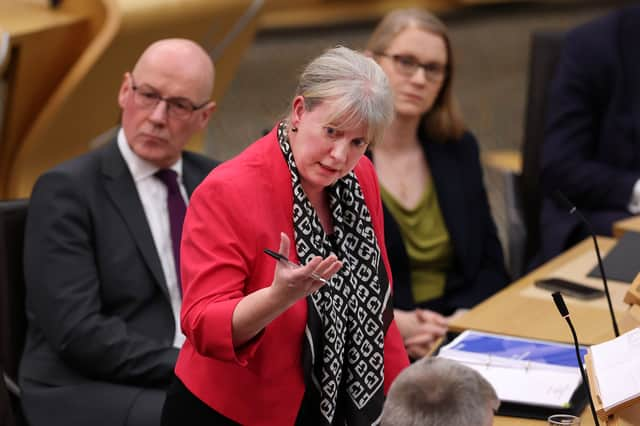
Finance Secretary Shona Robison announced last week that the Small Business Bonus Scheme (SBBS) relief will no longer apply to sporting rates from 2026-2027 - except where land managers qualify for a narrow exemption limited to deer or vermin control only.

The policy was announced with no prior industry consultation.
Estates membership organisation Scottish Land and Estates (SL&E) said land-based businesses now face paying shooting rates whether commercial shooting takes place or not. The organisation said any location where shooting rights exist will be affected by the rates liability, including some family farms.
On Orkney, for example, farmers use contractors to help control damaging goose populations and currently, with some relying on the SBBS to cover costs. The resident population of greylag geese on the northern isle has increased significantly over the last two decades, growing from roughly 300 breeding pairs in 2002 to more than 20,000 in recent years, according to official figures.
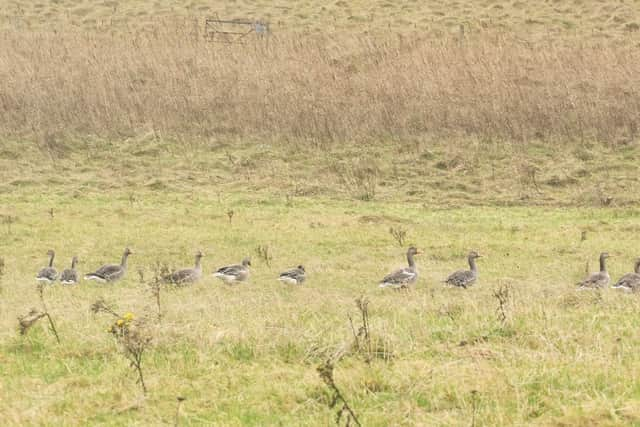
The Orkney Goose Group published data last year showing the numbers had dropped to an estimated 17,000, compared to 27,000 in the previous year, highlighting the effectiveness of management.
Under the proposals, however, the relief would no longer apply because geese are not classed as vermin, with farming unions warning this could have implications for farmers and food production.
With the average farm business income for Less Favoured Area livestock farms dropping by 32 per cent in the last year to £17,400, according to the most recent government statistics, SL&E said the rates policy leaves Scottish farms facing another potentially crippling rates bill.
It comes as farmers across Britain have been dealing with the implications of the UK Government’s move to scrap Agricultural Property Relief and Business Property Relief.

Plans to tax inherited agricultural assets worth more than £1m at a rate of 20 per cent were announced in Rachel Reeve’s budget in 2024. The figure is half the standard inheritance tax rate and had initially been estimated to raise £520m annually by 2029.
Last month, UK ministers were pushed to lift the limit from £1m to £2.5m after protests and warnings about the amount of family farms that were at risk.
Earlier this week, the Association of Deer Management Groups (ADMG), a voluntary partnership group of individuals, public bodies and organisations managing deer for conservation and economic purposes, warned small rural businesses involved in deer management could be at risk due to the recent SBBS changes.
Enterprises with occasional letting of stalking to help fund year-round deer management would be hit by the policy change.
Chairman of ADGM said the move was “an extraordinary step” at a time when deer managers are in discussion with ministers about how deer management should be incentivised as it is currently carried out at a net loss by many businesses, with its cost partially offset by letting stalking.
Sarah-Jane Laing, chief executive at SL&E, said: “The exemptions to avoid sporting rates in future are drawn far too narrowly and fail to reflect how land management actually works in practice.
“Land managers who control animals to protect designated habitats and ground-nesting birds, safeguard livestock and food production, or manage wildlife around roads, settlements and infrastructure are being excluded from relief for reasons that make little practical sense.”
“There is a clear contradiction at the heart of this proposal. At the same time as the Scottish Government sets ambitious goals on biodiversity restoration, deer management, climate action and sustainable land use, it is proposing to penalise the very people who are actively delivering those outcomes on the ground. That is why we have approached the Finance Secretary with a simple proposal to help maintain SBBS eligibility or at least broaden the scope of exemptions until the impact of the proposals are fully understood.
“Rural Scotland has seen this movie before. Like the UK Government’s family farm inheritance tax saga, a policy devised in isolation is now threatening to inflict real damage on family-run businesses and rural communities. As with that Westminster situation, there is time to fix this if there is political will to do so.”
Ms Laing said the policy appears to be another “dreamt up in a central belt meeting room, with no grasp of the real-life impact it will cause to rural businesses, jobs and livelihoods.”
“While it may have been sold as a move against large estates, the reality is that small and medium-sized family farms and landholdings - many of which carry out little or no commercial shooting - will be the ones paying a heavy financial price,” she said.
Scottish Conservative MSP Tim Eagle described the policy move as a “short-sighted decision” and “another example of the SNP unnecessarily interfering in the rural way of life.”
“It will have a deeply damaging effect on many businesses and the removal of rates relief will also put many jobs at risk,” he said.
“The sleekit move by Shona Robison in her Budget must be reversed immediately at a time when rural Scotland is already being hammered by out-of-touch SNP and Labour ministers.”
A Scottish Government spokesperson said: “The small business bonus relief will still be available where shootings rights are exercised solely for the purposes of deer management, including to prevent damage to woodland or to agricultural production, environmental management, or vermin control, it will also be available for crofts and all forms of agricultural and small landholding tenancies, leases for new entrants, and leases agreed for environmental purposes.
“The Scottish Budget 2026-27 will ensure the lowest Basic Property Rate since 2018-19 and support business and communities with a package of reliefs worth an estimated £864 million including transitional reliefs and the Small Business Bonus Scheme which remains the most generous of its kind in the UK.
“We are aware of concerns raised by the rural sector and will consider these carefully before laying regulations in advance of 1 April.”
Comments
Want to join the conversation? Please or to comment on this article.