
Three Loch Lomond farms chosen to future-proof food production against climate change
The announcement comes after months of wildfires and drought in parts of the UK.


On an upland estate overlooking Loch Lomond, sheep and cattle graze among expanding woodland and restored habitats.
Further along the loch’s southern shore, a family-run organic beef farm is examining how healthier soils, more resilient pastures and better shelter might help its livestock withstand changing weather conditions.
The two farms are among three chosen by Scotland’s first national park to help farming and food production adapt to temperature and rainfall changes in decades to come.
The Loch Lomond & The Trossachs National Park Authority (LLTNPA) has selected Glen Finglas, Shemore and Portnellan to lead the next phase of its Resilient Farm Network, a four-year initiative running from 2026 to 2030.

The programme will test practical approaches to land management designed to improve farm productivity and profitability while restoring nature and preparing agricultural businesses for increasingly unpredictable conditions.
The announcement follows months of wildfires and drought in parts of the UK, during which the Met Office reported summer 2026 to be provisionally the hottest on record.
Rather than impose a single model of regenerative agriculture, the LLTNPA initiative aims to allow each farm to develop and test methods suited to its own individual landscape and way of managing livestock and the farm business.
The findings will then be shared with other farmers and land managers across the national park, with the potential to inform farming practices more widely across rural Scotland.
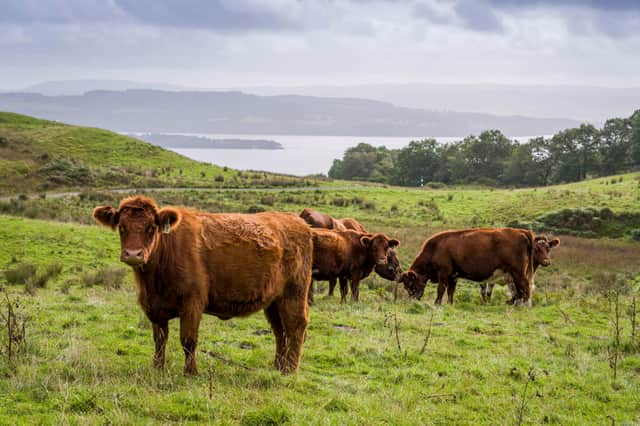
Glen Finglas, a 5,000-hectare upland estate owned by the Woodland Trust, already combines livestock farming with large-scale habitat restoration work. Its Blackface sheep and Luing cattle graze land where woodland expansion and the restoration of upland wood pasture form part of a broader approach to managing the landscape.
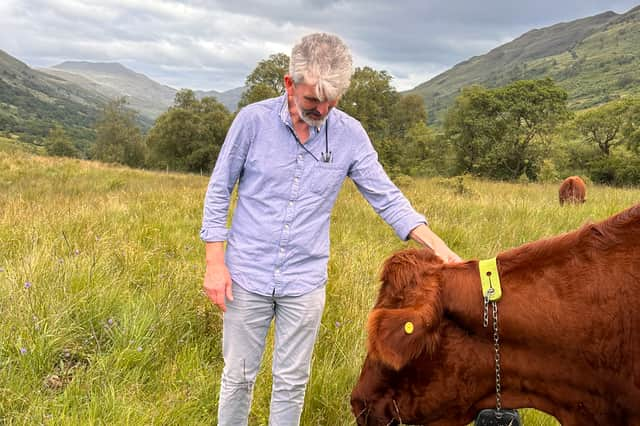
The estate team said it will use the programme to investigate how grazing and deer management can be balanced with woodland recovery and biodiversity, while maintaining productive farming.
Shemore, run by R J Lennox and Son as tenants of Luss Estates, operates as a commercial hill farm near Luss. It raises Blackface sheep and Luing cattle across permanent grassland, grazed woodland and rough pasture. The farm has collected genetic data on its sheep for more than 40 years, helping to improve flock health and performance. It also uses monitoring collars on some cattle to help with grazing management on the hills.
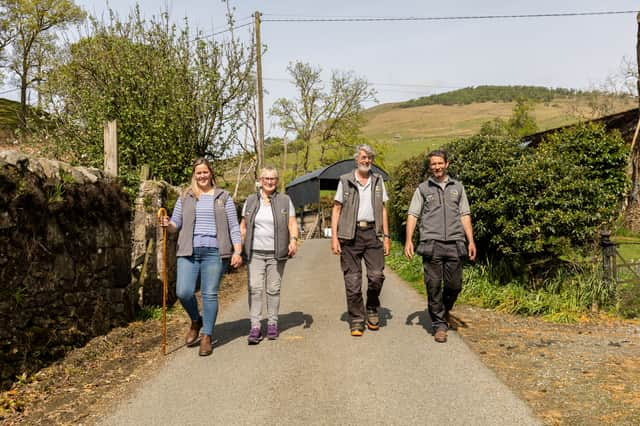
Meanwhile, Portnellan is a 94-hectare family-run organic beef farm on the south-eastern shore of Loch Lomond. The Scott-Park family has owned the farm for more than 70 years, producing grass-fed organic beef from native breeds including Aberdeen Angus, Shorthorn and Belted Galloway.
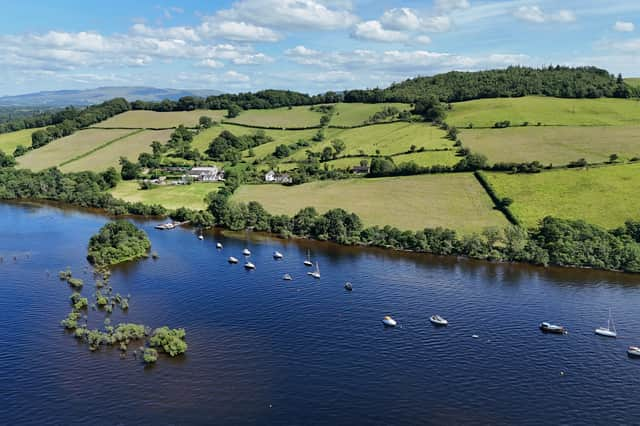
Its closed herd and long-term animal records, which date back to its days as a dairy farm, will be used to provide a record against which future changes can be assessed. The focus for the farm will be on improving soil structure and grass pastures to support more reliable grazing and greater biodiversity.
Freda Scott-Park, the Portnellan’s land manager and co-owner, said the network would allow the family to build on decades of experience while investigating new ways of adapting to climate change.

“Being part of the Resilient Farm Network gives us a chance to build on our closed herd and long-term animal data, using that history to understand how the farm can adapt and stay resilient in the years ahead,” she said.
Each of the three farms will receive tailored support, including carbon and biodiversity audits, free financial analysis and annual performance reviews. The assessments are intended to establish whether changes to land management deliver measurable environmental benefits while also strengthening the farm’s financial position.
Dominic Hall, future nature portfolio manager at the LLTNPA, said the farms represented a range of agricultural systems and offered an opportunity to look a different ways of improving land resilience.
“The selected farms reflect the range of farming approaches adopted across the National Park and give us a strong starting point to explore sustainable, nature-friendly ways to make businesses more resilient for the future,” he said.
He said that the experience of farmers dealing with increasingly unpredictable conditions had reinforced the importance of finding approaches supported by evidence rather than relying on a single model.
“By trialling different land management techniques together, we can build a clearer understanding of the practical changes needed to help farms deal with climate pressures while strengthening their ability to run profitable, productive operations,” he said.
The network is intended to extend beyond the three host farms, with training, peer support and opportunities to access funding helping other land managers who are members of the NFA to adopt suitable practices for them. The initiative’s longer-term ambition is to establish an approach that could be replicated elsewhere in Scotland, supporting rural businesses while improving the condition of the landscapes on which they depend.
Agriculture minister Jim Fairlie said: “The Resilient Farm Network is an exciting opportunity for crofters and farmers within the National Park to take advantage of expertise that will help them to manage land sustainably over the longer term, while restoring nature and increasing their resilience to climate change.
“The evidence and lessons we can learn from the existing RFN farms, and now joined by Glen Finglas, Shemore and Portnellan can benefit the wider agriculture sector, which is a vital part of rural Scotland and our economy.”
According to the latest figures in the Scottish National Adaptation Plan, released by the Scottish Government in relation to climate change, average annual temperatures in the country are projected to exceed by an added 2C by 2050, compared to temperatures at the beginning of the century, with summer temperatures increasing more than winter.
The report, released in June this year, said winters are projected to become wetter by up to 25 per cent, while summers may become drier by up to 20 per cent, increasing the risk of both flooding and drought.
Comments
Want to join the conversation? Please or to comment on this article.