
Tiny songbird plays key role in island gigantism after being found double its normal size


Even its song and plumage is showing up different to populations elsewhere in the UK.
The tiny wrens that dart across Scotland’s more remote islands are evolving into giants compared to their mainland cousins, new research has shown.
The discovery could help provide fresh clues into one of evolutions enduring puzzles: island gigantism.
Researchers have discovered that the population of this tiny songbird living on Shetland and St Kilda weigh almost double than those measured in parts of England.
The study, led by the University of Birmingham and published in the Linnean Society of London journal Evolutionary Journal of the Linnean Society, examined four isolated populations of wrens inhabiting the islands of Shetland, Fair Isle, the Outer Hebrides and St Kilda.
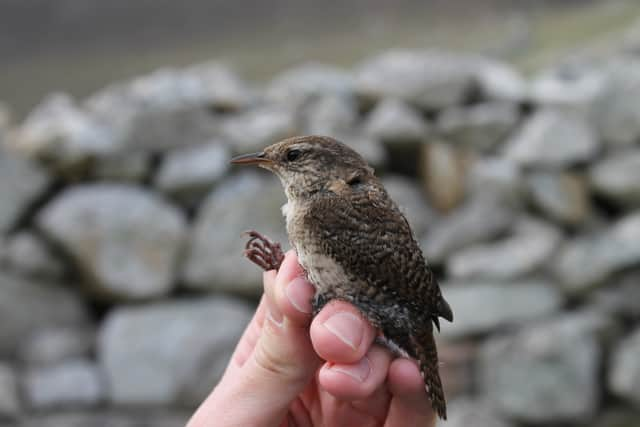
Although only separated by stretches of sea, the birds have diverged sharply from wrens found across mainland Britain and Europe.
The transformation was particularly noticeable on St Kilda, authors of the paper said. While a typical English wren weighs between seven and ten grams, its Atlantic relative can reach as much as 16 grams — more than double the size of the smallest of the mainland population.
Scientists said the phenomenon places the St Kilda wren among the most striking known examples of “island gigantism” in birds worldwide.
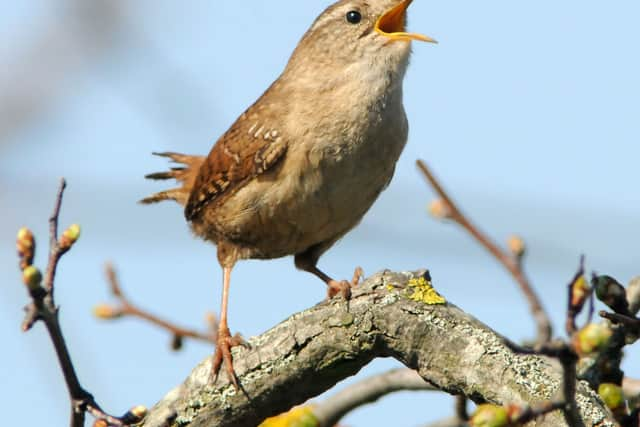
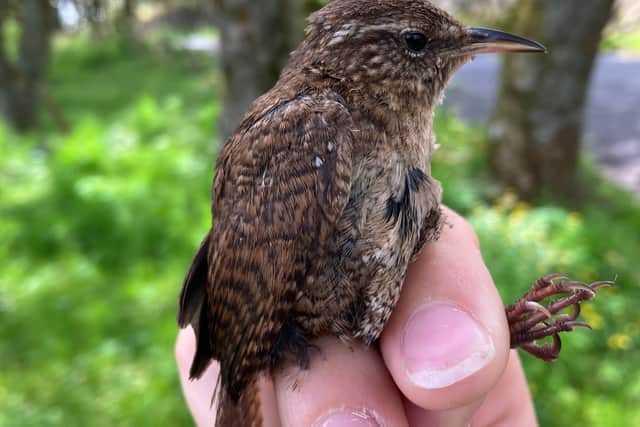
Island gigantism, in which species isolated on islands become markedly larger than their mainland ancestors, has previously been associated with creatures such as the giant tortoises of the Galápagos and the extinct dodo of Mauritius. The Scottish wren suggests that the same evolutionary pressures may also be at work much closer to home.
Dr Michał Jezierski, the study’s lead author from the University of Birmingham, said the island populations were becoming so genetically distinct that some may eventually emerge as separate species.
“We found that all four Scottish Wren subspecies are genetically distinct from the Wrens of mainland Britain; with the Wrens of Shetland and St Kilda being especially distinct in both appearance and song,” he said.
“Their genetic distinctiveness is so high, that it is likely they are on their way to becoming new species.”
Researchers combined body measurements, song recordings and whole-genome sequencing to compare the island birds with mainland populations. The findings suggest that while the Shetland and St Kilda wrens evolved similar large bodies, they did so independently — an example of what scientists call “parallel evolution”.
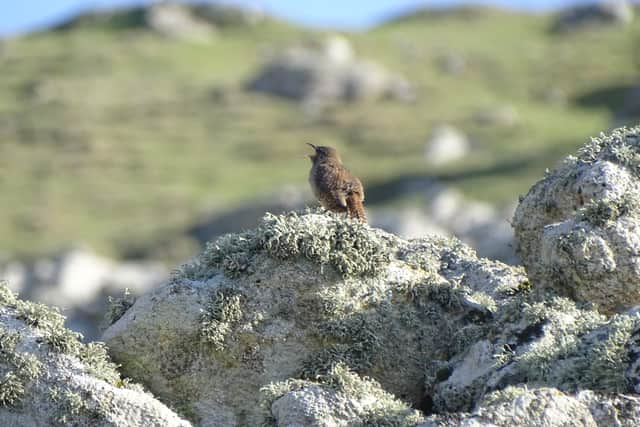
In effect, two separate populations appear to have reached the same evolutionary destination by different genetic routes, they said.
Wrens from Fair Isle and the Outer Hebrides, however, turned out to be more similar to those on the British mainland, highlighting that island evolution does not proceed in the same way, even within a relatively small geographic region.
Islands account for between 20 and 30 per cent of the world’s biodiversity despite covering only a small fraction of the Earth’s surface. Their isolation often creates evolutionary laboratories where species develop in unusual and exaggerated ways.
Will Smith, a co-author from the University of Nottingham, said: “Our research suggests that islands with similar environments can produce similar evolutionary outcomes using different genetic pathways. The wrens of Scotland provide us with a powerful case study to understand the mechanisms by which island biodiversity is generated worldwide.”
Beyond their increased size, the wrens developing distinctive song, subtle plumage differences and altered body proportions suggests that isolation is reshaping not only their appearance but also their behaviour.
Comments
Want to join the conversation? Please or to comment on this article.