
We turned a farm on a remote Scottish island into a historical experience 'on the edge of the world'
The restoration work has been carried out “to show what life was like as a 19th century farmer on the edge of the world.”
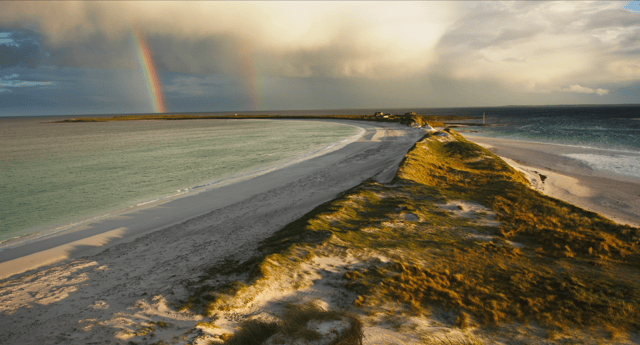


Islanders have transformed one of the most remote farmhouses in the UK into a location for visitors to see what life was like as a farmer in the 19th century.
Following years of painstaking work, residents of the Orkney island of Sanday will be opening the Historic Environment Scotland-listed farm of Boloquoy to the public.
The house, farm and water mill lie on the island’s western coastline, and were continuously inhabited by the Fea family from 1762 to 2023.

The property was bought by the Sinclairs in 2013, but the former Boloquoy farmer and last member of the Fea family stayed in the farm house on a life tenancy until he left in 2022.
After discovering 200-300 year old artefacts and the complete Fea family history spanning more than two centuries, Mrs Sinclair and her business partner, Dave Walker, decided to restore the home to tell the house’s story.

“We had never been in the house apart from maybe for a cup of tea,” Mrs Sinclair said.
“What we found was a real treasure trove.
“We didn’t want to just let it out as a holiday let, we wanted to do it justice and tell its story.”

During the renovation, the pair uncovered various artefacts including 18th and 19th century furnishings, clothing and lost personal treasures including unopened Christmas gifts from over a century ago.
The restoration has been completed to reflect the period between 1880 and 1950 “to show what life was like as a 19th century farmer on the edge of the world,” they said.

Opening to the public this summer, the location is set to transport guests and visitors to a bygone era.
From next year, it will be possible to spend the night in the original Victorian beds, including a traditional Orcadian box bed.
Beyond the house itself, the farm is home to restored barns housing historic farm implements beneath traditional turf roofs, and heritage breeds of livestock, vegetables and crops.
The nearby mill pond habit has been revitalised in partnership with RSPB Scotland and now supports a range of waders and coastal birds. Future plans include bringing the water mill on site back to life.
Ms Sinclair said: “I’ve always loved Boloquoy, ever since the day I arrived on Sanday 30 years ago. As I drove past, it caught my eye immediately. The fields full of haystacks, the old water mill down by the sea - I wondered if I’d travelled back in time. It feels right that we are now returning the farm to its natural state, weaving together the stories of generations living in harmony with the landscape.”

Boloquoy Victorian Farmhouse Mill opened this summer to the public for tours and afternoon teas. Spending the night at the property will be available from 2026, with bookings open.
The story of Boloquoy, its history and its subsequent restoration feature in a new documentary film, which is now available to view online.
The Sinclairs are active farmers on the island.
They built up their farm business by buying smaller, neighbouring farms over time.
One of their farms, How, has been in Mr Sinclair’s family for six generations.
Another farm they own, Backaskaill Farm, a grass and cereals farm which includes a traditional farmhouse, an adjoining one-bedroom cottage, a range of farm buildings and land that extends to about 311 acres, is on the market for offers over £1.2m.
Comments
Want to join the conversation? Please or to comment on this article.