
What can Scotland learn from Spain's Catalonia about wildfires?

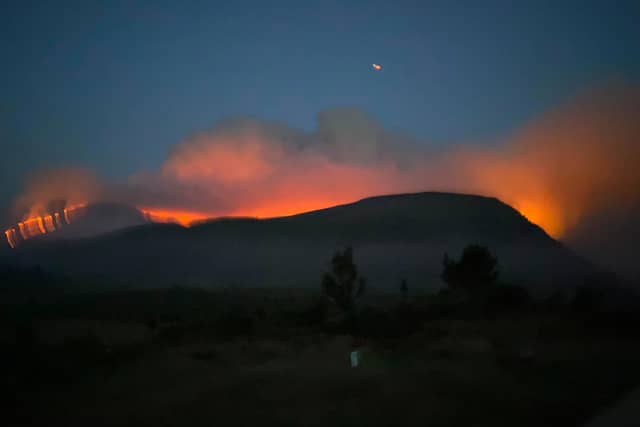

Deploying goats or other roaming livestock and creating firebreaks are widely accepted techniques to help tackle devastating wildfires.
As wildfires become more frequent in Scotland, rural experts have urged the Scottish Government to adopt fire prevention techniques used in some of Europe's most wildfire-prone countries.
Countries such as Spain and Greece have become a warning of what could lie ahead further north as temperatures continue to rise.
Rural specialists, including experienced gamekeepers who are heavily relied upon to prevent and tackle wildfires, said England and Wales are already showing signs of the conditions that began emerging in Spain around three decades ago. They have called on ministers to learn from southern European countries before Scotland faces similar challenges.
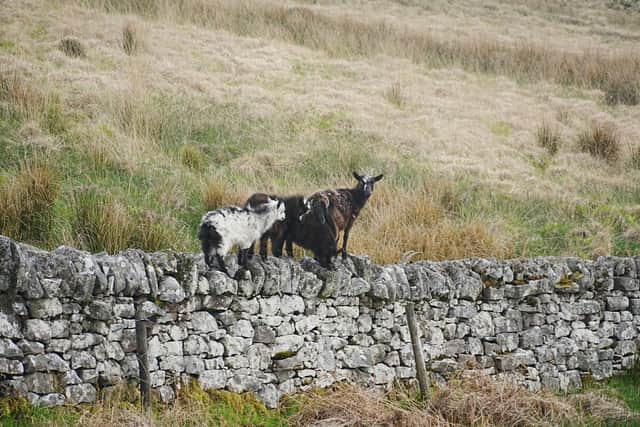
One approach that has been hailed as a success in Catalonia is the deployment of hundreds of goats to graze vegetation in wildfire-prone areas.
The scheme in the city of Mataró, part-funded by the EU, uses the animals to clear flammable undergrowth such as thistles and scrub, creating natural firebreaks. By opening gaps in the vegetation, fires are less likely to spread rapidly. The cleared areas also provide firefighters with safer positions from which to contain flames or carry out "back-burns".
Back-burns, also known as prescribed burns, have long been accepted as an effective form of wildfire prevention around the world. The Scottish Fire and Rescue Service uses (SFRS) the technique when tackling wildfires in Scotland.
Landowners and gamekeepers also advocate muirburn, or controlled burning, which works on a similar principle. While the practice is primarily used to improve conditions for grouse by burning older heather to encourage fresh shoots for chicks to feed on, it is also regarded as a wildfire prevention measure because it creates breaks in vegetation and reduces the "fuel load" — the build-up of combustible plant material that can accelerate the spread of a wildfire.
Critics of muirburn, including the RSPB Scotland, which owns large areas of land in Scotland, argue that other methods such as ‘rewetting’ the land is preferred as a replacement wildfire prevention technique. Rewetting raises a landscape's water table (often by blocking drainage ditches), which can keep the soil saturated to help slow the spread of the flames.

According to the International Association of Wildland Fire (IAWF), prescribed burning has improved planning, monitoring and fire management in many countries prone to wildfires, while becoming an essential tool for reducing fuel loads in forested landscapes.
The technique has been widely adopted since the late 20th century and is often attributed to the work of José Antonio Vega in Galicia, Domingo Molina in Catalonia and Francisco Rodríguez y Silva in Andalusia, whose research helped demonstrate that fire could be used as a tool for both wildfire prevention and suppression.
While human activity, whether accidental or deliberate, remains a common cause of wildfires in Scotland, climate change is increasing the risk through warmer temperatures and longer periods of dry weather, particularly in spring.
The result is drier vegetation, lower ground moisture and a greater likelihood of fires igniting and spreading. Scotland's extensive peatlands and woodlands are particularly vulnerable. Peat fires can smoulder underground for prolonged periods, releasing carbon into the atmosphere and causing long-term damage to habitats and wildlife.
Although by-laws have been introduced to reduce the risk of fires being started by people, rural experts argue that land management practices such as grazing by sheep and goats to reduce vegetation, alongside the creation of firebreaks through controlled burning, will be essential in limiting the impact of future wildfires.
Comments
Want to join the conversation? Please or to comment on this article.